
Different forms of wireless and leadless pacemakers have been recently developed to replace the pulse generator located in a patient’s chest and connected to the heart via one to three wired stimulus and sensing 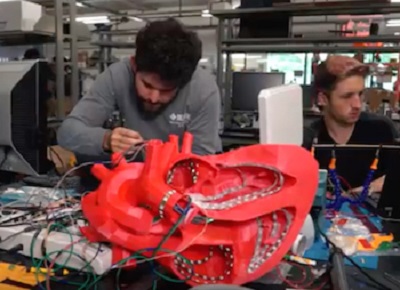 A network of chips within the heart would constantly monitor conditions and apply a charge when regulation is required. Source: Brandon Martinleads. A pacemaker that would instead insert a network of chips the size of a grain of rice at various sites inside the heart has been designed at Rice University.
These chips would communicate with a base station located under a patient’s skin and charge via radio frequency. The embedded chips would release a jolt of energy timed to re-establish the heart’s normal rhythm if the base station senses a problem.
The proof-of-concept system includes a 3D printed heart with light traces triggered by programmed anomalies and sensor-simulator chips that detect problems and send data to the base station. The station then commands the stimulators to release timed jolts to adjust the heart’s rhythm.
Without the use of wires, the control unit continually dribbles power to and gathers data from the heart-embedded chips through radio frequency radiation, the same technology found in common RFID tags. The chips would deliver 25 nanojoule charges to stimulate heart muscles.
