
Researchers at the University of Bern in Switzerland are working on a way to use a 3.6- square-centimeter solar cell to continuously recharge implanted electronic medical devices.
The project is aimed at providing real-life data about the potential use of solar cells to power devices such as pacemakers and deep brain stimulators. These solar cells under the skin may save patients the discomfort of having to continuously undergo procedures to change the batteries of these life-saving devices.
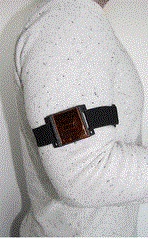 Regardless of the season when these solar cells were worn, they generated enough power to charge medical devices. Source: University of Bern Today’s electronic implants are battery powered, and the size of the implants is governed by the battery volume required for an extended lifespan. When the power runs out, the batteries need to be recharged or changed. That means patients must undergo implant replacement procedures and holds the risk of medical complications.
Prototypes of small, electronic solar cells that are wearable have shown they are able to recharge medical devices without these invasive procedures. University of Bern researchers developed solar measurement devices that can indicate the output power being generated. These devices are small enough to be implanted if needed.
The solar cells were tested by covering them in optical filters to simulate how properties of the skin would influence how well the sun penetrates skin. The scientists tested the devices on the arms of 32 volunteers in Switzerland for one week during the summer, autumn and winter.
The research team found that no matter the season, the solar cells generated much more than the five to 10 microwatts of power that a typical cardiac pacemaker uses. The lowest power output of the volunteers still obtained 12 microwatts on average.
“By using energy-harvesting devices such as solar cells to power an implant, device replacements may be avoided, and the device size may be reduced dramatically, says Lukas Bereuter of the University of Bern.
The researchers say the results of the study can be scaled up and applied to any other mobile, solar- powered applications on humans, opening up the possibility for uses outside of the medical market.
