
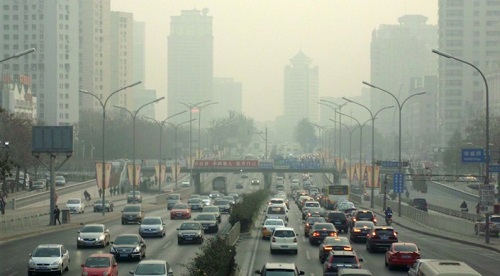
 Electrifying taxis and buses may offer better hopes of reducing CO2 emissions than electric vehicles. Source: Harvard UniversityPart of China’s plan to improve its air quality while simultaneously reducing its CO2 emissions involves the rollout of electric vehicles in the form of three- and four-wheel passenger cars.
However, new research from Harvard University and Tsinghua University in Beijing questions just where the energy to charge these EVs will be coming from and how effective the strategy will be in the long run.
China’s electricity still comes from coal-fired power plants and researchers say if EV owners can be incentivized to slowly charge vehicles during off-peak hours, it could have a positive effect on CO2 reduction. Quickly charging vehicles in the higher energy “fast mode,” however, could be counterproductive.
The research team determined that electrifying the bus and taxi fleet in China may be an effective option for improving air quality because these vehicles make a significant contribution to NOX emissions, a precursor to air pollution.
“This research offers a more nuanced strategy for reducing CO2 emissions and improving air quality in China,” said Michael B. McElroy, the Gilbert Butler Professor of Environmental Studies at the Harvard John A. Paulson School of Engineering and Applied Sciences (SEAS) and the Department of Earth and Planetary Sciences.
Researchers used real-time power demand data and driving patterns for Beijing and its suburbs to develop a comprehensive model of the energy system. The team found that how electric vehicles are charged — whether in the low-energy slow mode or high-energy fast mode — plays a significant role in the integration of wind energy. Vehicles that charge in the 30-minutes-or-less fast mode do so during hours of peak power demand resulting in additional coal generators that need to come online to meet demand. With these generators operational at night, the opportunity to take advantage of available wind power is reduced.
“If people were incentivized to wait until evening and charge their vehicles in the slow-charge mode, which takes hours, the power load could take advantage of wind energy available during off-peak hours,” said Chris P. Nielsen, Executive Director of the Harvard China Project and co-author of the study.
There are about 30,000 buses and 66,000 taxis in China, responsible for about 20 percent of total NOX emissions, equivalent to the contribution from 8.2 million private vehicles. Electrifying this fleet would reduce NOX emissions significantly and increase air quality, researchers say.
“Electrifying the public fleet and introducing incentives to charge personal electric vehicles at off-peak times would be the most effective strategy to reduce NOX and CO2 emissions in Beijing,” McElroy said. “This strategy could also be applied to cities across the world that have a significant source of electricity from coal.”
The full research can be found in the journal Nature Energy.
