
New research from Purdue University proves that water-repelling surfaces can support water boiling if all air and vapor is removed from the system first. Water is boiled off hydrophilic surfaces to cool nuclear reactors and high-power electronics. This prevents them from overheating. The new research proves that most water-repellent surfaces and superhydrophobic can boil water efficiently and stay cooler than a hydrophilic surface.
"One of the ways to take the heat out of a surface is to boil from it," said Justin Weibel, associate research professor of mechanical engineering. "But no one typically considers using superhydrophobic surfaces to improve boiling."
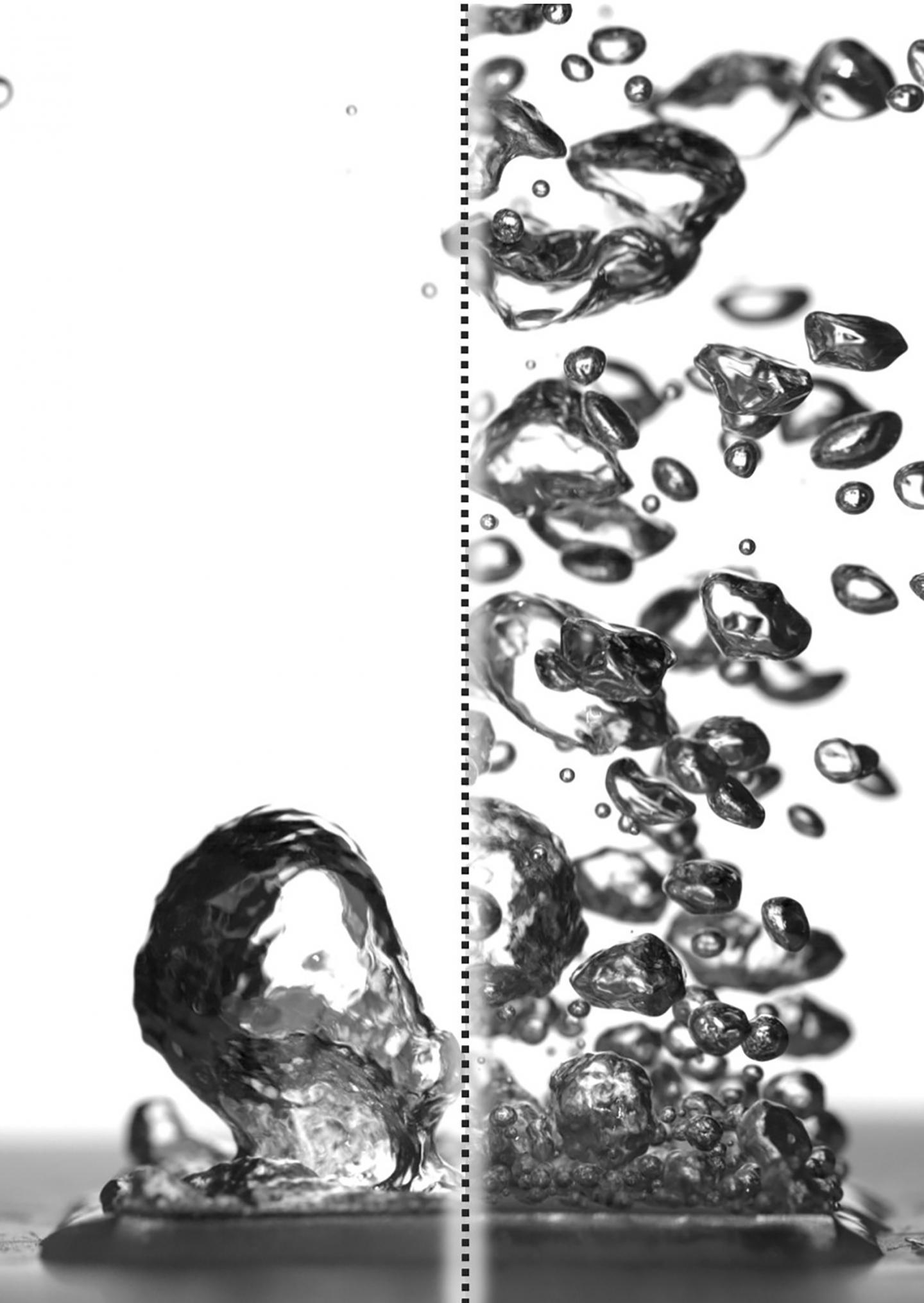 Superhydrophobic surfaces are normally insulated by vapor when brought to a boil (left), but getting water to stick makes them boil very efficiently (right), better than hydrophilic surfaces. (Source: Purdue University image/Taylor Allred)
There is water within metal “heat pipes” on all consumer electronics. This water dissipates the heat that is generated when the devices are being used and keeps them from overheating. High-power electronics in electric vehicles, supercomputers and aircraft need this type of cooling but the current uses are not efficient enough.
"Superhydrophobic surfaces were previously thought to be bad for boiling because they can't stay wet," said Taylor Allred, a Purdue doctoral student in mechanical engineering and first author on the paper. "You get a blanket of vapor on the surface, and because the vapor is a very good insulator of heat, you are insulating the surface instead of cooling it."
In the past, researchers believed that superhydrophobic surfaces that don’t have the insulating vapor layer could boil at a lower temperature than hydrophilic ones. There have been a few studies that have attempted to make pattern surfaces that have hydrophilic and hydrophobic material benefits but a vapor-free surface with patterning has not been developed due to hydrophobic regions.
"We realized that if we could perform one key step prior to boiling from the superhydrophobic surface, we could get the best of both hydrophobic and hydrophilic surface behaviors all in one," said Suresh Garimella, Purdue's Goodson Distinguished Professor of Mechanical Engineering and director of the Cooling Technologies Research Center.
The team first submerged the surface and heated the surrounding water without boiling directly from the surface’s temperature. This removed the layer of air that is typically trapped within the superhydrophobic surface texture and allowed water to penetrate the texture the same way it would for a hydrophilic surface.
Pre-wetting the texture of the superhydrophobic surface results in small bubbles that are pinned during boiling so they don’t spread out over the surface. The bubbles depart without coalescing into a vapor blanket that keeps the surface wet with water. Hydrophobic materials can form more small bubbles than hydrophilic surface so the surface can be cooled efficiently.
"There are numerous papers on making superhydrophobic surfaces and using them for a variety of applications. With this research, we've opened up a whole new area where they can be deployed," Garimella said.
The paper on this research was published in Physical Review Letters.
