
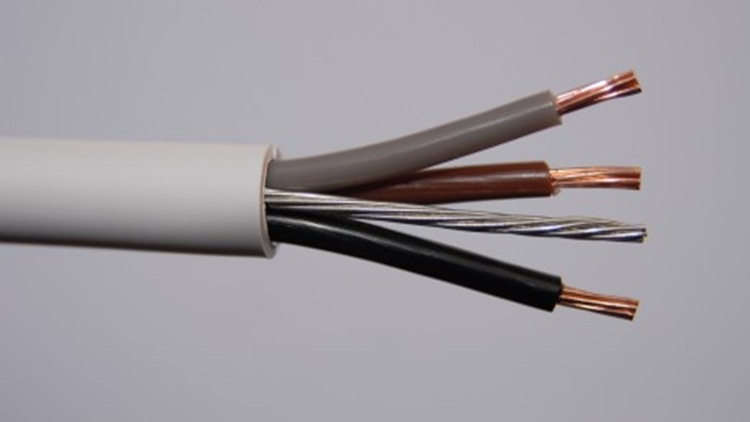
Low-smoke, zero halogen (LSZH) cables are specially designed wire and cable products that prioritize safety in fire conditions. Unlike traditional cables that may release dense toxic smoke and corrosive gases when burned, LSZH cables are made from materials that minimize smoke output and contain no halogens (such as chlorine or bromine). This makes them ideal for use in enclosed or populated environments where fire safety is critical.
Material properties of LSZH cables
LSZH cables derive their unique properties from the materials used in their insulation and jacketing. Instead of PVC or other halogenated plastics, LSZH jackets are typically made from halogen-free polymers (often polyolefins like polyethylene or polypropylene, sometimes blended with EVA or other co-polymers). These base polymers are compounded with specialized flame-retardant additives without the use of halogenated compounds. Common additives include metal hydroxides such as aluminum trihydrate (ATH) or magnesium hydroxide (MDH), which are mixed into the polymer at high loadings (often 30% to 60% by weight). The polymer itself provides insulation and mechanical structure, while the additives confer flame-retardant properties.
Key material characteristics of LSZH compounds include:
- Halogen-free composition: By definition, LSZH materials contain virtually no chlorine, fluorine, bromine or iodine. This ensures that burning the cable will not release halogenated toxins or acids (like hydrogen chloride gas). Typically, industry definitions require halogen content less than 0.2% of the material.
- Flame-retardant fillers: The high filler content (ATH, MDH or similar) gives LSZH plastics a high limiting oxygen index (LOI) — meaning the material requires a higher concentration of oxygen to sustain combustion. In a fire, these fillers decompose endothermically (for example, ATH releases water vapor when heated), which absorbs heat and cools the material, slowing down combustion. Some formulations also form a protective char layer that insulates the underlying material.
- Mechanical attributes: The base polyolefin materials are typically thermoplastic (and sometimes cross-linkable for enhanced performance). Pure polyolefins are flexible and tough, but the addition of large amounts of inorganic filler tends to make LSZH jackets stiffer and higher in hardness than standard cable plastics. Modern LSZH formulations often include elastomeric modifiers or use advanced synergistic flame retardants to improve flexibility and tensile strength despite the filler load. Overall, LSZH jacket materials are strong and durable, but historically could be less elastic than PVC. Newer compounds have narrowed this gap.
Electrical performance
While the primary focus of LSZH cables is safety in fires, their electrical performance must also meet the needs of the intended application. "Electrical performance" relates to the cable’s ability to insulate conductors, withstand operating voltages and not interfere with signal integrity. Key points include:
- Insulation properties: Many LSZH cables use halogen-free insulating materials (for the conductor insulation) in addition to the outer jacket. Common insulation materials in LSZH cables are cross-linked polyolefins (XLPE, XLPO) or other thermoset halogen-free compounds. These materials provide excellent dielectric strength and low dielectric constant, making them well suited for both power and high-frequency data cables. For instance, polyethylene has a lower dielectric constant (~2.3) compared to PVC (~3-4), which means LSZH-insulated data cables can exhibit lower capacitance and attenuation — a benefit for signal transmission. As a result, LSZH versions of Ethernet, HDMI or other communication cables can perform as well as or better than their PVC counterparts in terms of signal integrity.
- Voltage and current ratings: LSZH cables are available across various voltage classes (from low-voltage instrumentation cables to medium-voltage power cables). The materials used can be formulated to meet the same voltage rating tests (such as withstand voltage, insulation resistance, etc.) required by standards. There is nothing inherent in LSZH that limits voltage handling; a properly designed LSZH insulation can comply with standards like IEC 60502 (for power cables) or relevant IEEE/UL standards for wire insulation. Thus, electrically, LSZH cables can be made to handle everything from data signals to mains power safely.
- Thermal electrical behavior: From an electrical standpoint, one must ensure the operating temperature limits of LSZH insulation/jackets are not exceeded, because excessive heat can degrade insulation and lead to failures. Within their specified temperature range (often up to 70° C to 90° C for continuous operation), LSZH materials maintain insulation resistance and dielectric performance comparably to other plastics. One benefit of halogen-free materials is that they do not release corrosive vapors even under normal heating, which is advantageous for maintaining contact integrity over time (no chlorine to cause metal chloride formation). For special high-temperature needs (above the typical range for LSZH), engineers might still opt for fluoropolymer or silicone cables since LSZH compounds are not designed for extreme heat — but those scenarios go beyond standard electrical usage.
- Shielding and signal considerations: LSZH jacketing does not directly affect a cable’s ability to carry signals or power beyond the insulation properties. However, when using LSZH in sensitive electronics environments (e.g., data centers or control rooms), the fact that LSZH materials produce less outgassing and corrosive byproducts is beneficial. It means connectors, PCB contacts or relay contacts nearby are less likely to suffer corrosion over time (especially important in sealed environments like submarines or spacecraft). For high-frequency signals, a well-formulated LSZH cable has minimal impact on impedance or signal loss — in fact, many high-performance coaxial and twisted-pair cables in Europe are LSZH to meet building codes, and they achieve the same category ratings (Cat6, Cat7, etc.) as PVC versions.
Conclusion
LSZH cables represent an important class of wiring products that enhance safety in modern engineering projects. Their specialized materials significantly reduce the dangers associated with fire by limiting smoke and eliminating halogen-based toxins. This article explored how LSZH cables are made and how they perform — covering their material makeup, fire behavior, mechanical and electrical properties, and typical applications from buildings to transportation.
