
Mouser Electronics, Inc. is now stocking the PIC32WM-BZ6 multiprotocol module from Microchip Technology.
The PIC32WM-BZ6 is a highly integrated, low-power module that simplifies development and reduces time-to-market for multiprotocol products. This turnkey solution is ideal for industrial and internet of things (IoT) devices, heating, ventilation and air conditioning (HVAC) systems, automotive and telematics applications, and consumer electronics.
The Microchip PIC32WM-BZ6 module, now at Mouser, is built around the powerful PIC32CX-BZ6 System-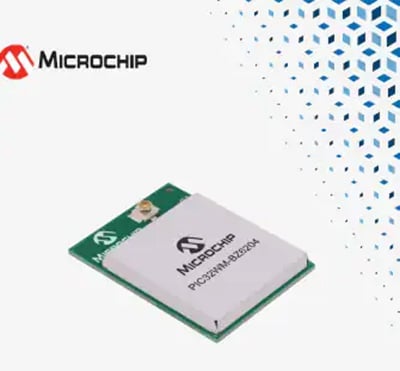 Source: Mouser Electronics, Inc.on-Chip (SoC) and supports Bluetooth Low Energy, Thread, Matter, and proprietary smart-home mesh networking protocols. The module also includes analog peripherals for motor control development and touch and graphics capabilities for advanced user interfaces. The PIC32WM-BZ6 MCU features a 128 MHz Arm Cortex-M4F processor with 2 MB of Flash memory and 512 KB of RAM, making it suitable for complex applications and evolving standards. The PIC32WM-BZ6 module is pre-certified and includes a fully integrated RF front end, antenna and passive components, enabling easy integration. The MCU module boasts a range of security features, including secure boot with an immutable root of trust, a high-performance AES, SHA, RSA and ECC cryptography accelerator, and a true random number generator (TRNG). The PIC32WM-BZ6 module is AEC-Q100 Grade 1 (125° C) qualified for automotive and industrial environments.
The Microchip EV31U42A PIC32-BZ6 Curiosity Board, also available from Mouser, is a versatile development platform for the PIC32WM-BZ6 multiprotocol module. All signals from the module are connected to the onboard features, enabling fast and flexible prototyping and development. The PIC32WM-BZ6 module also supports Microchip's MPLAB Harmony v3 software framework, providing a comprehensive set of development tools, drivers and middleware. Two MikroBUS sockets allow users to expand functionality using MikroElektronika Click adapter boards and Microchip add-on boards.
