
A soft robot that mimics a caterpillar by using liquid crystal elastomers (LCEs) with paper-based electrodes to create asymmetric bending has been developed by researchers at Chung-Ang University in South Korea.
According to its developers, the robot achieved efficient crawling via regulated asymmetric heating. Using LCEs that change shape when their temperature changes, the team heated the materials with built-in electrical elements, thus causing the robots to move in controlled and useful ways.
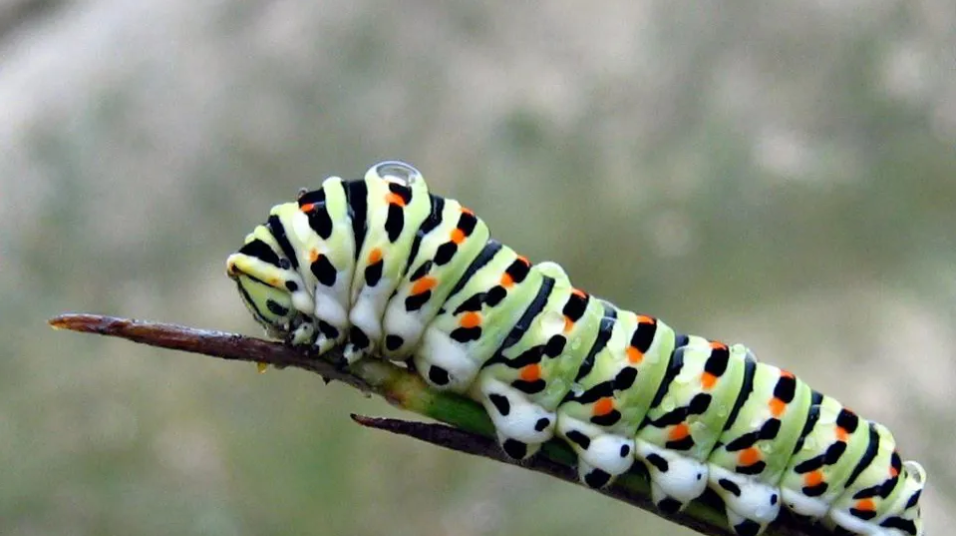 Source: Vicki’s Nature from Openverse
The robots were built with layered materials that bend in controlled directions. A facile electroless plating technique for patterning asymmetric temperature gradients on paper substrates reportedly resulted in the caterpillar-inspired soft robots.
The team selected cellulose-based paper as the substrate for the soft robots. In lieu of complex circuit designs, the team opted for printing-based electrode patterning technology to simplify the manufacturing process.
The team noted that the choice of using cellulose-based paper substrates offered advantages thanks to their porous structure, which allowed for facile electrode deposition via solution-based processes and offered high mechanical deformability.
Thin copper strips were placed on paper in faintly different widths, thus causing the electricity to flow unevenly, while also creating warmer and cooler areas across the paper. This paper was then combined with the shape-shifting LCE material in a layered design to form the soft robots that can crawl in one direction using almost no power.
“In this way, we successfully achieved asymmetric bending motion, which is a difficult feat for conventional soft robots. By precisely controlling the temperature gradient on the paper-based electrode, we were able to induce differential bending, which mimics the natural crawling motion of a caterpillar. This novel mechanism enables directional and controlled movement for soft robots,” the team added.
The crawling robot could, in the future, potentially be used for environmental monitoring or to perform tasks in challenging environments.
An article detailing the robots, “Crawling Soft Robotic Locomotion via Asymmetric Temperature Distribution on Paper-Based Electrodes,” appears in the journal Advanced Functional Materials.
