
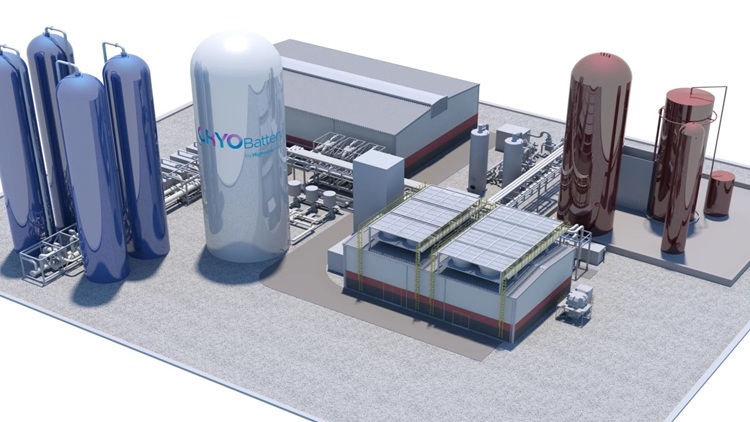
Cryo-batteries, short for cryogenic batteries, are an emerging class of energy storage systems that operate at extremely low temperatures (typically below -150° C). They make effective use of the electrical energy stored in materials by making use of their special physical and electrochemical properties at these temperatures. While still largely in the experimental or prototype stages, they have been attracting attention for high-performance, long-duration energy storage needs — especially in the context of space applications, superconducting systems and potentially grid-scale storage.
How do they work?
Cryo-batteries operate based on electrochemical principles similar to conventional batteries, but their performance is significantly influenced by cryogenic (extremely low) temperatures — typically below −150° C, often using liquid nitrogen (−196° C) or liquid helium (−269° C) for cooling. These low temperatures fundamentally alter how ions, electrons and materials behave, enabling novel battery architectures and functionalities. The following is the breakdown of key steps:
1. Electrochemical reactions at cryogenic temperatures
Similar to regular batteries, cryo-batteries consist of:
· Anode: where oxidation (electron release) occurs
· Cathode: where reduction (electron acceptance) occurs
· Electrolyte: transports ions between electrodes
· Separator: prevents physical contact between electrodes while allowing ion flow
At cryogenic temperatures, reaction kinetics slow down, but in specially engineered materials (like certain lithium-based solids or superionic conductors), this slowdown is minimized or even reversed in terms of stability and efficiency.
2. Use of specialized materials
· Electrolytes: Traditional liquid electrolytes freeze at low temperatures. Cryo-batteries may use solid-state electrolytes or ionic liquids that remain conductive at cryogenic conditions.
· Electrodes: Materials such as lithium metal, graphene composites and ceramic oxides are chosen for their resilience and performance at low temperatures.
3. Cryogenic cooling integration
· The system is maintained at cryogenic temperatures using external cooling (liquid nitrogen, helium or cryocoolers).
· Cooling is essential not just for battery function but often to match the environment (e.g., space or superconducting systems).
4. Phase stability and reduced degradation
· Many battery degradation pathways (like dendrite growth in lithium-ion batteries) are suppressed at low temperatures.
· Thermal runaway — common in high-energy batteries — is virtually eliminated due to the cold, making cryo-batteries intrinsically safer.
Cryo-batteries versus regular batteries
|
Feature |
Conventional battery |
Cryo-battery |
| Operating temp | ~0° C to 60° C | Below −150° C |
| Electrolyte type | Liquid (organic) | Solid-state/cryo-stable liquids |
| Safety | Moderate, risk of fire | High, almost no thermal runaway |
| Ion transport | Fast | Slower unless engineered for cryo |
| Use case | Everyday electronics, EVs | Space, quantum computing, LAES |
| Infrastructure needs | Minimal | Requires cryo-cooling systems |
Why cryo-batteries matter
1. Higher energy density
At cryogenic temperatures, certain battery chemistries exhibit reduced internal resistance and improved charge transport. This can lead to higher energy densities, making cryo-batteries attractive for aerospace and space missions where weight and volume are at a premium.
2. Superconducting synergy
Cryo-batteries can pair effectively with superconducting electronics, which also require cryogenic environments. This synergy can support ultra-efficient power systems for satellites, quantum computers and high-energy physics experiments.
3. Extended lifespan and safety
Low temperatures reduce the rate of chemical degradation and thermal runaway, improving the overall lifespan and safety of the battery. This is especially critical for space and defense applications where maintenance is nearly impossible.
4. Integration with liquid air energy storage (LAES)
Some cryo-battery systems are being studied as part of LAES technologies, where energy is stored by cooling air into a liquid and released by reheating it. Cryo-batteries could help manage the intermittent energy flow in these systems.
5. Potential for zero boil-off storage
In systems where cryogenic fuels like liquid hydrogen are used (e.g., in NASA launch systems or future green aviation concepts), cryo-batteries can help manage boil-off energy and stabilize power without additional cryo-fuel consumption.
Real-life applications
NASA’s cryogenic energy storage for launch support systems
NASA developed a cryogenic battery system as part of its launch infrastructure at Kennedy Space Center. The battery was integrated with liquid oxygen and liquid hydrogen storage systems. These systems already require cryogenic environments for propellant storage, which allowed for natural synergy with cryo-batteries.
The cryogenic battery modules were used to capture and store boil-off energy from liquid hydrogen tanks. Power stored was used for backup and auxiliary energy systems, reducing waste and improving the overall energy efficiency of ground support operations. Materials were engineered to maintain conductivity and stability at liquid hydrogen temperatures (−253°C)
Highview Power — LAES
The process of liquefying ambient air using Highview's CryoBattery technology entails cooling it to 196° C. It keeps the vaporized air in tanks using insulation. When power is required, heating it causes it to expand rapidly, which in turn spins turbines to produce energy. Though not a chemical battery, the CryoBattery is marketed and classified as an energy storage system that functions similarly to a cryogenic battery, especially in grid-scale applications. It is commercially deployed, in contrast to most academic cryo-battery prototypes.
This approach stores energy in a cryogenic state, using liquid air as the medium rather than a conventional battery electrode. However, the energy is still charged and discharged based on electrical input/output cycles, much like a battery.
Conclusion
Cryogenic batteries are ultra-low temperature energy systems offering high safety, longevity and integration with superconducting and aerospace tech. NASA and Highview Power have implemented real-world cryo-energy systems for launch support and grid-scale storage, respectively.
True cryo-batteries are still largely experimental, but cryogenic energy storage is commercially emerging.
They represent a promising frontier in extreme-environment and long-duration energy storage.
