
Warehouse automation isn’t a nice-to-have anymore. It’s a must if you want to stay competitive. Manual tasks like depalletizing and package handling slow you down, cost more over time, and put your team at risk of injury. That’s where robotics and 3D vision step in. These technologies help you move faster, reduce errors and keep your operations running smoothly around the clock. Whether you’re struggling with labor shortages or just trying to scale more efficiently, the right automation tools can make all the difference.
In this article, you’ll learn how robotic systems with 3D vision are changing the game, starting with SCAPE.
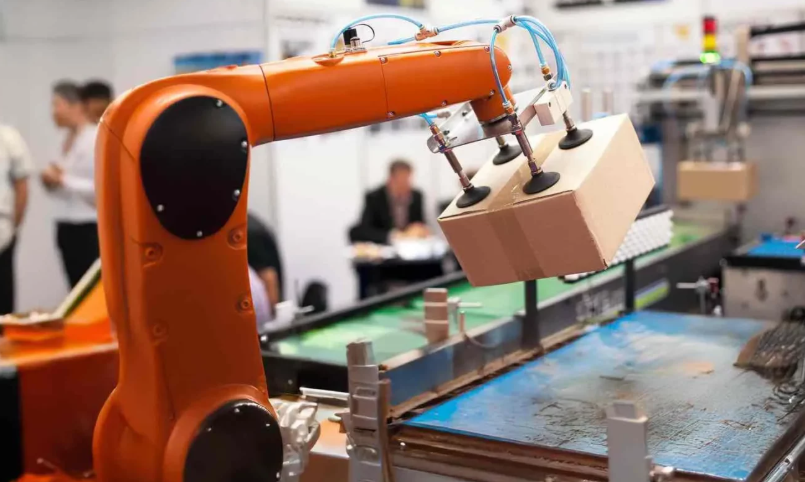 Source: Qviro
Biggest challenges in warehouse logistics today
Labor shortages are limiting growth
Finding and keeping warehouse staff is harder than ever. High turnover and physical strain make manual tasks less sustainable. This slows down operations and limits your ability to scale.
Manual depalletizing is a bottleneck
Manually unloading pallets takes time and increases the risk of injury and errors. It’s repetitive, exhausting and hard to maintain at a consistent pace. You lose valuable time every shift.
Packages come in all shapes and sizes
From slippery surfaces to fragile materials, no two packages are the same. This makes consistent handling difficult and increases the chance of damaged goods or failed picks.
Scaling during peak seasons is tough
When demand spikes, your current setup may not keep up. Without automation, it’s nearly impossible to boost throughput quickly. Hiring more staff isn’t always an option.
If you want to grow without adding more pressure to your team, automation is the next logical step.
Manual depalletizing is a bottleneck
It’s repetitive, labor-intensive and unsafe
Manually unloading pallets is one of the most physically demanding tasks in your warehouse. Workers repeat the same motions for hours, which leads to fatigue, strain and injury risk. Over time, this affects both productivity and morale.
It introduces delays in order picking and shipping
Slow depalletizing creates a ripple effect throughout your operation. When items aren’t unloaded quickly, everything else slows down. Orders pile up, deadlines get missed and customer satisfaction takes a hit.
Operators can’t maintain throughput at scale
As order volume grows, manual processes can’t keep up. Hiring more staff isn’t always realistic or cost-effective. Without automation, it becomes harder to meet demand during peak periods or scale your warehouse efficiently.
If you’re relying on manual depalletizing, you’re putting a cap on your productivity. It’s time to consider a system that can keep pace with your goals.
A smarter way to handle depalletizing
Built for real-world package variability
Not all packages are perfect cubes. Some are tilted, reflective, shrink-wrapped or randomly stacked. The SCAPE Package Picker handles them all. Its 3D vision system captures depth and surface details, even on transparent or glossy items. It doesn’t just guess where the box is, it knows.
AI that thinks on the job
With built-in AI, SCAPE doesn’t rely on pre-programmed layouts. It identifies item orientation, adjusts for uneven stacks and sends precise pick instructions to the robot arm. That means fewer errors and no manual corrections.
Seamless fit into your workflow
You don’t need to redesign your warehouse. SCAPE integrates with your existing robot arms and connects directly to your WMS. You get a smarter, faster process without starting from scratch.
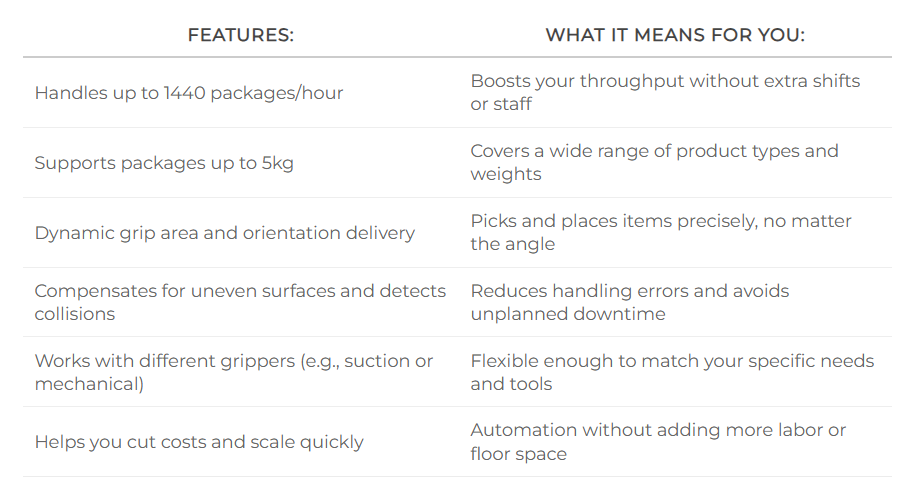 Source: Qviro
See it in action
Watch how SCAPE automates complex depalletizing in real time.
You’re paying for every inefficiency
Missed deadlines, worker fatigue and high operational costs
When your processes depend on manual labor, small issues turn into big problems fast. Delays in unloading, sorting or picking lead to missed shipping windows. At the same time, your team gets overworked, and overtime hours start to pile up. This drives up costs and wears down your workforce.
Lack of automation means you’re falling behind competitors
Other facilities are investing in automation to move faster and more accurately. If you’re still relying on manual workflows, you’re already a step behind. It shows in slower output, higher error rates and limited flexibility.
Scaling manually is no longer sustainable
Bringing in more staff to meet demand is getting harder and more expensive. Space is limited. Training takes time. And you still can’t guarantee consistent results. You need a smarter way to scale without multiplying your problems. Automation gives you that edge.
How 3D vision and AI improve package handling
Seeing more than just a box
3D vision gives your robot depth perception. It creates a digital map of every package, including shape, size, surface detail and position. This allows the system to detect packages even if they’re tilted, overlapping or partially hidden.
Smarter decisions in real time
With spatial awareness, the robot knows exactly where and how to pick each item. It can avoid collisions, adjust to uneven stacks and handle delicate or reflective surfaces. There’s no need to pre-sort or reposition packages.
AI that learns and adapts
AI goes beyond pre-set rules. It analyzes what it sees, adapts to new packaging types and improves over time. It can identify barcodes, adjust grip based on material and rotate items for proper label facing.
Results you can count on
This combo of 3D machine vision and AI reduces errors, speeds up throughput and improves consistency across your entire operation.
FAQ section
What is robotic depalletizing?
Robotic depalletizing is the process of using automation to unload items from pallets. Instead of relying on manual labor, a robot arm uses vision and gripping tools to pick and place packages accurately.
How does AI help in logistics?
AI helps you make faster, smarter decisions. It powers systems that recognize objects, adapt to changing conditions, and optimize routes or tasks. This means fewer errors, quicker handling and better use of your resources.
Why is 3D vision critical for warehouse robots?
3D vision gives robots depth perception. It allows them to detect item size, shape, and position—even when objects are misaligned, stacked irregularly, or partially hidden. This leads to safer and more reliable automation.
Can SCAPE integrate with my current systems?
Yes. SCAPE is designed to work with your existing robot arms and warehouse management systems. It adds smart functionality without requiring a complete system overhaul.
Conclusion
If depalletizing is slowing down your line, SCAPE is worth a closer look. It doesn’t just move boxes, it handles real-world challenges like crushed corners, plastic wrap and uneven stacks without missing a beat. You won’t need to rebuild your system from scratch or hire more people to keep up. SCAPE gives you speed, precision and consistency where it matters most. If you’re dealing with mixed pallets or struggling to keep throughput steady, this is your next move. Explore how it fits into your setup or book a demo to see it work on your terms.
