

It’s an inferno out there. Summer has gone scorched Earth in many regions. Without a cryosleep chamber to escape the heat, the only reprieve is cutting-edge personal climate control tech. In the grip of unrelenting heat domes and record shattering UV indices, wearable cooling gadgets have vaulted from sci-fi novelties to essential survival gear.
From neck-mounted turbines to full-body phase change vests, engineers and developers are weaponizing thermodynamics to shield the body. The devices of 2025 can manipulate microclimates with startling precision. Forget fashion statements; these wearables function like personal armor on an increasingly hostile planet. While each is engineered for endurance, all are built for survival in triple-digit conditions.
Era of microclimates
The era of personal microclimate sovereignty has arrived. This is not a discussion about trimming a few degrees. These are autonomous systems, void of reliance on centralized A/C infrastructure. They are portable ecosystems that use technologies like cool-to-touch plates, semiconductor chillers and adaptive fabrics to create localized “comfort bubbles” of relief.
Thermoelectric modules fused with precisely directed airflow can maintain a skin-level thermal equilibrium, even under extreme conditions. What once required structural HVAC intervention now fits in a backpack or around the neck, giving individuals their own zone of climate control.
Tech in action
Today’s personal cooling innovations reflect a convergence of materials science, thermodynamics and bio-inspired design. They transform fundamental heat transfer principles into agile, body-adaptive systems that regulate temperature with engineered precision.
Thermoelectric cooling (TEC): Semiconductor plates leverage the Peltier effect to transfer thermal energy away from the body through direct-contact metal surfaces, enabling precise, fraction-of-a-degree thermal control, without refrigerants. TEC modules maintain consistent chill in compact wearables, driving an immediate cooling sensation at skin contact points, typically around the neck or spine, with solid state efficiency.
Hybrid TEC and airflow designs: These devices integrate thermoelectric plates with micro-fan arrays to amplify heat dissipation and accelerate skin cooling. One unit reportedly reduces neck-skin temperature by approximately 10° F within three seconds by combining TEC modules and a 36 vent air distribution system.
Phase-change materials (PCM): PCMs embedded in garments function as thermal shock absorbers, storing and releasing latent heat near skin temperature during solid-liquid transitions. These microencapsulated reservoirs reduce skin temperature to promote sustained comfort across humidity extremes.
Hybrid PCM and fan garments: Hybrid PCM fan garments combine phase change reservoirs with microfan ventilation systems to synchronize passive and active temperature management mechanisms. They consistently maintain skin temperatures below 97.7 ° and hold core body heat under 100.4° F, even under sustained exposure. By coordinating airflow with latent absorption, these hybrid systems outperform standalone technologies in both thermal stability and operational endurance. Their dual mode architecture makes them especially effective for scenarios involving high exertion or prolonged environmental stress.
Bio-inspired pulsing flow systems: Next-gen cooling garments are adopting pulsed, valve-regulated coolant delivery systems that mirror vascular dynamics found in biological organisms. By replacing steady state flow with rhythmic bursts, these systems enhance convective heat transfer while minimizing energy consumption to support efficient cooling modeled on nature’s own thermoregulation blueprint.
Radiative textiles: Engineered to emulate the reflective fur of polar bears, these advanced textiles radiate body heat outward while deflecting incoming solar energy. Field tests show passive cooling gains of 9° F to 10.8° F under direct sun.
Wearables ranked by cooling power
Consider the most advanced microclimate gadgets this year, ranked by effectiveness, utility and technical sophistication. Built for sizzling job sites, marathon commutes and sun-drenched outings with the family, these gadgets can deliver quantifiable changes in skin temperature, core regulation and endurance under stress.
Neck fans
Neck-mounted air conditioners and fans offer immediate upper body relief, targeting arteries and high sensitivity zones around the neck and head.
1) TORRAS Coolify Cyber combines thermoelectric modules and directional airflow to reduce neck-skin temperature by up to 10° F within seconds.
2) Ranvoo Aice Lite offers 360° airflow and heat management from dual semiconductor plates with app-adjustable temperature modes.
3) JISULIFE FA35 Pro is a bladeless wearable fan with 78 vents and ultra quiet operation for 4 to 16 running hours.
 The EZ Cooldown PCM vest uses bio-based PCMs to maintain thermal control for up to four hours for heavy gear, costumes and motorsports. Source: EZCooldown
Vests
Cooling vests and climate apparel manage full body thermal loads and are ideal for prolonged exposure or heavy exertion.
1) Texas Cool Vest features phase-change inserts calibrated to maintain 65° F during melt transition, avoiding ice burn and lasting longer than frozen packs.
2) FlexiFreeze Ice Vest uses flexible ice sheets to facilitate high intensity cooling for 1.5 to 2 hours.
3) EZ Cooldown PCM Vest utilizes bio-based phase change materials that maintain thermal control at either 59° F or 70° F for up to four hours, regardless of ambient humidity or airflow. This Dutch engineered vest is designed for wear under heavy gear, costumes and motorsport protection.
4) Kuchofuku Air-Conditioned Jacket is equipped with twin fans to circulate ambient air through the garment to reduce heat buildup. Designed by a former Sony engineer, the device has become a staple for Japan’s summer workforce.
 The Reon Pocket Pro cooling gadget slips into a shirt or neck holster to automate temperature. Source: Sony
Thermoelectric accessories
Thermoelectric accessories apply localized cooling at pulse points for strategic sensory intervention.
1) Embr Wave 2 uses wrist contact and neural patterns to furnish personalized comfort.
2) Sony Reon Pocket Pro slips into a dedicated shirt or neck holster to automate temperature shifts based on motion and ambient sensing, dispensing dynamic temperature management directly along the spine. When paired with the Reon Pocket Tag, it operates autonomously by activating smart thermal responses without requiring manual input or smartphone control.
3) Black + Decker ComfortPak uses a Peltier thermoelectric plate to effectuate targeted cooling when worn against the chest or neck. Its adjustable straps, dual temperature modes and rechargeable battery make it highly mobile for thermal relief at the body’s core.
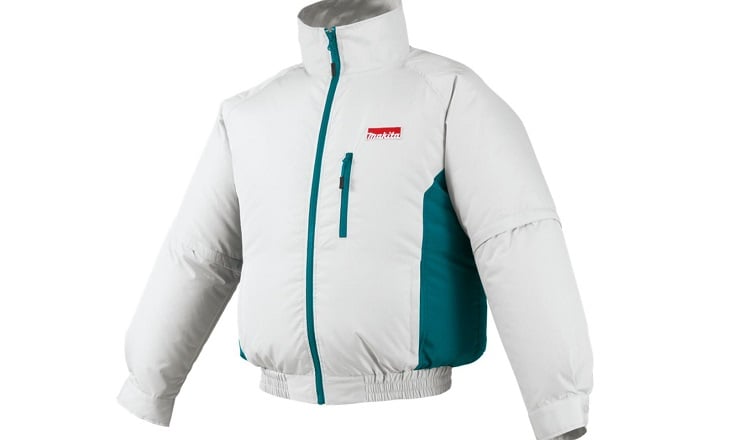 Putting on a jacket to cool off might seem counterintuitive, but the Makita Fan Cooling Jacket uses dual-fan airflow powered by lithium-ion batteries to circulate air to the body. Source: Makita Tools
Microclimate systems
Advanced microclimate systems are purpose-built for extreme conditions and offer self-contained climate control.
1) Fujitsu Comodo Gear i2 is a wearable air conditioner that enables extreme cooling in 10 seconds, using a water-cooled neck plate enhanced by Peltier integration. Designed to reduce skin temperature by up to 36° F below ambient conditions, it is a high-impact solution for industrial heat exposure.
2) Compcooler Liquid Cooling Vest circulates ice-chilled water through embedded tubing across the torso for uninterrupted relief. It is designed for extended use and connects to a wearable hydration-style reservoir to cool without active ventilation or ambient airflow.
3) ChillOut Systems Pro Touring Cooling Shirt integrates 50 meters of coolant tubing into flame-retardant fabric specifically for motorsport environments where thermal stress is extreme. The system interfaces with external cooling units to circulate chilled liquid under fireproof gear.
4) Makita Fan Cooling Jacket harnesses dual-fan airflow powered by lithium-ion batteries to provide industrial-grade cooling. It circulates ambient air through the jacket’s interior to lower body temperature without restricting movement.
Conclusion
The summer of 2025 has transformed personal microclimate control from an indulgence into an imperative. As heat waves smash historical records and legacy cooling infrastructure reaches critical strain, wearable climate technology has become both lifesaver and operational enabler when conditions would otherwise force shutdowns.
Thermal autonomy is no longer bound by location or architecture. The range of solutions sculpts a perimeter of comfort against an atmosphere that feels increasingly adversarial. Beyond their engineering elegance, these devices are riding a wave of mainstream adoption.
And what has emerged is a clever toolkit of cooling ideologies. There are solutions that scale across physiologies, climates and kinetic demands to ensure thermal resilience in personalized, portable and untethered from grid dependence form. Instead of retreating from oppressive weather, individuals can now advance into it.
There are more gadgets to come. Until then, this year’s technologies offer a tangible, wearable reprieve.
