
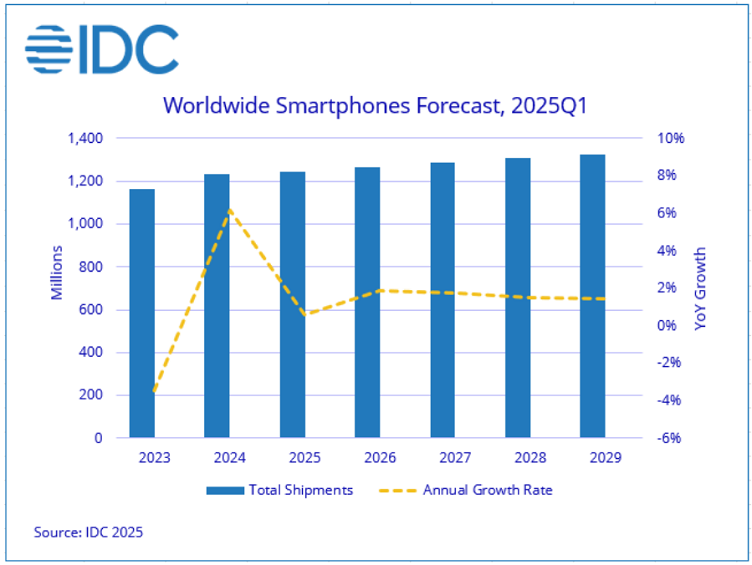
Global smartphone shipments are headed for less growth than previously expected due to uncertainty, tariff volatility and macro-economic challenges, according to new research from International Data Corp (IDC).
Previously, IDC forecasted 2.3% growth for smartphones globally. But the market research firm has reduced that growth to 0.6% year-over-year in 2025 to 1.24 billion units, as part of its most recent Worldwide Quarterly Mobile Phone Tracker.
Meanwhile, the five-year compound annual growth rate (CAGR) for global smartphone shipments is forecasted to be 1.4% through 2029. IDC said this meager growth is due to increasing smartphone penetration rates, lengthening refresh cycles and cannibalization from used smartphones.
"The US Market is forecast to grow 1.9% in 2025, but it was impacted from the ongoing US-China trade war as growth was pulled down from 3.3% due to increased uncertainty and tariff related price increases,” said Anthony Scarsella, research director with IDC's Worldwide Quarterly Mobile Phone Tracker. "Further negative impact was prevented by the unique structure of the US smartphone market, where majority of devices are bought through carriers which help fuel demand by offering robust trade in deals and interest free financing programs.”
Because of this, Scarsella said a 4% growth in average selling prices is forecasted but will have less of an immediate impact on consumers as new premium devices are launched in the second half of the year.
China, meanwhile, is forecast to grow 3% year-over-year driven by government subsidies that will stimulate demand and boost Android devices, mostly, IDC said. By contrast, Apple is forecast to decline 1.9% in China in 2025 as:
- Huawei increases its competition
- The economy slows down
- Ineligibility of many models from subsidies grows
“Since April 2nd, the smartphone industry has faced a whirlwind of uncertainty,” said Nabila Popal, senior research director at IDC’s smartphone sector. “While current exemptions on smartphones have offered temporary relief, the looming possibility of broader tariffs presents a serious risk. Recent signals from the US administration on potential tariffs hikes on smartphones manufactured outside the US further complicate long-term strategic planning for OEMs.”
Because of this, smartphone vendors are going to have to navigate complex geopolitical issues, particularly in the U.S. The good news is that India and Vietnam are expected to remain alternatives to the Chinese smartphone market.
