A new camera robot designed to improve intelligence, surveillance and reconnaissance (ISR) tasks — specifically preventing hostile access to nuclear weapons silos — has been developed by a U.S.-based defense firm.
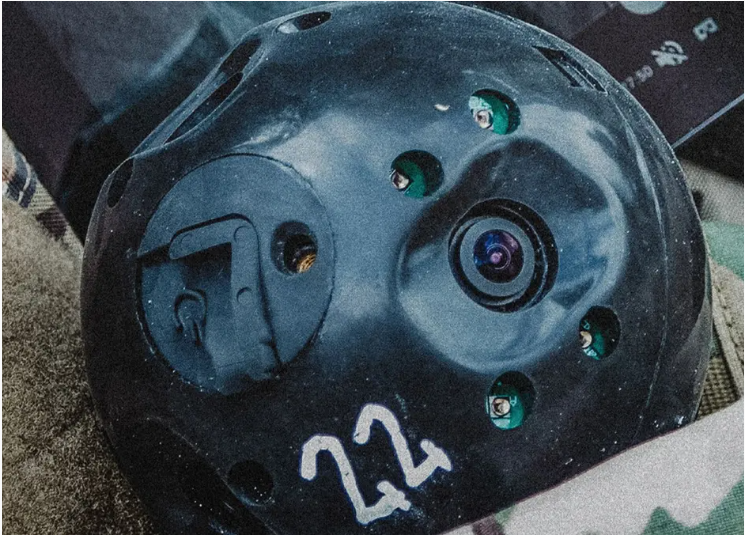
Bounce Imaging’s Recce360 Deep Inspection Camera is described as a first-of-its-kind ISR asset certified for deployment in high-security, electromagnetically restrictive environments.
 Source: Bounce Imaging
According to its developers, the Recce360 Deep Inspection Camera was developed in response to classified vulnerability assessments surrounding potential unauthorized entry into nuclear storage infrastructure.
The team developed this hardened, non-emitting surveillance solution for denied or degraded environments and it is reportedly the only tactical camera approved for nuclear asset protection operations.
By operating via an armored fiber-optic tether, the Recce360 is unlike conventional drones or robotic platforms that tend to rely on wireless communications and emit electromagnetic signatures that might interfere with strategic systems.
Such a design, the company explained, eliminates radio frequency (RF) transmission risk while also offering secure, real-time visual intelligence to operators at a safe distance.
Making it possible for the robot camera to operate in proximity to nuclear command-and-control systems, launch mechanisms or active warhead storage is that the sensor head is enveloped in a metallic shielded casing featuring copper-shielded optical lenses to ensure zero electromagnetic emission.
“Operators responsible for securing strategic nuclear assets have traditionally lacked access to certified ISR tools that can be safely inserted into sensitive enclosures. Existing robotic solutions are incompatible due to emissions concerns. As a result, they’re left with no choice but to physically enter the silo, which introduces both risk and delay. The Recce360 solves that problem — it’s shielded at every level, including the lenses,” the company explained.
In addition to being used for nuclear deterrent infrastructure, its developers are eyeing the device for other applications including the inspection and monitoring of secure government facilities, hardened bunkers, industrial plants under RF control protocols and other national security sites where signal discipline is required.
Further, the Recce360’s panoramic optical payload allows for 360° situational awareness, even in zero-light or obstructed environments, and it is deployable in vertical shafts, confined spaces or subgrade infrastructure via its tethered cable.
