
The nature of the competitive industrial landscape drives hard toward minimizing equipment downtime and sustaining/improving operational efficiency. Two related keystone strategies to help in achieving this are predictive maintenance and condition monitoring.
While both approaches focus on maintaining the health of machinery and preventing unexpected failures, they differ methodologically, in technology and in implementation. Exploration of the core concepts of both, to compare their features/capabilities, and delineate the advantages and disadvantages of each is the purpose herein.
Through a developed and nuanced understanding of their differences and interrelationship, organizations can make informed decisions about approaches best adapted to their needs.
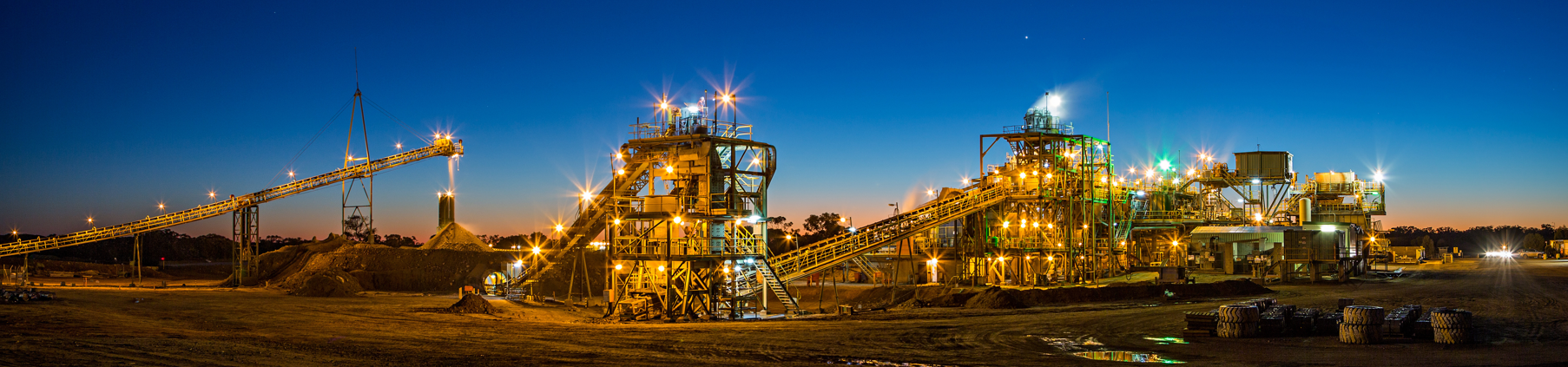 The earliest applications in primitive condition monitoring were in mining equipment, where large equipment failures and underground maintenance poses huge challenges and requires string intervention to avoid down-time and disasters. Source: Michael Evans
What is condition monitoring?
Condition monitoring involves measurement and analysis of the operational state of equipment to identify and diagnose condition changes before failure. The intent is to detect signs of wear, damage or imbalance, triggering intervention early. This involves techniques such as Fourier transforms to analyze vibrations, coupled with regression analysis and machine learning (ML) to predict failures based on historical data. Statistical Process Control (SPC) helps track deviations from norm, and ML adapted algorithms learn to identify incipient issues.
The technique had its inception in the 1930s in early proactive maintenance practices based on recognizing changes in vibration and learning how to infer their cause. It extended into thermography, lubrication analysis, and acoustic monitoring through the 1950s and 1960s. Electronics and sensor developments from the 1960s enabled real-time performance tracking to reduce downtime, extensively used in sectors like coal mining.
Condition monitoring typically involves using a spectrum of sensors and diagnostic tools to track selected parameters (vibration, temperature, pressure, lubrication levels, lubricant contaminants and sound). Analysis can detect changes in the machine’s performance that may indicate impending maintenance needs. An increase in vibration levels might suggest bearing wear or misalignment, while rising temperatures typically point to rising friction.
Key techniques in condition monitoring
There are several common techniques used in condition monitoring to assess the health of machinery:
Vibration analysis: This technique involves measuring and analyzing the vibrations generated by rotating equipment such as motors, pumps and turbines. Abnormal vibration patterns can indicate misalignment, imbalance or bearing wear. Patterns in complex harmonics can become recognizable when quantified and Fourier transformed to allow historical comparisons.
Thermography: Thermal imaging is used to detect hot spots on equipment surfaces; alterations in which may indicate localized overheating or electrical faults; patterns which may be repeatable and analyzable by ML.
Lubricant analysis: By analyzing chemical composition, viscosity changes and particulate content, oil analysis can flag issues such as fluid contamination, wear particles and their likely sources, and degradation of lubrication properties.
Ultrasonic testing: This method uses piezoelectric oscillators/detectors to analyze changes in resonant frequency of critical components, implying structural changes such as cracks, even at the incipient stage.
Acoustic monitoring: Acoustic sensors are used to listen for high-frequency sounds emitted by stressed materials. The rhythmic and fine detail sounds a machine produces can be informative about cracks, friction, balance and pressure leakage among other aspects. In reality, the sound of machines has long driven the maintenance plans of their operators - listening to valve gear, timing chains and bearings in steam and later IC engines has been an art since engines were first built.
Advantages of condition monitoring
Early detection/identification: Condition monitoring allows operators to identify issues before they escalate into full-blown failures, reducing the risk of unexpected breakdowns and costly repairs.
Improved equipment lifespan: The early detection and addressing of potential issues extends the useful life of equipment, primarily by early fault correction that avoids the consequent and cascade failures that result from catastrophic events as unattended maintenance issues snowball.
Reduced downtime: Planned and scheduled maintenance is far less disruptive than disaster response, typically increasing equipment up-time.
Limitations of condition monitoring
Continuity is required: Condition monitoring requires regular or continuous data collection and repeat analysis of an increasing database. This also involves human intervention to log issues identified in a precise timeline, to correlate data observations with real world events that become learning-moments. This is resource-intensive in terms of sensors, data analysis tools and personnel.
It’s by nature reactive: Although condition monitoring can detect early stage problems, it is essentially post-hoc in analysis, with action being taken only after an event or failure mode has begun to manifest.
What is predictive maintenance?
Predictive maintenance takes condition monitoring to the next level by using advanced data analytics, ML and predictive algorithms to forecast when equipment will likely fail. Instead of relying solely on real-time condition data, predictive maintenance leverages historical data, equipment performance patterns, and sophisticated models to predict future failures with a high degree of accuracy.
The primary goal of predictive maintenance is to perform maintenance activities only when necessary, based on the predicted remaining useful life (RUL) of a component. This allows organizations to maximize the lifespan of their assets, avoid unnecessary maintenance tasks, and reduce the likelihood of sudden failures.
Key aspects of predictive maintenance
Data collection: Predictive maintenance relies on the collection, integration and analysis of potentially huge quantities of data from sensors, equipment logs and historical maintenance records. These data are analyzed to interpret and interpolate patterns, probabilities and trends that may indicate incipient potential failure modes that have not yet occurred.
ML and artificial intelligence (AI): Analytical algorithms and machine learning models must be constructed to analyze this data-ocean, identify or infer correlations, and thereby probabilistically predict failures. These models must be continually refined - and potentially be self-refining, deriving inferences that allow improving accuracy of prediction as a consequence of systemic-leaning.
Predictive analytics: This is based on building tools that use statistical techniques to forecast events (equipment failures, wear or maintenance opportunities). This allows for scheduled maintenance based on probability that a failure will occur.
Digital twins: One of the most empowering approaches is the use of virtual reproductions of complex - and typically life critical - systems, as digital embodiments of equipment that can be adjusted according to real-world analysis and act as real-time or accelerated-time test-beds that eventually have enough basis in data to be informative and advisory about future events. Accuracy in prediction depends utterly on the size and integrity of the data ocean and the ability to process huge model activity at fast speeds.
Advantages of predictive maintenance
Optimized maintenance scheduling and catastrophic failure avoidance: Predictive maintenance allows organizations to perform maintenance only when it is indicated, prior to the ‘need’ point, reducing the frequency of unnecessary maintenance/inspection tasks and minimizing downtime.
Cost savings: The avoiding of unplanned outages and reducing maintenance interventions, predictive maintenance can generate cost savings in both maintenance expenses and lost productivity.
Increased equipment reliability: Predictive maintenance improves the overall reliability and functional life of equipment by ensuring that components are maintained in a timely fashion, obviating or reducing frequency in sudden failures.
Limitations of predictive maintenance
Implementation of a predictive maintenance program demands significant investment in sensory arrays, data analytics and ML models. The investment in training/recruitment of personnel to manage and interpret the data can also be significant, though there are increasing options in more turnkey solutions than have been available.
Predictive maintenance relies on complex algorithms and models, which may be difficult to implement, demand highly effective back-end computing and demand specialized expertise. The increased capacity of internet of things (IoT) processing and the growing concept of networked edge computing is making fast analytical tools more available and effective, however.
The effectiveness of predictive maintenance depends on; the quality of the data being collected; and a growing database of historical reference that is tied to real-world analysis to feed knowledge into the interpretation algorithms to allow machine learning. Inaccurate or incomplete data can only drive ineffective predictions.
Key differences between predictive maintenance and condition monitoring
While both condition monitoring and predictive maintenance aim to prevent equipment failure and optimize maintenance activities, they differ in some critical regards.
Condition monitoring focuses on real-time data analysis to detect existing problems, while predictive maintenance uses historical data and predictive analytical algorithms to identify incipient failure modes as (or before) they start to influence the system.
Condition monitoring is generally considered as a reactive approach, as it triggers maintenance actions based on current conditions, when a failure becomes evident in the machine operation and data. Predictive maintenance is definitively proactive, as it forecasts potential failures before they occur - based on a deeper and more thorough analysis of essentially the same data, with considerably more powerful analytics and machine learning tools being used.
Condition monitoring generally has lower upfront costs, as it is driven by basic sensor-based monitoring and simple mathematical analysis tools that recognize patterns as they occur, by comparison with past logged and real-world correlated events. Predictive maintenance requires a higher initial investment in processing tools and custom analytics, resulting in greater long-term savings from improved up-time, reduced maintenance impact and improved system safety in life-critical and out-of-support-range events.
Selecting either predictive maintenance or condition monitoring
The implementation of predictive maintenance or condition monitoring depends on the specific needs of the organization, the criticality of the equipment and, of course, budget constraints.
Condition monitoring is suitable when: with a limited budget, a solution for monitoring equipment operating condition is demanded; the equipment requires regular human observation/disassembly and down time to evaluate wear condition; critical assets must be monitored frequently for safety and operational reasons; maintenance strategy is largely based on current equipment conditions rather than forecasting operational condition.
Predictive maintenance is optimal when: an organization wants to move toward a more assertive and tightly controlled, deep-data driven maintenance strategy; access is available to historical equipment performance data and the ability to implement advanced data analytics tools - implying that ideally, setting up for predictive maintenance will follow a condition monitoring period; there is a strong focus on system safety, reducing maintenance costs, minimizing downtime and improving equipment reliability; and the equipment is critical (and/or life critical), where unexpected failures would result in death/injury and/or significant financial losses.
The future of maintenance strategies
Both approaches play vital roles in effective maintenance strategies. Critically, advancements in ML, AI and IoT are driving the industry toward more predictive, data-driven approaches and blurring the differentials between the two approaches as equipment and analytics become more affordable. With improving economics, these technologies are increasingly within reach, even for smaller organizations and less critical applications.
Basic condition monitoring remains an essential tool, particularly for industries with legacy systems and equipment that must be kept economically viable. In many cases, a hybrid approach that combines both condition monitoring and predictive maintenance is beginning to offer the best balance of cost and efficiency.
Conclusion
Both predictive maintenance and condition monitoring are invaluable strategies for ensuring the health and longevity of equipment, when effectively selected and applied. Condition monitoring retains a focus on detecting problems based on real-time data, where predictive maintenance takes a more proactive approach, using the same data ocean and considerably more capable analytics to predict future failures, helping reduce unscheduled activity and obviate crisis costs.
The choice between these two strategies depends on budget, equipment criticality, and the organization’s ability and approach to investment. Predictive maintenance technologies continue to evolve, so more organizations are able to exploit these more advanced techniques with good cost-benefit.
Through careful consideration of the strengths and limitations of these related approaches, organizations can choose the optimal maintenance strategy for their own situation and needs
