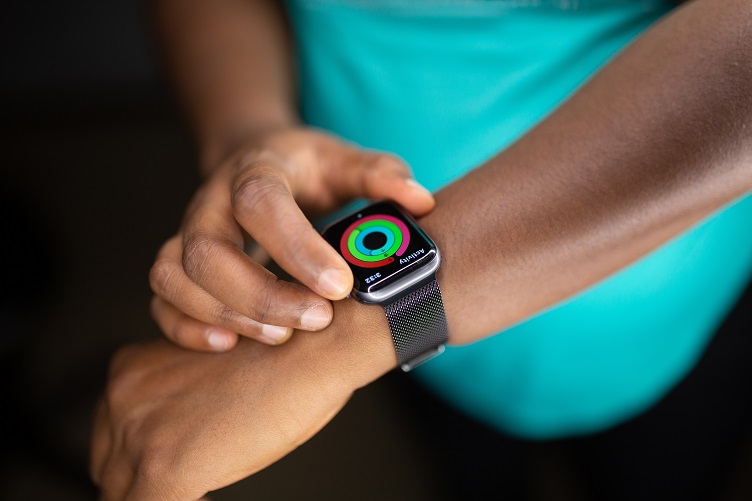
The recently unveiled Apple Vision Pro headset ushers in a new era for wearable technology. This cutting-edge device seamlessly integrates virtual images with live video, revolutionizing the way we perceive and interact with the world. At its core, the power of 5G connectivity plays a pivotal role, providing unparalleled data transmission speeds and minimal latency. This transformative fusion of reality and augmented reality (AR) is made possible by the power of 5G, presenting exciting possibilities for the future of wearables.
Coinciding with this groundbreaking development, Qualcomm's announcement of new processors, engineered specifically for small/medium form factor devices, suggests a paradigm shift in wearable technology. These processors extend 5G connectivity beyond smartphones to smartwatches, fitness trackers and headsets, unlocking a suite of novel innovations.
Revolutionizing wearables
The advent of 5G in wearables marks a remarkable turning point in the evolution of interconnected devices. 5G has the potential to achieve ultra-fast speeds of up to 10 Gbps, almost a hundred-fold increase compared to 4G, along with a massive network capacity enhancement.
The ability to process and transmit data in real-time will enable a host of new functionalities for wearables. This includes seamless streaming of high-definition content, providing immersive AR experiences, and making video calls without any lag. Real-time processing and transmission of data enable a host of new functionalities for wearables, including seamless streaming of high-definition content, immersive AR experiences and lag-free video calls.
The ultra-low latency of 5G, as low as 1 millisecond, ensures near-instantaneous data transmission, significantly enhancing wearables' potential for real-time monitoring fitness and health metrics. This opens up exciting possibilities for remote patient monitoring, advanced fitness tracking and enhanced personal safety features.
Consider, for example, a 5G-enabled smartwatch detecting heart rate irregularities and alerting healthcare professionals instantly, illustrating the potential for rapid and effective responses in critical health situations. Furthermore, the increased network capacity of 5G empowers wearables to manage extensive data, relevant for devices that rely on continual data collection and analysis. This capacity equates to comprehensive insights into personal health and wellness, fostering the development of tailored health experiences according to individual needs.
Wide-ranging impacts
The application of 5G on wearables extends far beyond personal health tracking and wellness, promising transformative implications across numerous sectors. In fact, the full economic effect of 5G is expected to be realized globally by 2035, supporting a wide range of industries and potentially enabling up to $13.1 trillion worth of goods and services. This 5G value chain (which includes OEMs, operators, content creators, app developers and consumers) is estimated to generate up to 22.8 million jobs over the next few years, or more than one job for every Beijing, China, resident.
In healthcare, 5G could revolutionize telemedicine by enabling real-time, remote patient monitoring, facilitating instantaneous communication between wearables and healthcare providers. Physicians would be able to diagnose and treat patients remotely with greater speed and accuracy, transcending geographical barriers.
In industries such as manufacturing and logistics, 5G wearables have the potential to optimize productivity, safety and operational efficiency through real-time tracking of personnel and assets. Wearable devices equipped with 5G connectivity can relay critical information on machine performance, triggering predictive maintenance and preventing costly downtime.
In the entertainment and gaming industry, 5G wearables could redefine user experiences. With low latency and high data speeds, 5G could enable immersive virtual reality (VR) and augmented reality (AR) experiences, changing how we game, consume content, and interact with virtual environments.
For athletes, 5G wearables that employ advanced sensors and algorithms to capture details of an athlete’s movements and biomechanics could provide real-time performance analysis and personalized training. The low latency of 5G ensures quicker transmission of this data, allowing for immediate analysis by staff and coaches to drive better athletic performance during training sessions or competitions.
The implementation of 5G-enabled safety wearables holds immense potential for professionals who work in hazardous jobs. In sectors such as mining, construction, and oil and gas, leveraging 5G connectivity can significantly reduce risks and add an additional layer of protection to prevent accidents, injuries and even fatalities. Real-time monitoring of environmental conditions and vital signs can alert both the wearer and supervisory personnel to potential hazards, ensuring a safer work environment.
For the average consumer, the integration of 5G technology into wearables may remove the day-to-day challenges from navigating traffic with AR glasses to making secure payments with a flick of the wrist. Contactless payment and the secure storage of banking data is still evolving and we’re looking at a more streamlined, convenient and efficient experience as 5G becomes more widespread.
Envisioning the future
The trajectory of 5G integration into wearables is likely to mirror the path we've seen with smartphones. Initially, flagship devices like high-end smartwatches and fitness trackers will incorporate 5G. As 5G matures and becomes more cost-effective, we can expect the integration into a broader array of wearable devices across various price ranges and styles. While Apple and Samsung seem to dominate the 5G device space, other tech companies like Tesla, Motorola, Google, Meta, OnePlus, Vivo, Oppo and Xiaomi are actively working toward innovation in this field, as well. Collaborations among tech companies, manufacturers of wearables, and mobile network operators must continue to create new use cases and functionalities to expedite this adoption.
Final thoughts
As we stand on the brink of a new era for wearables, the arrival of Qualcomm's 5G-specific processors marks a remarkable shift in the landscape of connected devices. The power of 5G is set to redefine the capabilities of wearables by offering unparalleled speed, connectivity and possibilities for devices such as Apple's Vision Pro.
With technology advancements progressing rapidly and the 5G ecosystem maturing, we are approaching an era where wearables integrate seamlessly with 5G power. This convergence will likely deliver transformative experiences and empower individuals to lead healthier, more connected lives. As we eagerly await their arrival, the potential for innovation appears limitless.
Additional resources
These sources provide information on the role of 5G in the development and use of wearables in the future.
- "Qualcomm Introduces the World's First 5G NR Light Modem RF System" — Qualcomm's official press release announcing their new processors designed for small/medium form factor devices.
- "Understanding 5G" — An article providing insights into the capabilities and potential of 5G technology, including low latency and real-time data transmission.
- "The 5G Era: New Horizons for Advanced Electronics and Industrial Companies" — A publication by McKinsey & Company exploring the transformative impact of 5G on various industries, including wearables.
- "How 5G Improves Construction Safety" — An article by T-Mobile highlighting the potential of 5G-enabled safety wearables in enhancing workplace safety in industries such as construction, mining, and oil and gas.
- "The Impact of 5G on the Fitness Industry" — An article discussing the benefits of 5G wearables in the fitness industry, particularly in real-time performance analysis and personalized training for athletes.
About the author
Emily Main holds a J.D. in in Compliance Law and a BS in Telecommunications. With extensive experience in 5G and digital networking, Main has contributed to numerous publications and conferences, exploring the technical challenges, innovations, trends and applications of 5G technologies and related networking systems. Passionate about RF communications and networking, she is dedicated to sharing the latest advances in the field.
