Sponsored Content
Industrial Electronics
Power sensors for accurate near-field wireless product testing
26 April 2023
Accurate testing of near-field wireless products is essential in our increasingly complex, interconnected world. With the proliferation of communication protocols and ever-evolving mobile technologies, there has never been a greater need for precision testing. Therefore, it’s no surprise that power sensors have become invaluable in validating device performance and connectivity.
The Friis transmission formula for near-field testing
The Friis transmission formula is a powerful tool for near-field testing, providing an accurate calculation of the received power (Pr) at the terminals of a receive antenna, at some distance away from a transmitting antenna. This formula takes into account both the gain of the two antennas (Gt and Gr), as well as the frequency f and distance R between them. It can be expressed in simple mathematical notation as:
PR = PTGTGRc2/(4πRf)2
Put simply, this equation calculates how much power will be received by an antenna when it receives signals from another source. This information is used to determine if an antenna needs to be moved closer or further away to achieve optimal performance.
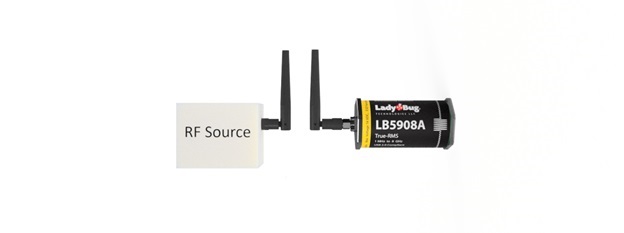 Figure 1: Power sensors have become invaluable in validating device performance and connectivity. Source: LadyBug Technologies
Applications of power sensors for near-field testing
Power sensors are an ideal way to conduct near-field testing due to their simple implementation and precise measurements. As they have a vast dynamic range of voltage and current detection, these sensors can be utilized for many purposes.
Antenna gain and near-field to far-field correction
This method includes positioning a power sensor a fixed distance away from the antenna and measuring the power radiated by the antenna in its near-field region. The power sensor is then connected to a measuring system and moved away from the antenna until it is in the far-field zone in order to obtain the data necessary to compute the antenna's gain. This data is critical because an antenna's gain dictates how successfully it can broadcast or receive signals due to its strength.
Efficient pass or fail testing for wireless devices
A power sensor can be attached to the terminal of the wireless device under test and placed in a certain position to establish a connection and measure the power compared to a predetermined threshold value. If the output power received by the sensor exceeds the threshold, the device is considered to have passed the test. If the output power is less than the threshold, the device has failed the test.
Antenna adjacency in manufacturing environments
Power sensors in this scenario are deployed at fixed places around the antenna under test. The power readings from the sensors are then used to determine whether or not there is interference between the antenna under test and the surrounding antennas. If interference is observed, the placement or orientation of the antenna under test can be adjusted to minimize interference.
Verifying a Wi-Fi board transmitted signal in manufacturing
A power sensor can also be linked to the Wi-Fi board's output and configured to measure the power of the Wi-Fi board's transmitted signal, and the measurement results are compared to the required parameters. The Wi-Fi board passes the test if the power of the transmitted signal satisfies the required parameters. If the power of the sent signal falls below the acceptable parameters, the Wi-Fi board can be adjusted to increase its performance.
Near-field test fixture requirements
When designing a near-field test fixture, there are several important factors that need to be considered to ensure accurate and consistent results.
Spacing between antennas
The first consideration for a near-field test fixture should be antenna spacing. For near-field testing, a separation of one inch is generally recommended. It is vital to note, however, the final sensitivity of the measurement at the selected distance must be characterized to ensure repeatable results.
Distance from interfering objects
Another crucial consideration is the distance between interfering objects. To achieve reliable measurements, the antenna should be placed at least four inches away from any sources of interference. This will aid in reducing the effects of any electromagnetic interference present in the testing environment.
Device and fixture relative antenna orientation
Considering the relative orientation of the device and fixture antennas is significant because the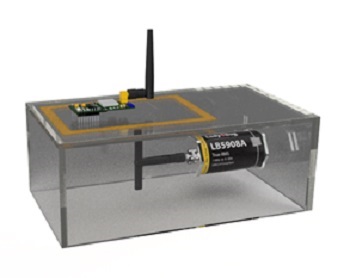 Figure 2: Power sensors have revolutionized near-field wireless product testing. Source: LadyBug Technologies measurement instrument should not be positioned on a null of the device under test. In other words, the measurement should be done at the point where the device emits the most energy.
Optional correction factor
The measurement data can be subjected to an optional near-field to far-field adjustment factor. This correction factor, which is typically a few dB, is used to adapt measured data from the near-field to the far-field region. This correction factor is significant because it accounts for the antenna's radiation pattern changing as it moves from the near-field to the far-field region.
Conclusion
Power sensors have revolutionized near-field wireless product testing, allowing designers to obtain more precise measurements to better fine-tune their products. With a few days set aside for careful consideration and testing, power sensors allow for the production of higher quality and more reliable wireless systems.
LadyBug Technologies
LadyBug Technologies is a leading provider of high-performance, ultra-precise U.S. National Institute of Standards and Technology (NIST) traceable microwave test and measurement instrumentation. Its products are designed for use in a wide range of industries, from automotive and aerospace to biomedical and defense applications. The company’s core competency lies in the design, manufacture and assembly of vector network analyzers, spectrum analyzers, power meters, microwave sources and associated components.
LadyBug's products require no zero, no calibration and are thermally stabilized. This ensures the highest level of accuracy during operation with minimal adjustments needed over time due to changes in temperature or environment.
To learn more about LadyBug Technologies, their power sensor offerings and to find helpful product support documents visit their website here.
Powered by CR4, the Engineering Community
Discussion – 0 comments
By posting a comment you confirm that you have read and accept our Posting Rules and Terms of Use.
Advertisement
Advertisement
Popular News
Find Free Electronics Datasheets

Advertisement