
One key to getting the maximum value from automated test equipment (ATE), as custom-engineered test solution provider Circuit Check points out in a recent blog post, is being able to use the same equipment and fixtures to test multiple products. For Circuit Check, this is achieved by the 1000 Series ATE, a configurable, modular test rack architecture platform that can utilize a variety of industry-standard mass interconnect interfaces and interchangeable fixturing.
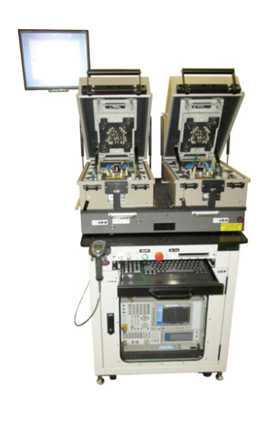 The 1000 Series ATE is a configurable, modular test rack architecture platform. Source: Circuit CheckThe stand-alone system can be configured for manual testing, a fit for individual board development, or with a pneumatic fixture for testing in larger quantities. Either option uses 14U of rack space, which includes a rack-integrated keyboard; a 15U model with a swing-arm monitor and keyboard is also available.
The availability of interchangeable fixture drop-ins allows for cost reduction: The same system can be quickly reconfigured with new tooling for the different products of a product family. The 1000 Series fixtures support topside, bottom-side, bi-level and dual-stage probes, as well as through-connector testing. Traditional, VXI and PXI instrumentation are also supported.
Perhaps most importantly, the system’s modular design allows for ease of maintenance and redeployment as test system needs change.
According to the company, each 1000 Series includes:
- 24-inch racks to allow for easier component access
- Removable side panels to allow for additional hardware
- Interposer boards to lower costs and improve reliability
- A solid hard-coated aluminum top plate to allow for larger fixtures, rigid mounting of brackets and bar code readers/printers
- Slide plates to ease fixture change-out and mass interconnect alignment
The list of potential applications for the 1000 Series is significant, spanning multiple categories: RF and smart meter, infotainment (including AM/FM, HD and SiriusXM radio), medical device testing, and programming. Example applications include PCB- and unit-level functional testing; RF signaling and non-signaling testing; communication protocol testing; boundary scan testing; high-speed digital testing; component-level testing; vision inspection; product flash programming; and product calibration.
Headquartered in Maple Grove, Minnesota, the company said that it supports all aspects of the system development process including electrical and mechanical design, software development, fabrication, system integration, deployment and support.
