Sponsored Content
Consumer Electronics
How miniaturized precision resistors serve modern applications
02 March 2023
It is increasingly desirable for precision resistors to be low-ohmic to achieve higher power densities with a smaller footprint and higher current handling capabilities. Two key characteristics of quality shunt resistors are a low temperature coefficient of resistance (TCR) and good thermal conductivity. TCR is vital to accurate current measurements and thermal conductivity is essential for maintaining lower board temperatures.
However, with the decrease in size and resistance, is it still possible to withstand the potentially high application loads and still maintain long-term stability? As it turns out, it is with carefully chosen metal alloys and an optimized construction.
Isabellenhuette specializes in manufacturing precision resistors where the unique production of current sense resistors such as the BVN, WAx, FMx and CMx are designed with the lowest resistance levels in the market — down to 300 microohms. Excellent thermal conductivity of the resistance materials are achieved, combined with extremely low resistance levels that allow for power ratings up to 7 W.
Low-ohmic resistor considerations
In an ideal world, current sensing would be as simple as Ohm’s law; however, both the voltage measured on the resistor and the real resistance value are the result of several complex factors. The voltage measured across the resistor is substantially influenced by temperature (both environmental and generated heat from the measured load). While it is important to reduce board temperature using components with good thermal conductivity to dissipate as much heat onto the terminals as possible, the TCR has a high influence on the overall measurement.
Optimizing layout and choosing the right resistor
The TCR of copper traces on the PCB are 4,000 ppm per degrees Celsius while the TCR of Isabellenhuette’s precision resistors is in the range of 20 ppm to 50 ppm. This nearly 80-fold improvement in TCR can greatly impact the precision of the current measurement as the component heats up. The issue of TCR and contact resistance is essentially bypassed with the Kelvin principle measurement where four leads are used instead of two. In this topology, one pair of leads injects the measurement current while the second pair of leads measures the voltage drop across the device, uninhibited by the negative effects of TCR, maintaining a stable resistance value despite thermal strain.
A four-terminal resistor is not required to use the Kelvin configuration; the PCB can be designed so that the copper traces add a four-terminal connection to a two-terminal resistor (Figure 1).
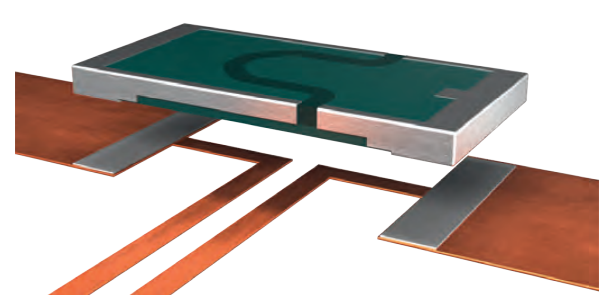 Figure 1. Four-terminal connection on PCB to perform the more accurate Kelvin principle for current sensing. Source: Isabellenhuette
Layout is critical in order to effectively measure current. The symmetry, size and thickness of the traces, and the physical point of measurement will all immensely impact measurement values. The traces on the board must sit as close to the resistive element’s edge as possible. If the traces are just a bit farther apart from each other than they should be, an entirely different current value will be measured. The symmetry of the design is important where the center of the traces should be as close to the center of the alloy as possible.
Resistor optimization
As previously stated, the lower the resistance values go, the more the measurement can be affected by temperature fluctuations. This is mitigated by selecting a high-quality precision resistor with a low TCR. This would allow for accurate measurements across the resistor at high temperatures. The higher power rating of Isabellenhuette resistors also means that the current flow can be increased if a higher board temperature is allowed (Figure 2). These characteristics ultimately assist in integrating it in the end-application with minimal redesign.
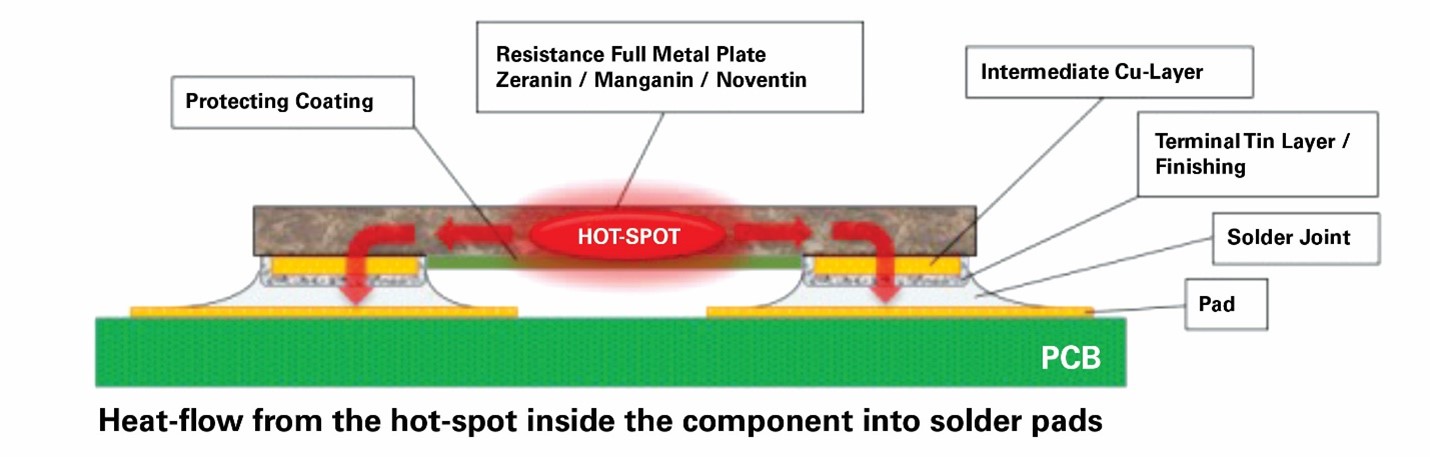 Figure 2. Isabellenhuette uses a copper-specific resistance alloy and an optimized structure for a low internal thermal resistance to optimize heat dissipation. Source: Isabellenhuette
Applications of miniaturized, low-ohmic current sense resistors
E-mobility
The electric drives in smaller electromobility applications such as e-bikes, electric motorbikes and flying vehicles rely on low-ohmic, small form factor current sense resistors to meet size and weight requirements. The electric drive must include the battery management system (BMS) to measure battery diagnostic parameters, including state of charge (SoC), state of health and state of function for active and passive balancing of the internal battery cells. Determining the SoC requires a precise and high resolution total current measurement.
The battery current first flows through the shunt resistor, developing a small voltage proportional to the current. A current sense amplifier then increases this small voltage to a level that the BMS can use to measure the current. A low-ohmic resistor yields high resolution measurement, allowing users to determine currents in the milliamps range and detect standby currents or leakage currents. Isabellenhuette’s BVN series of four-terminal power resistors have resistance values as low as 0.3 milliohms, have a 5 W power rating and are capable of withstanding constant current up to 100 amps, making these ideal in power dense, small form factor e-mobility.
Buck-boost converters for USB charging
Another space-constrained application is chargers for consumer and automotive electronics with power supplies ranging from 5 V to 12 V; one of the most common is USB charging. The most recently released USB-C standard has grown in popularity with its symmetric connector design and relatively fast speeds.
In this application, the current sensing circuitry detects overload occurrences (e.g., overvoltage, overcurrent) and assists with input current regulation for a fast-charging solution. As a result, these current sense resistors must be able to withstand a high pulse power. With a 1206 footprint available, Isabellenhuette’s FMK and CMK resistors can be readily integrated into these designs without consuming a great deal of precious board space. Considering its small package, the CMK current sense resistor has a high-rated power of 4 W for a high power-to-size ratio with excellent long-term stability. The flat construction of both resistors adds little parasitic inductance, minimizing any performance degradations during switch mode.
Isabellenhuette
Isabellenhuette specializes in creating robust resistors that withstand high pulse powers, high continuous currents while maintaining a small surface mount footprint on the PCB. This can ease thermal- and space-based design constraints for engineers that require high resolution current sensing. For more information and to contact Isabellenhuette, visit their website.
Powered by CR4, the Engineering Community
Discussion – 0 comments
By posting a comment you confirm that you have read and accept our Posting Rules and Terms of Use.
Advertisement
Advertisement
Popular News
Find Free Electronics Datasheets

Advertisement