Researchers from the University of Bath, U.K., and FIFA Medical Centre of Excellence, Portugal, found that virtual reality (VR) could be a helpful tool to improve balance and prevent falls in older adults, a leading cause of non-fatal injuries in people over 65. Currently, testing for balance and improving walking skills is not performed in real-world situations and can be dangerous.
Balance is currently assessed through surveys and physical tests, like using a treadmill or testing agility when performing specific movements. The accuracy of these tests can be affected by age, sex and motivation and are not always reflective of real-world scenarios.
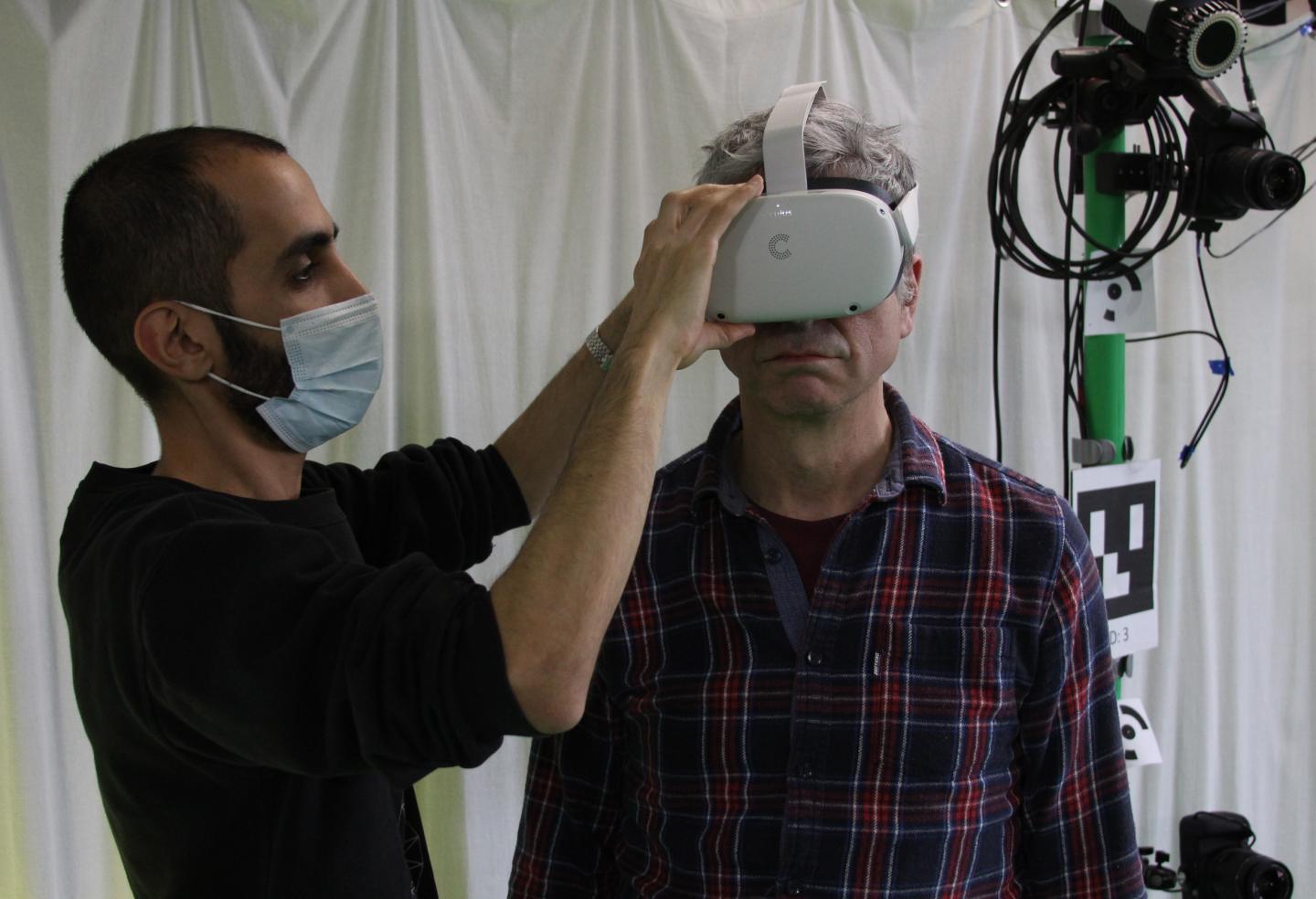 A volunteer is fitted with a VR headset. Source: University of Bath
VR has been used as a balance testing tool in past studies. Its viability as a medical tool was gauged in a review of 19 studies that used VR to help balance. The validity, reliability, safety, feasibility and efficacy of VR for assessing and training balance in older adults was evaluated.
The team found that VR is effective in assessing balance and is a useful tool for fall prevention and for improving postural gait and patterns. VR systems have the capacity to differentiate between healthy and impaired balance.
While it is difficult to replicate real-life situations in the lab or a doctor’s office, VR testing would open up a range of more natural testing scenarios. Patients could be asked to cross a virtual street or navigate a maze while doing cognitive tasks. VR scenes could be adapted to help patients gradually improve their balance and confidence. Disorienting effects could be added to make tasks more challenging and elements could be resized or removed to test how patients maintain balance.
During VR versions of traditional tests, older adults were more cautious and took more time to complete tasks. But they also reported finding the tasks more enjoyable, which could encourage them to stick to their recovery timeline.
Overall, the researchers say that VR has great potential, but work needs to be done before it can be widely used. Some improvements include checking parameters, finding the most effective scenarios and reducing problems with motion sickness.
This study was published in Frontiers in Sports and Active Living.
