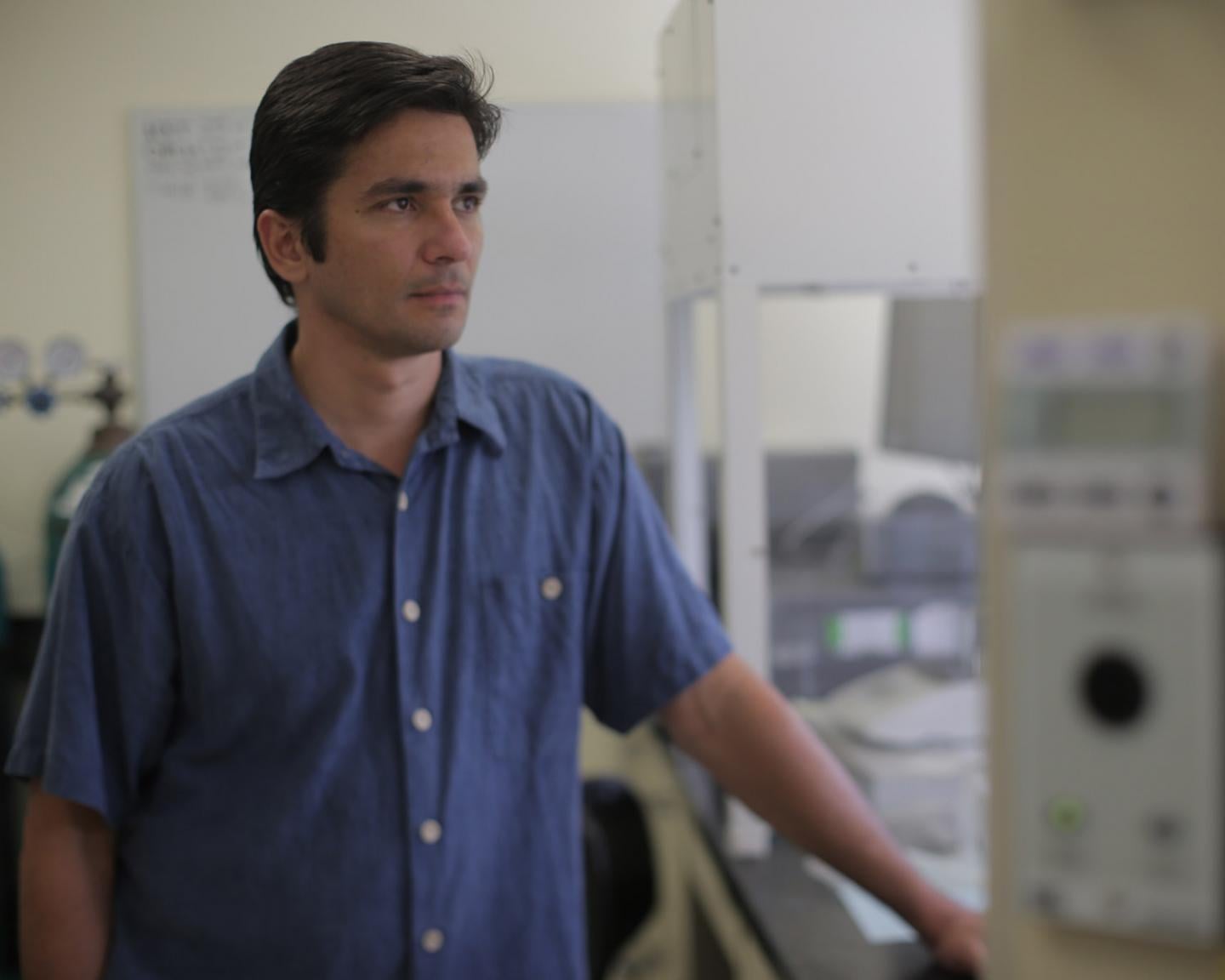
 Camilo Mora, associate professor of geography, College of Social Sciences, University of Hawaii at Manoa. Source: UH College of Social SciencesThe recent report from the Intergovernmental Panel on Climate Change (IPCC) concluded that the difference between the planet warming 1.5° C and 2° C above pre-industrial levels is considerable in measures such as sea-level rise and the loss of coral reefs. Research from the University of Hawaii at Manoa shows that bitcoin and other cryptocurrencies are likely to raise the Earth's temperature by more than 2° C in just over two decades, or sooner if they are adopted at rates similar to other new technologies.
Bitcoin exists only in the realm of encrypted, digital transactions which involve sophisticated algorithms that create a distributed ledger, known as the blockchain. Transactions are verified when a cryptographic hash function is solved. Whoever solves the function receives a small payment. Miners, as they are called, try to solve as many equations as possible to get those payments. This requires an enormous amount of computing power and lots of electricity.
The study also looked at society's adoption of other technologies to assess the cumulative emissions generated by bitcoin if it grows at a similar rate.
"We cannot predict the future of bitcoin, but if implemented at a rate even close to the slowest pace at which other technologies have been incorporated, it will spell very bad news for climate change and the people and species impacted by it," said Camilo Mora, associate professor of geography in the College of Social Sciences at UH Manoa and lead author of the study.
"With the ever-growing devastation created by hazardous climate conditions, humanity is coming to terms with the fact that climate change is as real and personal as it can be," added Mora. "Clearly, any further development of cryptocurrencies should critically aim to reduce electricity demand, if the potentially devastating consequences of 2°C of global warming are to be avoided."
The study is published in the journal Nature Climate Change.
