
Skyworks announced the release of SKY68020-11, an LTE-M/NB-IoT front-end solution for low-power, low-data-rate internet of things (IoT) applications. This advanced multi-band front-end module is system-on-chip (SoC) agnostic and designed to meet the most difficult network operator band specifications, including harmonic performance across stringent protocols. The device also supports 20 LTE bands, enabling single SKU designs to cover future LTE-M/NB-IoT requirements.
The hybrid, multi-band multi-chip RF front-end (RFFE) module supports cellular LTE M/NB-IoT (half-duplex system) transceiver platforms. The module integrates the entire RF front end necessary for more than 20 LTE bands, for products including Rx low-pass filters, broadband PA with bias controller, Tx low-pass harmonic filters, antenna switches and MIPI RFFE controllers.
Transmitter Section
The PA load-line is optimized for high efficiency while simultaneously meeting 3GPP ACLR and emissions 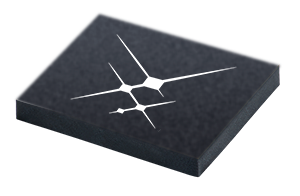 Source: Skyworksmask specifications with LTE up to 6 RB. An integrated LPF is implemented to reject the PA and transceiver harmonics while at the same time minimizing any post PA loss for an optimized transmit current consumption. Out-of-band emissions performance is emphasized by the design to be 3GPP-compliant for low-band and mid-band frequencies.
Receiver Section
Low-pass filters are integrated into the module along with the necessary matching to yield a 50 Ω single-ended impedance for the antenna and Rx ports. The filters provide a high level of rejection to out-of-band interferers, protecting the transceiver from high blocking signal levels and to support 3GPP LTE blocking test conformance. The Rx low-pass filters are cascaded with the low throw count switch to establish a lower insertion loss and noise figure than conventional LTE receivers.
Auxiliary Paths
The two AUX ports are additional broadband ports that can be used symmetrically for either Tx or Rx operation. The AUX ports can support conventional GSM power levels.
Smart Biasing
For most IoT applications, the DC-DC converter might not be available to control the VCC supply of the PA. With a fixed DC supply, smart biasing allows for easy power control through the MIPI interface by programming reduced bias current for lower gain states. Based on the application, a set of four to six different bias conditions with specific fixed-gain steps are predefined. For each of the steps, the transceiver output power can be adjusted to meet the desired total output power.
The key advantages of the smart biasing scheme are:
- Saving current consumption during lower output power operation
- Easy programming of fixed-gain steps through the MIPI interface
- Reducing the required output dynamic range of the transceiver
MIPI RFFE Controller Interface
The SKY68020-11 functional operation is fully controllable by a single MIPI interface, which is used to drive the PA in various optimized bias modes as well as providing band selection and controlling the antenna switch Tx, Rx and band selection.
