
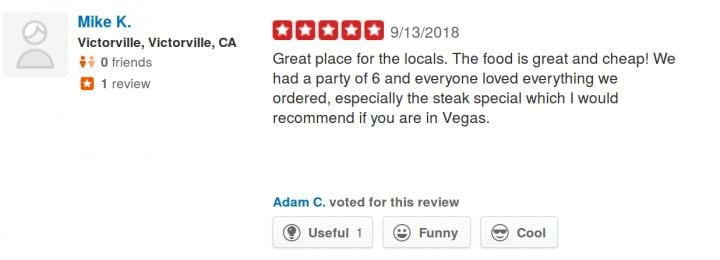
 This review is a fake created by the researchers' AI model, made to imitate the review layout on Yelp. No fakes were posted online in the study. Source: Aalto University
Consumers depend highly on reviews from sites like Yelp or Amazon. Nine out of ten people diligently read and trust reviews when attempting to decide on a purchase. Glowing reviews can make people spend 30 percent more than they originally planned. But a problem with depending on reviews is that fake ones are everywhere. Reviews made by a computer system or algorithm are a big problem for consumers, and because of our ever-evolving technology, they aren’t going anywhere.
Aalto University and Chicago University researchers have created an artificial intelligence (AI) algorithm that can produce and detect false reviews better than people can.
“Misbehaving companies can either try to boost their sales by creating a positive brand image artificially or by generating fake negative reviews about a competitor. The motivation is, of course, money: online reviews are a big business for travel destinations, hotels, service providers and consumer products,” says Mika Juuti.
The AI model learned from a dataset of three million real restaurant reviews from Yelp. After the model was trained, it then could generate fake reviews of its own.
The AI-generated fake reviews aren’t without their problems. The system has a hard time staying on topic about one place or one restaurant, making it obvious that the review is fake. To combat these issues, the researchers used a technique called neural machine translation. The system was given a text sequence of “review rating, restaurant name, city, state, and food tags” and then the system could create more believable reviews.
“In the user study we conducted, we showed participants real reviews written by humans and fake machine-generated reviews and asked them to identify the fakes. Up to 60% of the fake reviews were mistakenly thought to be real,” says Juuti.
Once the AI model could create believable reviews, the team created a classifier for the model. The model could then be used to detect fake reviews. After testing, the model was proven to be more accurate at detection than human evaluators. With this model, restaurants and other companies could detect and then delete fake reviews that are negatively impacting business.
You can access the paper on this AI model on the Cornell University website.
