
Endeas has developed an innovative method for measuring steady-state I-V curves in photovoltaic (PV) cells and modules using a flash tester. The novel method enables accurate measurement of the maximum power and other I-V parameters in even the highest efficiency PV technologies using a short flash pulse. The method is included in the acclaimed QuickSun 600 all-in-one module testing station and other current solar simulator models from Endeas.
Many solar simulators currently in production have limited accuracy when measuring I-V curves and maximum power of high-efficiency PV modules, such as PERC, and especially HJT or IBC. This inaccuracy is caused by charging the cells, which leads to a significant underestimation of the maximum power by typical flash testers. While the flash pulse length can be increased, this is expensive and comes with additional problems, such as heating of the module during measurement. The new method by Endeas, called Capacitance Compensation (CAC), reliably measures the steady-state I-V curve and maximum power of any PV cell or module based on a single flash pulse of only 40 ms.
The CAC method is based on measuring the capacitance — ability to store electric charge — of the tested device during the flash pulse. This capacitance is then taken into account in processing the measurement data, resulting in more accurate steady-state I-V curves and maximum power measurements.
The Capacitance Compensation method will be presented at the EU PVSEC conference in Brussels on September 24, 2018, by Dr. Henri Vahlman, a scientist at Endeas. Endeas employees will also be available for discussion at their booth (number D4 in hall 2) throughout the conference.
More information on the Capacitance Compensation method can be found on the Endeas website.
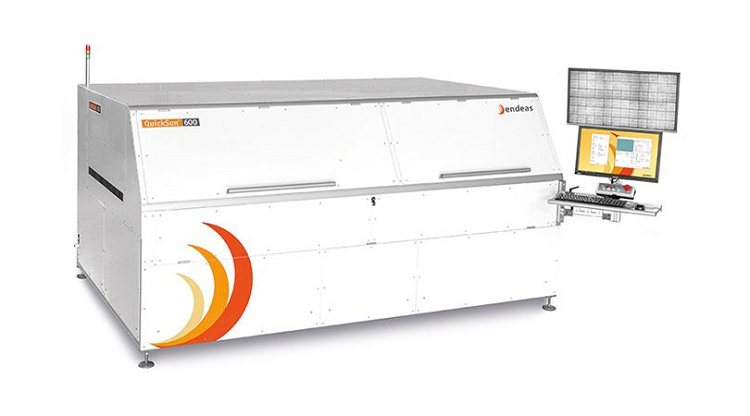 Source: Endeas
