
Underwater robots have confirmed the presence of a growing “dead zone” — an area devoid of oxygen — in the Arabian Sea.
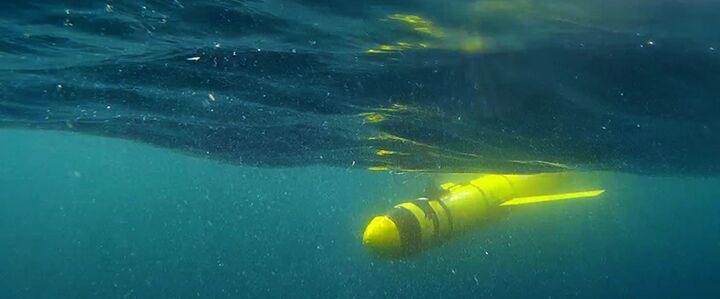
As part of a research project led by the University of East Anglia (UEA), “Seaglider” robots about the same size as a human diver were deployed into the Gulf of Oman. There, they were able to reach depths of 1,000 meters and travel for months collecting data over thousands of kilometers. Most significantly, the Seagliders were able to reach areas of water that piracy and geopolitical tensions previously had made inaccessible.
What they found was certainly not good news for the environment: an area larger than Scotland with almost no oxygen left.
Research leader Dr. Bastien Queste, of UEA’s School of Environmental Sciences, says that the dead zones are a “disaster waiting to happen.” While such zones occur naturally in some parts of the world at depths between 200 and 800 meters, he adds, they are “made worse by climate change, as warmer waters hold less oxygen, and by fertilizer and sewage running off the land into the seas.”
According to Queste, the Arabian Sea is the largest and thickest dead zone in the world. But until now, the dangers of collecting data there caused the extent of the problem to be unknown; barely any data has been collected in the area for nearly 50 years.
"Our research shows that the situation is actually worse than feared — and that the area of dead zone is vast and growing. The ocean is suffocating."
"Of course all fish, marine plants and other animals need oxygen, so they can't survive there. It's a real environmental problem, with dire consequences for humans too who rely on the oceans for food and employment.”
Because the dead zones move up and down between seasons, fish are squeezed into a thin layer near the surface. According to Queste, management of the fisheries and ecosystems of the western Indian Ocean will depend on a better understanding and forecasting of oxygen levels over the coming decades.
The data gathered by the Seagliders was communicated by satellite and combined with a very high-resolution computer simulation. This allowed the researchers to build an underwater picture of oxygen levels and the ocean mechanics of oxygen transport. It should be noted, however, that such simulations have a difficult time representing small but important features that impact how oxygen is transported, such as eddies.
Still, the lack of oxygen has another consequence as well: dramatic changes in the chemical cycling of nitrogen, a key nutrient for plant growth. The absence of O2 means the production of N2O — nitrous oxide, a greenhouse gas 300 times more potent than carbon dioxide.
