
AkzoNobel is developing a biocide-free fouling prevention technology that uses ultraviolet light-emitting 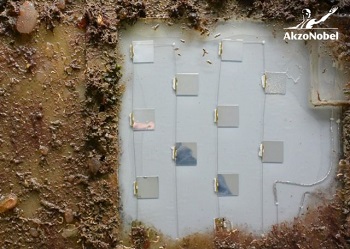 The innovation will integrate UV-LEDs in a protective coating scheme that will allow for the UV light to be emitted from the coating surface. Source: AkzoNobeldiodes (UV-LEDs). The solution uses underlying technology developed by Royal Philips and will be applied to underwater surfaces to eliminate fouling growth.
The innovation will integrate UV-LEDs in a protective coating scheme that will allow for the UV light to be emitted from the coating surface, providing total prevention of biofouling accumulation on the surface of the protected area.
The total control of biofouling represents a substantial economic and environmental benefit, and when realized, the impact of this new technology on vessel owners and operators will be hugely significant. Initially, the focus will be on applications for ships, yachts and offshore assets, but the project could potentially be extended to include other surfaces challenged by bio-fouling issues.
AkzoNobel has long been a frontrunner in developing sustainable marine coatings, having introduced the industry’s first biocide-free antifouling coating, Intersleek, in 1996. The product has since helped ship owners to save over $3 billion of fuel and 32 million tons of carbon dioxide.
