
New ultrathin graphene-oxide membranes allow solvents to pass through while still blocking out very small particles, a key development in filtration technology. The development could impact research involving salt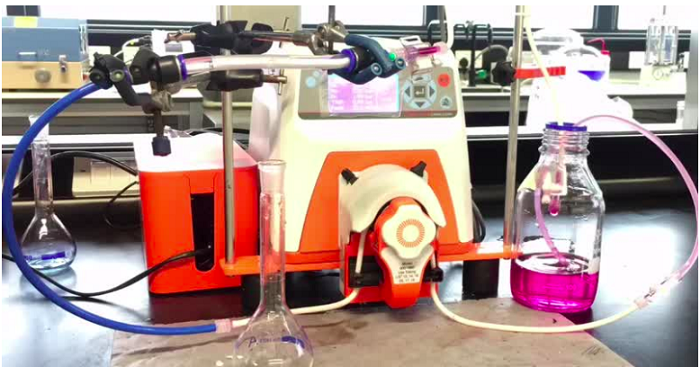 New ultrathin graphene-oxide membranes allow solvents to pass through while still blocking out very small particles. water desalination as well as organic solvent nanofiltration, which separates charged or uncharged organic compounds from an organic solvent. Graphene can be hydrophobic and hydrophilic, is stronger than steel while being flexible and is thinner than a human hair by one million times.
A research team led by Professor Rahul Nair at the National Graphene Institute and School of Chemical Engineering and Analytical Science at The University of Manchester developed the ultrathin membranes. The new graphene-oxide membrane is highly stable; many of the existing polymer-based membranes are unstable in organic solvents.
As an example, Manchester scientists demonstrated that graphene-oxide membranes can be designed to completely remove various organic dyes as small as a nanometer dissolved in methanol. The new membranes filter out small molecules and also increase filtration efficiency by boosting the flow rate of the solvent. The new separation process will also reduce the consumption of energy.
The team even filtered whisky and cognac through the graphene-oxide membrane. The membrane allowed the alcohol to pass through, while removing the larger molecules that gives the alcohol its amber color. The scientists reported that the clear whisky smelled similar to the original, but added they did not drink it in the lab, so no taste test information was immediately available.
