A new material developed at the University of Utah can generate electricity thermoelectrically. The electricity could be sufficient to charge a cell phone or heat a pot in a few hours.
The thermoelectric effect describes energy generation due to a temperature d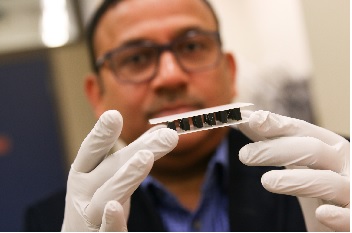 Professor Ashutosh Tiwari. Image credit: Dan Hixson/University of Utah College of Engineeringifferential in a piece of material. If one end is hot and the other is cold, charge carriers move through the material from the hot to the cold end. This generates electricity, even if the temperature differential is less than one degree.
Scientists have searched for years for a material that could efficiently generate a usable amount of electricity. Previous attempts have used ingredients, like cadmium, that are toxic to humans.
The Utah researchers, led by Ashutosh Tiwari, created a material that is non-toxic, electrically efficient, inexpensive and eco-friendly. Tiwari foresees multiple applications for this invention.
For example, in energy-poor developing countries, fire from cooking or heating stoves could be converted to usable amounts of electricity. Similarly, waste heat from power plants could be reused, recapturing value from the estimated 60 percent of energy wasted in these plants. Airplanes could use cabin heat and the cold air outside to generate electricity.
Tiwari’s team will initially develop the material to use in automobiles and biosensors.