
In 2025, Americans used a record 159.3 trillion megabytes of wireless data, more than the entire 4G decade combined, according to new research from wireless communication trade association CTIA.
The growth in data in 2025 was 20% more than 2024 and a 60% spike from two years ago, CTIA said.
And data use shows no sign of slowing with wireless data being used to power everything like wearables, digital streaming services, healthcare, home appliances and more.
CTIA said the record data use is a result of wireless playing a role in everyday life and this data demand is expected to grow by four times by 2032 as AI will demand even more from wireless networks.
AI is growing faster than traditional wireless traffic by as much as three times and is poised to consume about one-third of all broadband traffic by 2034, CTIA forecasts. This will likely upend traditional traffic patterns, cause for the release of more licensed spectrum and continued investment in infrastructure across multiple industries.
Wearables now part of daily life
According to the CTIA, in 2025, about 46% of all devices on networks were something other than smartphones. This includes devices like:
- Smartwatches
- Fitness monitors
- Glucose monitors
- Healthcare devices
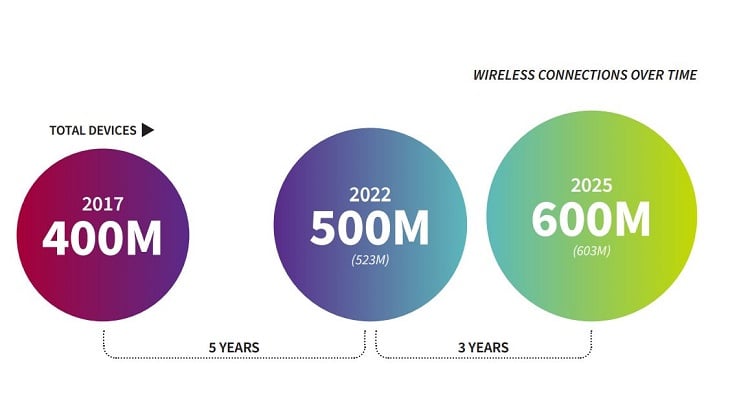
The U.S. now supports about 604 million wireless connections, about 1.8 connections for every member of the population.
CTIA said wearables also show no sign of slowing as critical infrastructure and other industrial sectors are increasingly relying on connected sensors and other wireless devices to improve safety, efficiency and performance.
As AI moves into the physical world — into robots, autonomous vehicles, intelligent devices, home appliances and more — the number of wireless connections will hit new records, the organization said.
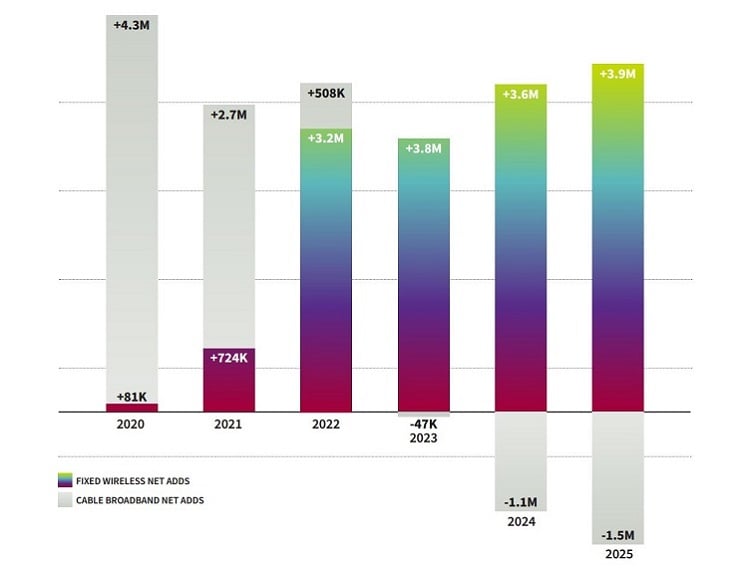 FWA subscriber growth compared to cable broadband growth. Source: CTIA
FWA rising
Meanwhile, fixed wireless access (FWA), otherwise known as 5G wireless broadband, is continuing to capture a larger part of the home connections market.
FWA operators are using lower prices to entice consumers moving away from traditional cable or satellite broadband. CTIA said 2025 was the fourth consecutive year where virtually all home broadband growth came from FWA.
Specifically, the cable industry lost about 1.5 million wired broadband subscribers in 2025 as FWA gained more than 3.9 million subscribers. In total, 16 million Americans now use 5G cellular networks for home broadband.
Learn more about the CTIA’s findings in its 2026 Annual Survey Highlights.
