
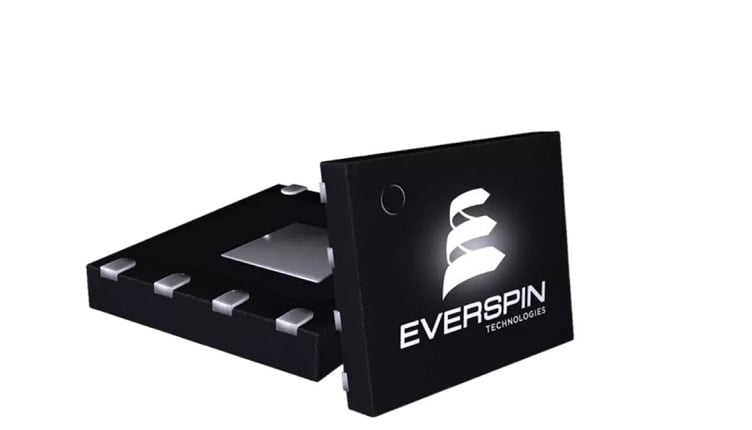
Teledyne HiRel Semiconductors will start offering Everspin Technologies Inc.’s magnetoresistive random access memory (MRAM) as part of its memory products portfolio to military and aerospace vendors in a new collaboration between the companies.
The move continues Everspin’s goal to expand its technology to the military and aerospace sectors through agreements with other semiconductor vendors. Earlier in 2026, Everspin signed an agreement with a vendor that was unnamed to provide MRAM technology for the U.S. defense industry. That deal would allow Everspin to become a provider for engineering and foundry services for the U.S. Department of War.
Under the Teledyne HiRel deal, the company would adopt Everspin’s 256 Mb PERSYST spin-transfer torque MRAM (STT-MRAM), a non-volatile memory that combines RAM-like speed with the ability to retain data through power-loss, system resets and interruptions.
Everspin said the target applications in the aerospace and defense sectors will be:
- Avionics
- VPX and single-board computer platforms
- Radar and electronic warfare payloads
- Satellite electronics
- Autonomous systems
- Other next-generation electronic solutions
Additionally, the deal will include other PERSYST STT-MRAM memory devices like the 64 Mb and 128 Mb options.
Everspin has been busy in 2026 ramping up MRAM after signing a 10-year deal with Microchip Technology to boost domestic memory manufacturing. That deal will augment Everspin’s U.S. manufacturing capacity for MRAM and tunnel magnetoresistive (TMR) sensor products. Microchip will establish an MRAM line to manufacture MRAM and TMR sensors at its fabrication facility in Oregon.
In addition to its PERSYST memory, Everspin also introduced its Unisyst MRAM that bridges traditional configuration memory and higher-density persistent storage. This will allow the Unisyst memory to challenge NOR flash memory in memory applications.
