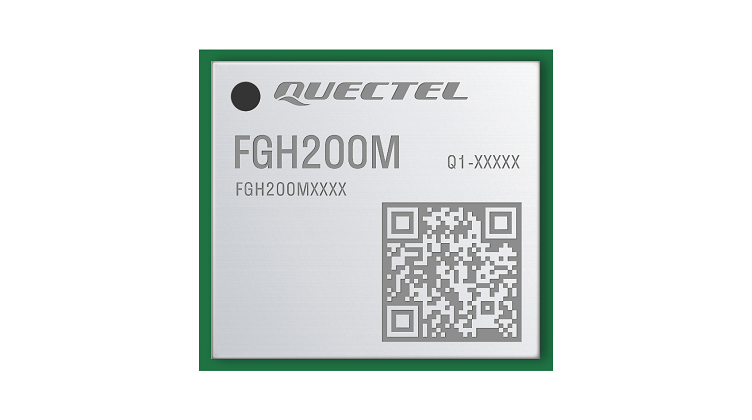
A new module from Quectel is integrating Morse Micro’s Wi-Fi HaLow system-on-chip (SoC), which has been cleared for mass production.
The module adds to a portfolio of Wi-Fi HaLow products for use across a range of internet of things (IoT) and edge AI applications like visual sensing, autonomous mobile robots and industrial IoT.
Quectel’s FGH200M module, using Morse Micro’s MM8108 SoC, passed FCC/IC/CE/RCM certification that offers Wi-Fi HaLow connectivity in a 11.0 mm x 10.0 mm x 2.0 mm module and is designed for the 850 MHz to 950 MHz frequency band and supports 1, 2, 4 and 8 MHz channel bandwidths.
Morse Micro said that the certification of the FGH200M module moves the Wi-Fi HaLow technology from concept to mass production that can be used in future connectivity applications that need to be tiny in size.
What is Wi-Fi HaLow?
Wi-Fi HaLow (IEEE 802.11ah) is a standards-based wireless technology that offers an alternative to other connectivity options, including low-power wide-area network (LPWAN) technologies such as LoRa (long range) and proprietary mesh systems
Wi-Fi HaLow combines range and power efficiency with bandwidth, IP-native compatibility and scalability for industrial networks.
The technology:
- Extends connectivity over distances of more than 1 km
- Reduces power consumption
- Connects more than 8,000 devices
- Penetrates walls, foliage and other obstacles using sub-GHz frequencies
- Integrates with existing IT infrastructure
- Secures communications with WPA3 encryption