A team at the University of Osaka has created a new artificial intelligence (AI)-powered technology to better control cyborg insects.
According to its developers, the Insect Synergy Circuit (ISC) works jointly with insects’ internal physiological signals instead of commanding their movements, thus representing a shift in how bio-hybrid systems interact with living organisms.
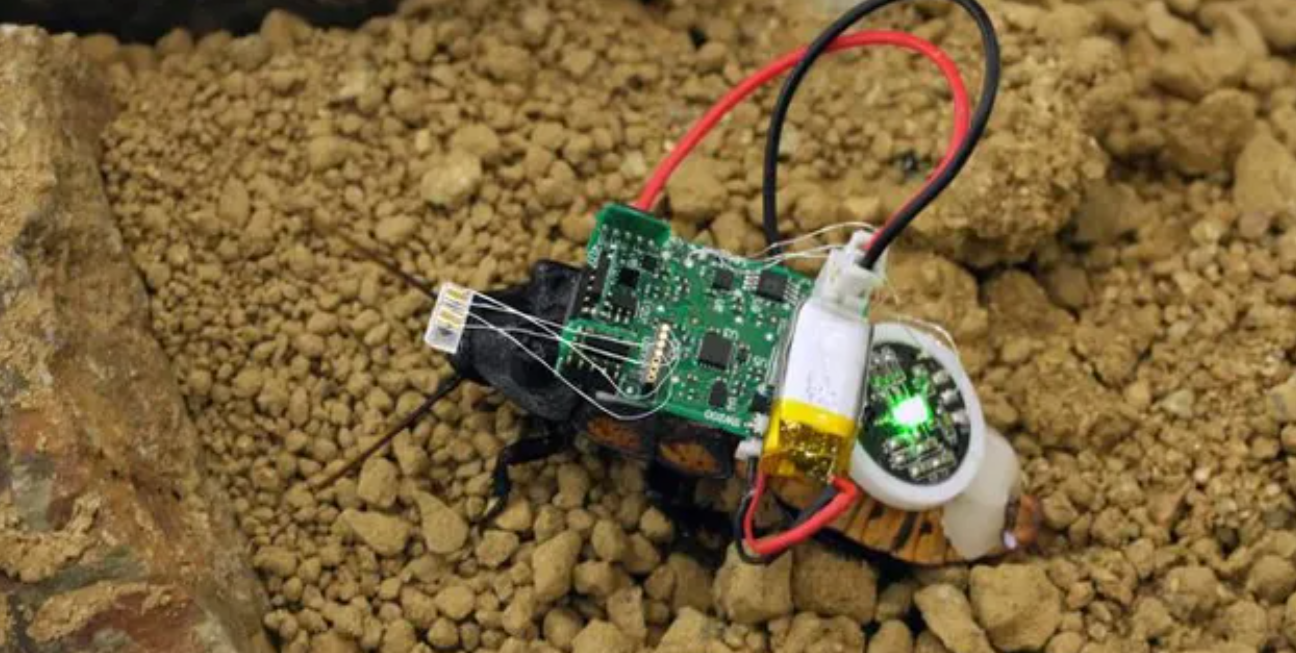 Source: Chowdhury Mohammad Masum Refat
While traditional cyborg insect systems tend to rely on external stimulation to direct behavior, the new approach reportedly deciphers the insect's heartbeat, neural signals and body movement to better understand its internal state before determining when to apply gentle stimulation.
As such, the team devised a wearable backpack for Madagascar hissing cockroaches that measures such signals and then relies on ultraviolet (UV) light and vibration stimulation to guide the insects through various environments. Meanwhile, machine-learning models that were trained on data collected under five conditions — natural baseline, UV light, chemical exposure, heat and food — reportedly achieved 93% accuracy in classifying the insect's environmental state.
Once the system detects that the insect is calm or attracted to food, gentle stimulation will guide the insect’s movement. However, in the event that the insect appears stressed or avoidant, stimulation will halt.
“An insect is a living being, and its responses change from one individual to another, and from moment to moment,” the team explained. “Conventional robot research has often taken a one-way approach, giving commands to animals. In this study, we took a first step toward bio-hybrid control that responds to the animal’s state. The key shift is from ‘controlling’ to ‘listening.’”
To test the technology, the team built a multi-chamber maze. Within the maze, the untreated cockroaches stayed in food-containing areas, while the cyborg cockroaches guided by the ISC system navigated through the entire environment.
An article detailing the technology, “Perception-driven control strategy for bio-intelligent cyborg insect,” appears in the ROBOMECH Journal.
