
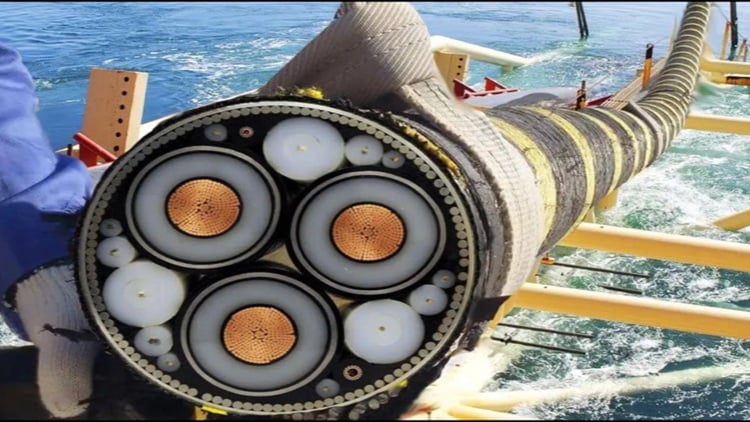
It is impossible to transport data, phone calls and internet traffic across countries in a timely manner if there are no undersea cables. It is only due to submarine cables that a modern internet is accessible. They transport internet traffic, which includes anything from emails to films on YouTube. Data that was transmitted across a cable that is buried beneath the water is the source of these lines being read. In a matter of milliseconds, these lines enable the transmission of billions of bits of data across continents.
It takes specialized cable ships and meticulous preparation to deploy these cables over the ocean floor.
Map out the installation route
Before beginning any undersea cable construction, thorough planning and route assessments are necessary to determine the optimal cable path. This is an essential step for laying the cable efficiently and safely. The engineers' goal in determining a course is to minimize the impact of natural and man-made hazards, such as coral reefs, deep pits, mountains and fishing zones or anchor drop spots. For geophysical and geotechnical surveys, survey ships map the seafloor using sonar, underwater drones and other sensors. The seafloor's topography and composition, in addition to any possible obstacles, can be better understood using this data. Taking core samples at regular intervals allows one to assess the seabed's stability.
By carefully avoiding potential trouble spots, the data collected during this step determines where the cable should be installed.
Production, inspection and testing of cables
Once the route has been decided, the undersea cables are made with the exact needs of the route in mind. These cables are made with layers of optical fibers, steel armor, copper and waterproof insulation so they can withstand the harsh conditions of the ocean.
Before being put into use, the cables are put through a lot of tests to make sure they can handle high pressure, changing temperatures and possible mechanical stress. These tests simulate what the cables will actually go through when submerged in water. The constructed cable is lifted onto a customized ship that can carry, handle and install long sections of cable — often thousands of kilometers long. On board the ship, the cable is carefully wound into enormous tanks so that it doesn't become tangled and can be fed easily during the laying process. The cable's markings and length tell the operator exactly where each piece is and how deep it is. These indicators make it easy for operators to keep an eye on the installation and control the wire.
Deploying and laying cables from the shore
After loading the cable, the ship sets off on the cable-laying mission. The ship's crew, engineers and workers on land need to work together during this phase to make sure the cable is laid correctly along the planned route. The first thing to do is to get the cable to a set place on the beach. A small boat or personnel on land will drag the cable from the ship to the landing location, where it will be connected to networks on land. The ship starts to head offshore after everything is tied down.
How are they shielded from damage underwater?
Burying the cable in shallow water is a traditional way to protect it from things like anchors, fishing gear and shifting tides that could damage it. To do this, plowing machines or remotely operated vehicles (ROVs) with jets or blades dig a trench for the cable.
When the ship that is responsible for laying the cable moves into deeper water, the process becomes less difficult. After being launched from the back of the ship, the cable is then dropped to the ocean floor in a controlled manner. This is made possible by gravity. Because the risk of damage from external sources is low, it is possible to lay the cable in a straight line on the seabed without having to dig a trench under in deep water. For the purpose of ensuring that the cable is positioned with the appropriate amount of tension, the speed of the ship is carefully monitored and effectively handled. The cable has the potential to break if it is too tight, and if it is too slack, it has the potential to become twisted or looped if the ship moves at an excessively slow speed.
When the ship draws closer to underwater impediments like ridges and trenches, ROVs and other specialized tools are used to carefully move the cable over or around them. This keeps the cable safe from any damage that might happen during installation and also stops it from wearing out in the future.
At some time, the cable ship might have to splice two segments of cable together. This can happen while cables are being extended or fixed, or when a lot of cable must be deployed to cross a long distance. Technicians on the cable ship carefully splice the cable to ensure the connection is strong and waterproof. To make sure that the quality of data transmission stays high, accurate optical equipment is used to fuse the fibers.
Upon complete installation of the cable, comprehensive testing is conducted to ensure optimal functionality and seamless data transmission. Engineers employ electrical and optical assessments to ensure the proper functionality of fiber optic and copper components. They examine for indications of signal loss, malfunctions or degradation. ROVs can inspect critical components of the cable, particularly at joints, beach landings and crossings.
Conclusion
The installation of cables is carefully evaluated in order to guarantee that it will continue to function well for enough time after it has been laid. Many undersea cables are equipped with fiber optic monitoring systems, which supply operators with the ability to monitor the cable's temperature and performance, as well as detect external events such as seismic activity in the surrounding area. For preventing anchors or fishing from causing damage to the cable, concrete beds or rock berms may be constructed in regions that either have a considerable amount of activity or potential hazards. Despite their durability, undersea cables are nevertheless susceptible to damage from activities such as fishing, shipping or natural disasters; as a result, they need to be inspected and repaired on a regular basis.
