
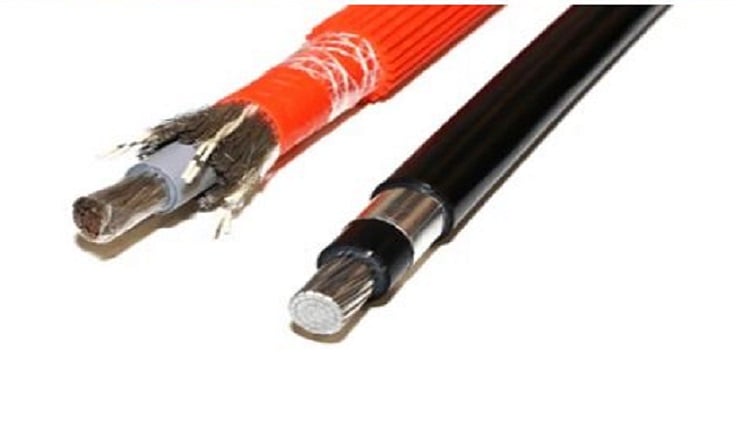
High voltage direct current (HVDC) systems facilitate the transmission of greater power over extended distances, enhance the integration of renewable energy sources, interconnect electrical grids and optimize network performance. These systems employ power electronics technology to convert alternating current (AC) and direct current (DC) voltage, making them suitable for enhancing existing infrastructures or constructing new power corridors.
Voltage source converters (VSCs) and line commutated converters (LCCs) are examples of HVDC systems. The VSC is an optimal technology for the coupling of undersea and land cables, facilitating the integration of renewable energy sources, as well as offshore and urban infeed applications. VSC is offered in point-to-point, back-to-back, submarine/land cable and offshore configurations. The LCC is also offered as point-to-point overhead lines and submarine/land cables, making it particularly suitable for back-to-back. In addition to these converter technologies used in HVDC systems, high voltage cables are commonly used for transmitting electricity underground or under the sea, which will be discussed in this article.
Types of HVDC cables
The standard components of an HVDC cable are a core of conductors, a semiconductor screen, primary insulation, a sheath, armoring and other accessories. Here are the most common kinds of HVDC cables, broken down by the dielectric type:
Oil-filled DC cable: Oil-filled cable, often called fluid-filled cable, typically has oil pushed into its channels. Multi-layer impregnated Kraft papers are primarily employed for insulation. Two varieties of oil-filled cables are available. To keep the oil from separating into tiny bubbles, the first kind uses devices that feed pressure and oil replenishment tanks to keep the cable’s pressure at a high level while it contains low viscosity oil. As a result, 30 km to 60 km is the maximum practicable length for this cable type to maintain an adequate oil flow. To keep the pressure uniform along the length of the second kind of cable, it is filled with a high viscosity oil. Thus, this self-contained OF cable can theoretically reach an infinite length and does not require additional oil feeding devices.
Mass-impregnated cable: The primary insulating material of mass-impregnated (MI) cables is likewise Kraft paper, just as the oil-filled cables. Since MI cables do not contain any free oil, they are typically characterized by having "solid" insulation. In order to achieve greater dielectric qualities, high-density papers (≈1,000 kg/cm3) are typically selected. These papers are impregnated with a mineral oil based on a high viscosity compound under extremely clean and controlled conditions.
Extruded DC cable: A more recent innovation in DC cable technology, extruded HVDC cables primarily use extruded polymeric material as insulation, as opposed to the more traditional paper insulation. With its long history of use as an insulator for HVAC and HVDC cables, cross-linked polyethylene (XLPE) is the main insulation material.
Gas-insulated cables: While oil-filled cables use oil as an insulating material, gas-insulated cables use pressurized insulating gases. Undersea cables can supposedly be supported by compressed gas, which increases electric strength and eliminates transmission length constraints, all while protecting them from the effects of external water pressure.
Superconducting cables: Superconducting materials have sparked a lot of interest due to their exceptional electric and thermal properties. HVDC superconductor cables are now the more realistic option. The cable is typically housed in a cryostat, a cryogenic container that uses liquid nitrogen for cooling purposes. Typically, a vacuum filled with super-insulation layers separates the outside shield from the cryogenic chamber. Such HVDC superconductor cables' cooling needs are unrelated to the power passing through them as the cables don't produce any heat.
Accessories for HVDC cables
Cable accessories in a comprehensive HVDC cable system, specifically terminations and joints, often emerge as the most crucial components because of the intricate mechanical, electrical and thermal designs of these assemblies, along with the significant dangers associated with environmental pollution and errors in installation. Consequently, accessories that can be dependably operated and effortlessly placed are crucial in a resilient cable transmission system. For long-distance power transmission using HVDC cable systems, various sorts of joints can be employed in a cable route, including factory joints and prefabricated joints for production processes, as well as transition joints and repair joints for distinct purposes.
The quantity of joints employed in onshore cable systems markedly differs from that in offshore cable systems; for instance, onshore extruded cable routes utilize a significant number of prefabricated joints, which are engineered for straightforward field installation, owing to transportation challenges arising from the weight and dimensions of cables having length over 1 km to 1.5 km. Termination is another accessory for cables; it joins the ends of routes to other pieces of equipment including switchgears, overhead lines, and busbars. The termination construction of various types of cables varies; for example, oil-filled cables require an oil feed entry, while mass-impregnated cables just require a tiny vessel that can accommodate oil expansion.
Conclusion
The design of HVDC cables involves advanced materials and insulation technologies, such as superconducting and oil-filled systems, which ensure optimal performance under high voltage and temperature conditions. Accessories, including converter stations, termination points and protective devices, are critical for maintaining system reliability and safety. Therefore, HVDC cables and their associated accessories are integral components of contemporary power transmission systems, facilitating the efficient transfer of electricity over extensive distances with minimal losses.
