
A U.S. defense firm has developed a new unmanned aerial vehicle (UAV) that can be deployed in just two seconds.
XDOWN suggests that its system, dubbed the Small Tactical Unmanned Drone (STUD), promises to significantly reduce deployment time on the battlefield as it is capable of transitioning from a stowed state to active flight in mere seconds.
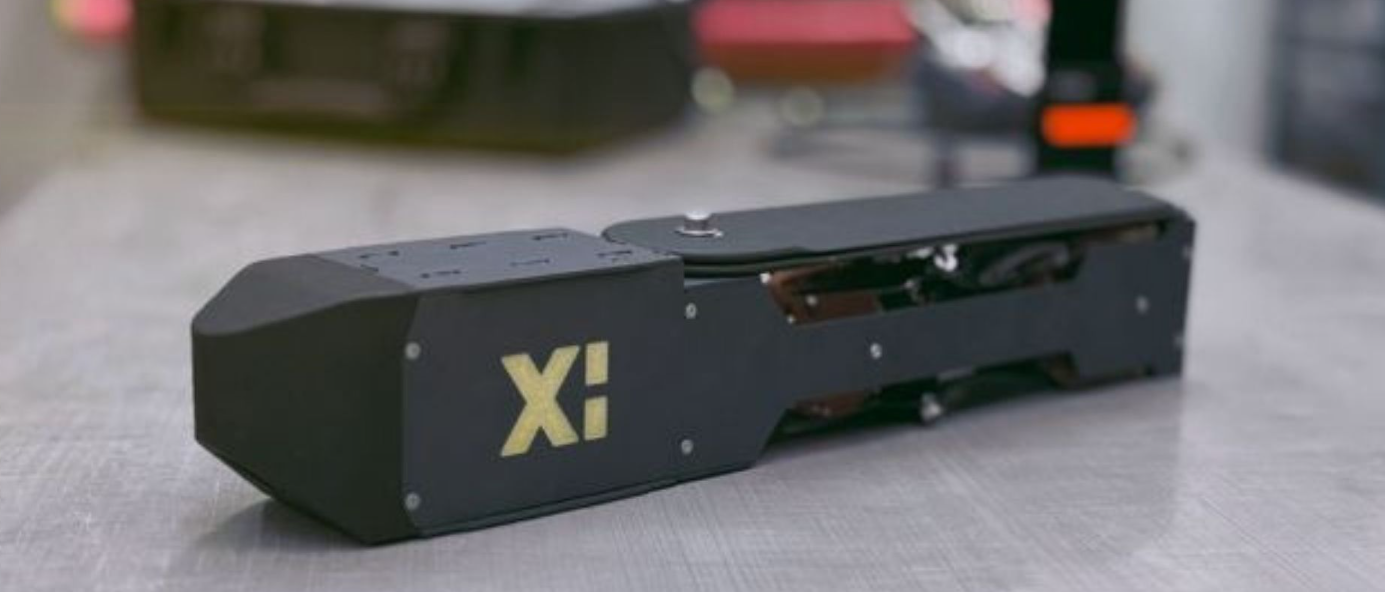 Source: Alexander Balan/LinkedIn
Designed for rapid-response operations where speed, portability and adaptability are critical, the STUD is unlike most traditional drones that require assembly or extended setup procedures because it is built for immediate use, enabling operators to deploy it almost instantly, particularly in high-pressure environments.
According to its developers, the STUD can be transported in a standard tactical backpack using a quick-release interceptor setup. Further, one operator can carry as many as 8 to 12 units simultaneously, thus allowing teams to transport several drones into the field without adding significant logistical burden.
As soon as it is turned on, the UAV can be launched by hand. Upon its release, the onboard rotors engage instantly, stabilizing the drone and guiding it into controlled flight in seconds — offering a tactical advantage on the battlefield.
Measuring 17.5 inches in length, with a width and depth of 3.1 inches, and weighing roughly 5.2 lbs, the STUD drone is designed for easy transport. Additionally, it can carry a payload of up to 1.7 pounds, which allows it to accommodate mission-specific equipment.
The STUD is also capable of reaching speeds of up to 190 miles per hour and has an operational range of 40 miles and an endurance of approximately 17 minutes.
Thanks to its modular architecture, the drone can support multiple payload configurations. Such flexibility enables it to adapt to a range of mission profiles without requiring separate systems for different roles.
The STUD can reportedly be deployed for intelligence, surveillance and reconnaissance (ISR) missions, precision strike operations, counter-unmanned aerial vehicle (C-UAV) tasks and electronic warfare applications, for instance.
