
Aerospace engineers at Texas A&M University have developed a quadrotor biplane capable of one day performing emergency tasks such as rescue missions, medical supply delivery, locating trapped individuals and firefighting.
The biplane, dubbed QUEST, fills the gap that exists between tiny search drones that can see but can’t carry injured individuals and large helicopters that can carry those individuals but that cost a fortune to fly.
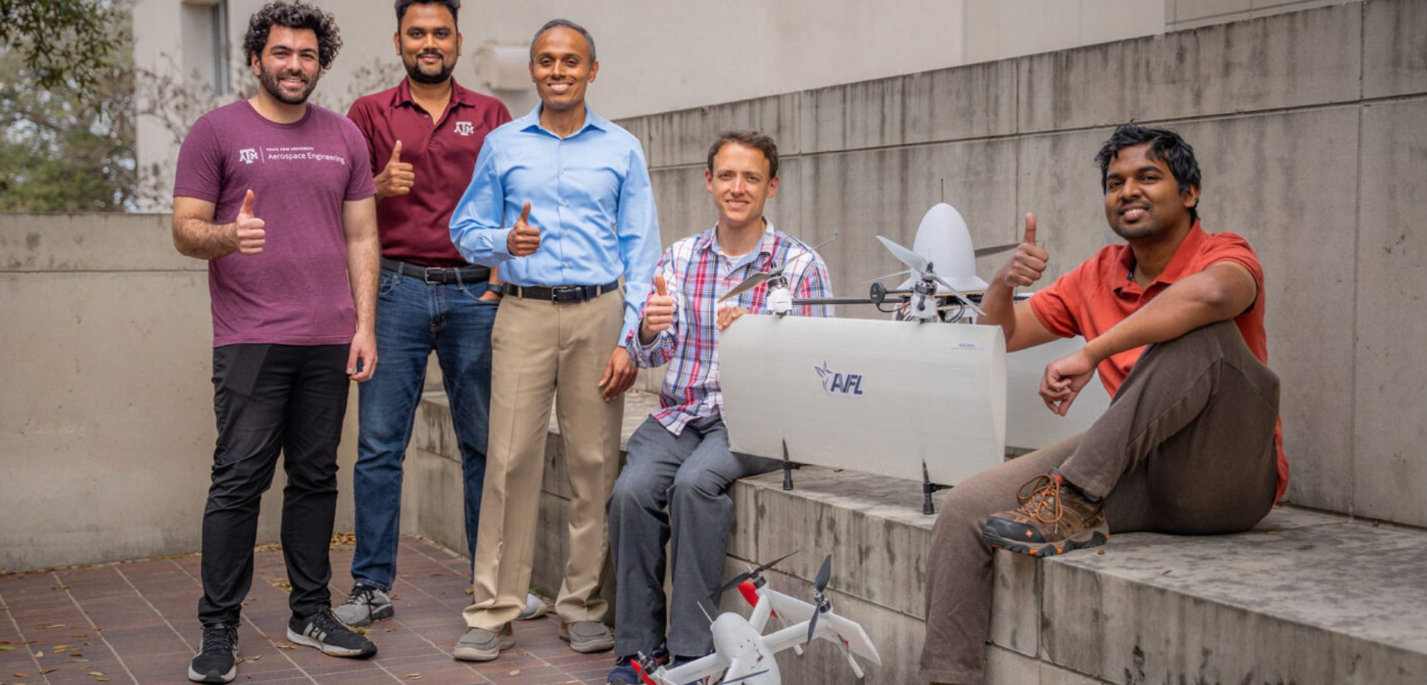 Source: Texas A&M
According to its developers, the QUEST aircraft goes from a vertical hover to high-speed cruise flight by tilting 90 degrees. Specifically, the aircraft hovers much like a drone for precision but tilts 90 degrees to fly like a fixed-wing aircraft to achieve high-speed, efficient cruising.
Ultimately, the team envisions that QUEST will eventually become a vehicle capable of carrying heavy payloads such as medical supplies or even people, thereby making disaster relief more affordable and accessible.
Using a blueprint that has already earned the team a $10,000 prize, the NASA University Innovation Award and proving the concept with subscale prototypes, the team is now preparing to scale up.
In February 2027, the engineers will test a full-scale version of QUEST under real-world conditions at the NASA Ames airfield Fly-Off.
“There is a gap in emergency response vehicles. On one hand, you have helicopters, which are limited in number and expensive to operate. On the other, there are drones that are capable of search, but not rescue,” the team explained. “GoAERO is trying to address this gap. You need something with serious payload-carrying capabilities that’s not as expensive or complex as a helicopter. It needs to be able to carry significant loads, such as critical supplies or even a person.”
With support from the WoodNext and Texas A&M Foundations, the physical build of QUEST will begin this spring.
