When one envisions a green energy future, it’s likely that electric vehicles (EVs) come to mind. EVs are more efficient than their traditional internal combustion engine (ICE) counterparts; they also produce fewer greenhouse gas emissions, improving air quality.
Yet EVs are not entirely “green,” a term most strongly associated with renewable energy sources with minimal environmental impact. As The New York Times points out in a recent article, it matters how the electricity used to power the vehicle is made. Some grids, like those in the Midwest, are coal-heavy – and coal, with its higher concentration of carbon, is a bigger producer of greenhouse emissions than other fossil fuel technologies such as oil and natural gas. Many countries have pushed to clean up their grids, but political developments – such as those witnessed recently in the United States – have the power to shift the balance back in coal’s favor.
Solar energy, by contrast, is a fully renewable resource – at least as long as the Earth’s sun keeps shining, which is predicted to continue for the next five billion years. Although it’s still happening largely under the radar – IEEE Spectrum recently published an article with the headline “Where Are All the Solar-Powered Cars?” -- solar has begun to find inroads into the EV landscape, which represents a promising trend for creating an energy future that’s truly green.
A closer look
When assessing a role for solar power in the EV landscape, it’s important to consider both the possibilities and the limitations. The IEEE Spectrum article mentions one expert on solar-power infrastructure who says that completely solar-powered cars aren’t realistic, but the “sweet spot” could be using solar cells to top up stored energy. These would be the same types of cells used on the rooftops of homes and businesses, but there would be unique transportation-related challenges. These include the limited available surface area for solar cell installation, plus vehicle aerodynamics that preclude the use of flat cells to collect maximum sunlight. There is also the very practical consideration that vehicles will quite naturally end up in places where sunlight is minimal: shady areas, parking garages and just plain driving at night.
All these factors translate to reduced range, which has long been a major stumbling block to increasing consumers’ appetite for switching to EVs. The cost of adding solar panels to a vehicle is also liable to increase its overall price, making it less competitive in the marketplace. Manufacturers may be able to
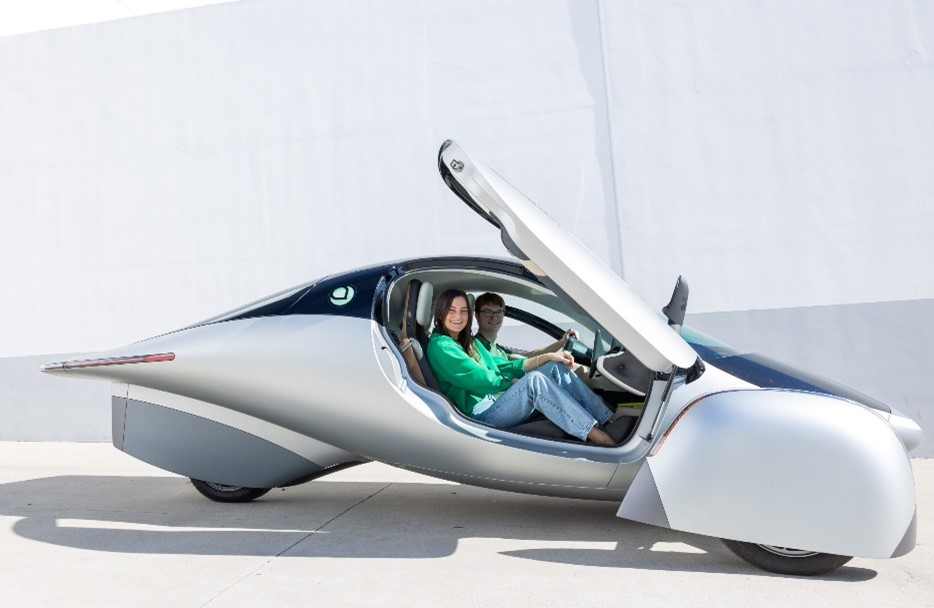 The Aptera is a solar electric vehicle with a design that might be likened to a “futuristic egg on wheels.” Source: Aptera Motors Corp.
balance obstacles like these by directing their focus toward lightweight design -- a contrary approach to the
more common “lazy man’s” trend of simply putting in a bigger battery to increase range, as reported by CNBC.
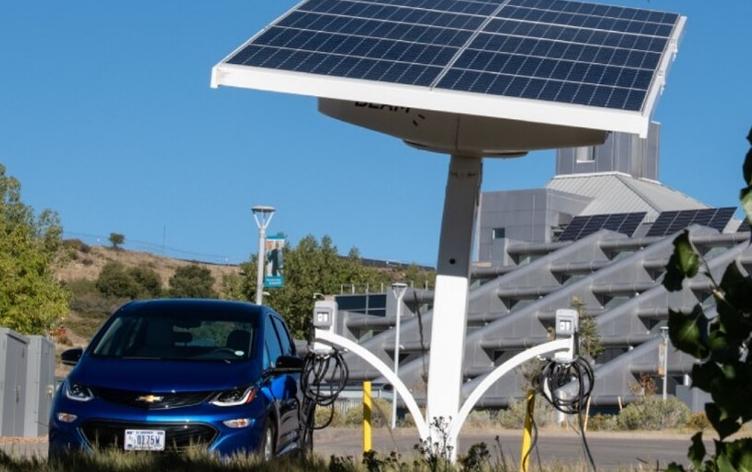
Still, adding solar panels onto cars, as noted in an entertaining video from YouTube content creator Tesla Jigsaw, is not unlike trying to add a “mini power plant” to the car’s roof – and focusing on infrastructure may be a more efficient way to increase solar energy’s presence in the transportation mix. This can include both solar charging stations and advanced energy storage systems, like this one in Southern California.
On a smaller scale, facilities managers and homeowners already making use of solar panels for tasks such as heating and lighting may find EV charging to be a next logical step for getting the most out of their solar investments. In addition, community solar sharing schemes can widen individual access to these types of benefits.
This is not to say, however, that the promise of solar cells will forever be limited to indirect infrastructure connections. Vehicles like the Aptera, with a design that Tesla Jigsaw likens to a “futuristic egg on wheels,” offer a hint of possibilities yet to come. Beyond its jaw-dropping looks, the Aptera allows driving up to 40 miles per day completely off-grid plus 400 miles of range per full charge. And, according to the company, it can go from 0 to 60 miles per hour in less than six seconds. But it should also be noted that the vehicle is still in the prototyping stage. “As of August 2024, Aptera Motors has not delivered any vehicles to customers,” Tesla Jigsaw reports. “The company’s been focusing on development, testing and securing funding for production … they’ve made significant strides in terms of design validation, production setup and financial arrangements, but actual customer deliveries are still zero.”
Similarly, Sono Motors, known for developing the Sion -- an affordable solar EV prototype priced around $25,000 – announced a shift to its mission in 2023 after crowdsourcing failed to yield the funds needed to move ahead with car production. The company is now focused on commercial vehicle solar solutions, which include retrofitting solar technology onto other buses, trucks and vans.
“It’s not that the technology wasn’t ready for prime time,” Tesla Jigsaw concludes. “These lightweight, super-efficient solar cars actually worked. They are not struggling because they are solar car companies; they are struggling because they are automotive startups which, as history shows, is a ridiculously difficult thing to achieve.”
True enough. Where solar goes from here – both as an automotive technology and in the larger context of world energy production – remains to be seen. Yet these early efforts at making solar a part of the EV landscape show promise, as well as the resilience to adapt to marketplace realities. There may well be a bright future in store as we move toward the sunny side of the street.
-- This article is part of our May theme week: EVs in the fast lane.