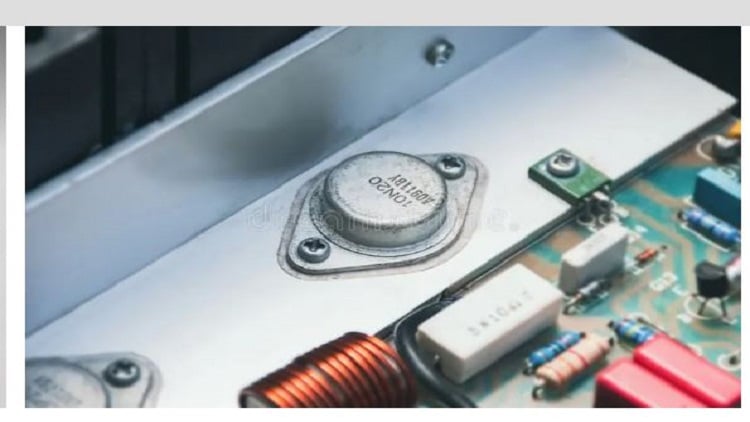
Thermal interface materials (TIMs) are used to improve the transfer of heat between two surfaces. It's like a thermal bridge that fills the microscopic gaps between components, ensuring efficient heat dissipation. Consider it this way: when attempting to heat a pot of water, the objective is for the heat from the burner to be transferred directly to the pot. A TIM performs a similar function for electronic components, assisting in maintaining optimal temperature and performance.
They are essential for power electronics due to their ability to efficiently dissipate heat. These materials fill the microscopic gaps between heat-generating components and heat sinks, significantly improving thermal conductivity. This prevents overheating, which can lead to reduced performance, shorter lifespan and even system failures. By ensuring optimal operating temperatures, TIMs enhance reliability and stability. Additionally, they enable higher power densities and miniaturization by allowing for more compact designs.
Common types of TIMs
· Thermal paste: This is a viscous, grease-like substance applied directly to the heat-generating component and heat sink. It fills microscopic gaps, ensuring efficient heat transfer.
· Thermal pad: These are pre-cut, adhesive-backed pads that come in various thicknesses. They are easy to apply and often used in smaller devices or where precise application of paste isn't necessary.
· Phase change interface material (PCIM): These materials transition from a solid to a liquid state when heated, filling gaps and improving thermal conductivity. They are often used in high-performance applications.
· Thermal grease: Similar to thermal paste, thermal grease is a viscous substance that fills gaps between components. It is often used in applications where high thermal conductivity is required.
· Thermal tape: This is a thin, flexible tape with adhesive backing and high thermal conductivity. It is used to attach heat sinks to components and can be easily removed and replaced.
· Graphite-based TIMs: These materials, often in sheet form, offer excellent thermal conductivity due to the layered structure of graphite. They are commonly used in high-performance applications where efficient heat dissipation is crucial.
How TIMs are used
Pre-manufactured TIMs, such as thermal paste or pads, can be applied to components to improve heat transfer between components. For instance, the following steps may be followed when applying thermal paste:
- Clean the surfaces: Ensure both the heat-generating component (e.g., CPU) and the heat sink are clean and free of any debris or old TIM. Use isopropyl alcohol and a soft cloth to clean the surfaces thoroughly.
- Apply the thermal paste:
- Pea-sized dot method: Apply a small, pea-sized amount of thermal paste to the center of the heat-generating component.
- Line method: Apply a thin, even line of thermal paste along the diagonal of the heat-generating component.
- Attach the heat sink: Carefully align the heat sink with the component and gently press it down to spread the thermal paste evenly. Avoid excessive pressure that might damage the components.
- Ensure proper contact: Make sure the heat sink is securely attached to the component to ensure optimal heat transfer.
Ideal characteristics of TIMs
· Thermal conductivity:
High thermal conductivity to efficiently transfer heat from the heat-generating component to the heat sink.
· Electrical insulation:
Good electrical insulation to prevent short circuits and ensure safe operation.
· Thermal stability:
Maintain thermal performance over a wide temperature range and withstand high temperatures without degradation.
· Mechanical stability:
Resist mechanical stress and maintain thermal contact under pressure and vibration.
· Chemical compatibility:
Compatible with the materials of the components it interfaces with, avoiding chemical reactions and degradation.
· Ease of application:
Easy to apply and distribute evenly, minimizing air gaps.
· Long-term reliability:
Maintain performance over time, resisting aging and degradation.
· Gap-filling capability: Ability to fill microscopic gaps between surfaces for optimal thermal contact.
· Low thermal resistance: Minimize thermal resistance to maximize heat transfer.
· Non-toxic and environmentally friendly: Safe for handling and disposal.
· Cost-effective: Balance performance with affordability.
Using TIMs in power electronics
1. Power modules:
- Power transistors: TIMs are applied between the transistor die and the heat sink to effectively transfer heat generated during switching operations.
- Diodes: Similar to transistors, TIMs help dissipate heat from diode junctions to maintain optimal operating temperatures.
2. Power converters:
- IGBT modules: TIMs are essential for cooling IGBTs, which are widely used in power converters for applications like motor drives and renewable energy systems.
- Power MOSFETs: TIMs help manage the heat generated by MOSFETs, especially in high-power applications.
3. Electric vehicle powertrains:
- Power inverters: TIMs are used to cool the power semiconductors within inverters, which control the electric motors.
- On-board chargers: TIMs help dissipate heat from the charging electronics, ensuring efficient and reliable charging.
4. Renewable energy systems:
- Solar inverters: TIMs are used to cool the power electronics components within solar inverters, optimizing energy conversion.
- Wind turbine converters: TIMs help manage the heat generated by the power electronics in wind turbine converters.
5. Data centers:
- Power supplies: TIMs are used to cool the power components within data center power supplies.
- Server processors: TIMs help dissipate heat from high-performance processors, ensuring reliable operation.
Conclusion
TIMs are essential for the reliable operation of power electronics components across various applications. By effectively transferring heat away from critical components, TIMs contribute to improved efficiency, extended lifespan, and overall system performance. TIMs can reduce the need for additional cooling solutions, leading to lower costs and energy consumption. Overall, TIMs play a crucial role in the efficient and reliable operation of power electronics systems.
