To enable rescue teams to rescue people trapped under the rubble of collapsed structures, researchers from MIT Lincoln Laboratory, working in conjunction with researchers at the University of Notre Dame, have developed a soft vine-like robot.
The robot, dubbed Soft Pathfinding Robotic Observation Unit (SPROUT), is capable of growing and maneuvering around obstacles and through small spaces. Its developers suggest that SPROUT can be deployed under collapsed structures to explore, map and find ideal ingress routes through debris.
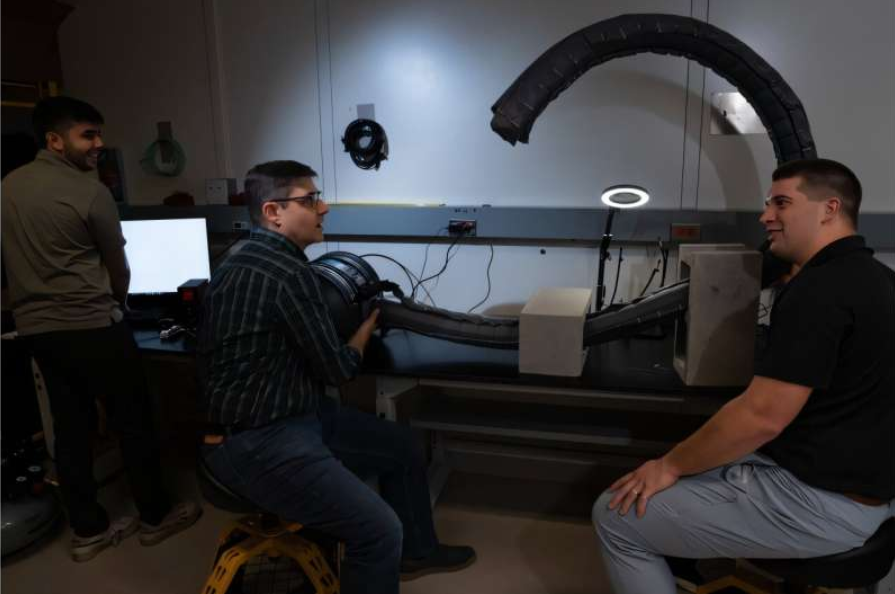 Source: Glen Cooper
"The urban search-and-rescue environment can be brutal and unforgiving, where even the most hardened technology struggles to operate. The fundamental way a vine robot works mitigates a lot of the challenges that other platforms face," the researchers explained.
Enabling SPROUT to get under collapsed structures while carrying cameras and sensors and traversing winding paths is the design of the robot, the researchers noted
SPROUT is made up of an inflatable tube comprised of airtight fabric that unfurls from a fixed base. As the tube inflates with air and a motor controls its deployment, the tube will extend into rubble, flexing around corners and squeezing through narrow passages. Meanwhile, a camera and other sensors are arranged at the tip of the tube for imaging and mapping the environment the robot is navigating. Joysticks enable users to steer SPROUT as they watch a screen that displays the robot's camera feed. For now, Sprout deploys up to 10 ft, but the team expects to expand to 25 ft.
The researchers explained that they pinpointed how to apply air pressure within the robot to simplify steering and designed the tube to minimize friction while the robot grows.
For more on SPROUT, watch the accompanying video that appears courtesy of MIT.
