
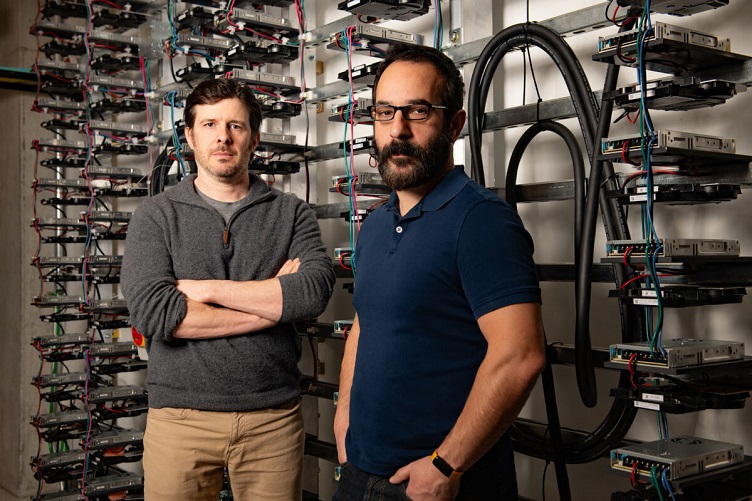
Researchers at the University of Texas at Austin are creating what they claim is one of the most powerful generative artificial intelligence (AI) hubs in academia.
Called Center for Generative AI, the hub will be powered by 600 Nvidia H100 GPUs that will be used for training AI models. The cluster of computers will be hosted by the Texas Advanced Computing Center (TACC) and will be called Vista.
“Artificial intelligence is fundamentally changing our world, and this investment comes at the right time to help UT shape the future through our teaching and research,” said Jay Hartzell, president at UT. “World-class computing power combined with our breadth of AI research expertise will uniquely position UT to speed advances in health care, drug development, materials and other industries that could have a profound impact on people and society. We have designated 2024 as the Year of AI at UT, and a big reason why is the combination of the trends and opportunities across society, our talented people and strengths as a university, and now, our significant investment in the Center for Generative AI.”
The core focus of the generative AI cluster will be on biosciences, healthcare, computer vision and natural language processing (NLP). The hub will be housed in UT’s interdisciplinary Machine Learning Laboratory and co-led by the Cockrell School of Engineering and College of Natural Sciences.
Researchers created the lab after the growth of ChatGPT and similar generative AI technologies and the pressure that these programs have put on healthcare, public agencies and more. Academia is looking to open-source models, open data sets and interdisciplinary peer-reviewed research to drive future AI advances, UT said.
“UT has established a tremendous foundation in AI,” said Adam Klivans, a professor in the College of Natural Sciences’ Department of Computer Science and director of the Machine Learning Laboratory. “With this investment, we can accelerate the process of scientific discovery and find new solutions to major engineering challenges that would otherwise take years of experimental work.”
