
In the ever-evolving landscape of medical technology, innovation is not just a buzzword; it's a necessity. Wearable medical devices have emerged as game-changers, providing patients with continuous monitoring and healthcare professionals with real-time insights. This requires the integration of reliable and sustainable electronic solutions.
Imagine needing a hearing aid in the future. Today’s hearing aids are quite large and are often visibly placed behind the ear. Wouldn’t it be great to have an in-ear hearing aid that is almost invisible without any limitations? This is where 3D-circuits come into play.
What is 3D-MID?
3D-MID stands for Mechatronic Integrated Device, also known as 3D-circuits. This manufacturing technology integrates circuits directly into 3D thermoplastic substrates. For example, the housing of a hearing aid, which is needed anyway, is used to support the circuitry on its inside, and a separate circuit board can be replaced. This technology enables the seamless combination of electronic and mechanical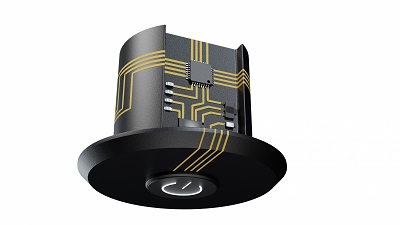 By integrating functions and the 3D routing of circuit tracks, the design space for hearing aid electronics can be optimally utilized. Source: Harting AG functions in a single component, which also eliminates the need of additional connecting points for the antenna. By eliminating these requirements, in-ear devices can be made as small as possible, which not only makes hearing aids nearly invisible but also improves performance and comfort. This is achieved through customer-designed shapes for a perfect fit to the ear, improving sound quality and minimizing power consumption by reducing the weight of the entire component.
Functional integration and miniaturization
Functionality and size constraints are paramount concerns in hearing aids and other medical devices. Here's where 3D-MID's technological prowess shines:
Function density
With 3D-MID, the integration of both electrical and mechanical functions reaches new heights. The result? A higher function density that enables designers to pack more capabilities into the same space. This advancement facilitates the pursuit of miniaturization without compromising on the range of functions, for example improving sound quality and reducing power consumption for hearing aids.
Space optimization
The quest for function integration and miniaturization doesn't just save space and weight; it transforms how wearable medical devices are designed and utilized. Imagine delivering enhanced capabilities within a sleeker and more comfortable form factor. With 3D-MID, this imagination turns into reality. For example, hearing aids should be as small as possible, adapting the shape of a human ear and running without having any problems.
3D-circuits, a trustworthy solution
For more than a decade, HARTING has been a reliable 3D-MID supplier for medical products, offering solutions according to user demands. For example, medical grade raw materials or preparation for additional sterilization. The company is the world's only 3D-MID provider with seamless integration of the entire process chain under one roof. From concept design and prototyping to all four manufacturing steps. These are injection molding, lasering, chemical coating and assembly with function control and testing. Every step is done in-house. This approach builds confidence by assuring customers of a holistic approach to quality control, avoiding additional interfaces and reducing the risk of unforeseen complications.
