
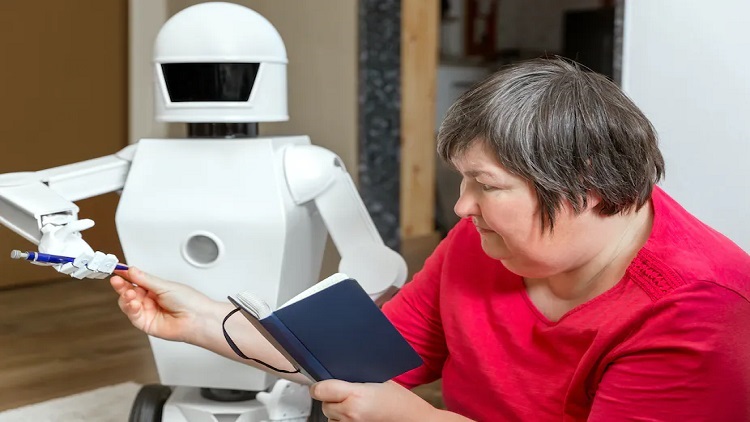
Convenience, energy savings and safety are just a few of the benefits that smart home control systems bring to the table. Although the positive effects of such systems on society as a whole are well recognized, their potential influence on the aging population is frequently disregarded. In this article, we go into the specifics of sensors, communication protocols, data analytics and adaptive control to explain how they work together to provide elders with easy and tailored home automation.
Integration of sensors and data acquisition
An array of sensors that gather data from the environment and the inhabitants is at the center of every smart home management system. Wearable devices, motion sensors, pressure sensors, temperature sensors and others are all used for aging-in-place applications. Sensor information is transmitted over wired or wireless networks and then analyzed to provide useful information on the health and daily routines of the elderly. Amplifying and filtering signals are only two examples of signal conditioning techniques that guarantee accurate data collection. These conditioning circuits are the responsibility of engineers, who must design and implement them while maximizing efficiency and reliability.
Communication protocols for seamless integration
Strong and effective communication protocols are crucial for a smart home's control system to allow for smooth integration of diverse devices. Zigbee, Z-Wave, Bluetooth and Wi-Fi are only some of the protocols used to set up stable and protected links between actuators, sensors and the central control unit. In order to provide a seamless and responsive user experience, engineers devote careful thought to data transfer speeds, power consumption and network scalability. To further improve the system's accessibility and support for senior users, engineers may also use cloud-based communication frameworks to provide remote monitoring and management of the smart home system.
Data analytics and machine learning
Data analytics and machine learning methods are applied to gain insights from the massive amounts of data generated by smart home management systems. Data scientists are crucial in this process because they create the algorithms and models used to mine the data for insights. Patterns, anomalies and trends in the health, behavior and routines of the elderly can be identified using data analytics techniques. Using machine learning methods, the system may modify the automation to better suit the users. These algorithms are developed, optimized for real-time performance and integrated smoothly into the control system with the help of experts.
Adaptive control and user interface design
The automation in an aging-in-place smart home has to be able to adapt to the users' ever-changing requirements and skills. Time of day, weather, tenant activity and health markers are only few of the variables that go into the development of the control algorithms. In addition, the system's user interface design must be straightforward and simple to use for senior citizens. Touchscreens and voice-controlled systems are only two examples of the user-friendly interfaces developed for the smart home control system. The usefulness and accessibility for the elderly are further improved by the incorporation of virtual assistants and speech recognition technology.
Energy efficiency and power management
By intelligently monitoring and adjusting household energy use, smart home management systems promote environmental sustainability. In order to keep tabs on and regulate appliances that use a lot of power, researchers are developing algorithms and optimization approaches based on machine learning. Engineers can provide automated energy management by combining smart plugs, smart thermostats and energy monitoring sensors. Power management is also critical, especially in scenarios where aging individuals may have limited mobility or cognitive abilities. Engineers design power-saving features such as low-power sleep modes, power scheduling and power optimization algorithms. These measures not only help reduce energy costs but also ensure the system operates reliably and efficiently.
Robustness, reliability and security
Smart home control systems for aging in place must be robust, reliable and secure. Engineers implement redundancy mechanisms, fault tolerance techniques and error detection algorithms to ensure uninterrupted operation of the system. Redundant sensors, communication paths and backup power systems can be integrated to minimize the impact of hardware failures. Security is of paramount importance, as smart home systems deal with sensitive data and control over the physical environment. Engineers employ encryption, authentication and access control mechanisms to safeguard the system from unauthorized access or data breaches. They work closely with cybersecurity experts to implement robust security protocols that protect the privacy and well-being of aging individuals.
Assistive technology integration
In order to age in place safely and comfortably, it is often necessary to combine smart home management systems with assistive technology. Features like speech recognition, gesture control and brain-computer interfaces are developed via the combined efforts of engineers and specialists in assistive technology. These advancements make it possible for seniors with mobility issues or other impairments to make full use of their smart homes without sacrificing independence or quality of life.
Conclusion
Safety, health monitoring, medication management, environmental control and social connectivity are just some of the ways in which smart home control systems have transformed the notion of aging in place. These advancements in technology help seniors keep their freedom, live with more ease and require less help from family and friends. Technology is always evolving, and smart home management systems are only going to become more useful in enhancing the lives of the elderly in the future.
