
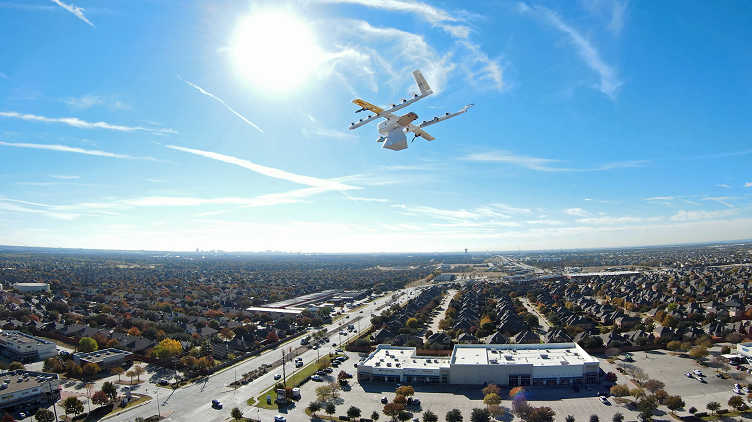
Looking to meet growing demands of public safety agencies, smart cities, construction, energy and defense organizations, Nokia has launched a CE-certified, 5G drone-in-a-box solution.
The goal is to provide an all-in-one product that meets the requirements of the European Union and that can easily connect over public and private 5G and 4G/LTE networks to enhance situational awareness for first responders and other professionals.
Called Nokia Drone Networks, the drone-in-a-box is manufactured in Europe and includes:
- Nokia drones
- Docking station
- Dual gimbal camera
- Edge cloud processing Nokia MX Industrial Edge
BVLOS and dual connectivity
Nokia said the benefit of connecting to both public and private 5G networks will allow higher data rates and lower latency than if the data from these drones were streamed via Wi-Fi. Dual modem connectivity allows for the drones to connect to multiple networks with system redundancy that is required by aviation regulatory bodies.
This connectivity will also enable better beyond the visual line of sight (BVLOS) operations with real-time kinetic (RTK) positioning to improve situational awareness. BVLOS allows drone operators to conduct complex drone operations where the device flies beyond a point where the operator can see it. This could be through a camera attached to the drone or for autonomous flight operations without a pilot.
5G’s role in BVLOS is seen as a critical element to enable these operations because other connectivity options are too limited in coverage or not powerful enough to send the amount of data to relay back to operators in real time.
Use cases
Nokia Drone Networks can be operated remotely so it makes it applicable for search and rescue activities or to assess damage in environments that are harsh to humans. The drones can also be scheduled for autonomous flights for applications such as security at large events or to manage remote equipment inspections.
The docking station included in the solution protects the drone and payload from external hazards and weather as well as charging the drone for the next flight. The drones operate more than 50 minutes of flight time and cover distances of more than 30 kilometers due to hardware architecture, integrated software innovations and 4G/5G connectivity.
