
An international team created a way to interpret a person’s mood and health by gathering biodata from sweat. The new system displays information as colorful spiral graphics in real-time on a smartphone for users to analyze. This system uses smart devices to measure electrical signals from the skin to inform users about their stress levels, help improve their sports performance and track their emotions.
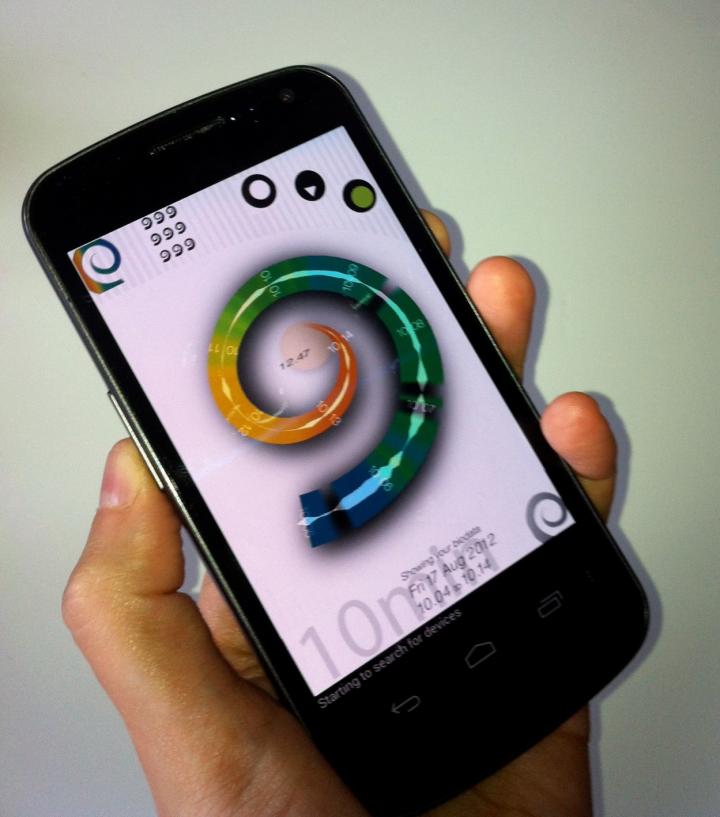 An image of skin conductance data visualization from the Affective Health app prototype. Source: Anna Stahl of RISE
The new system, named Affective Health, gathers data via a Phillips wrist-worn wearable sensor that contains an accelerometer to measure movement. Bodies produce a wide range of signals called biodata, including sweat. How much someone sweats indicates emotional and physical reactions.
To test Affective Health, the team gave the device to 23 participants. Participants didn’t know what the device was used for, but they were given guidelines. They were told that Affective Health could collect information relating to physical and emotional reactions, that sweating increased conductivity and how biodata is represented by different colors. Participants decided the best way to use this technology on their own.
The open design of the study led to some participants using the system as a tool to measure and manage stress levels. Others used it to get information on training and recovery regimes. Some used it to log information on their lives and track their emotions. Few participants used it for more than one purpose and some even avoided engaging with data that spoke against the idea they have about their personality.
The prototype lacked some of the functions needed to make a good tool for a specific role, like stress management or workout training system. The team found that it needed to add a second step in the design process that streamlines the device for a specific role. Design is important for users to understand their bodies. The results support a two-step approach to designing new technology.
The study was published in Transactions in Computer Human Interaction.
