
Researchers from Rutgers University have created a tabletop that combines a robot, artificial intelligence (AI) and near-infrared ultrasound imaging to draw blood and insert catheters to deliver fluids and drugs.
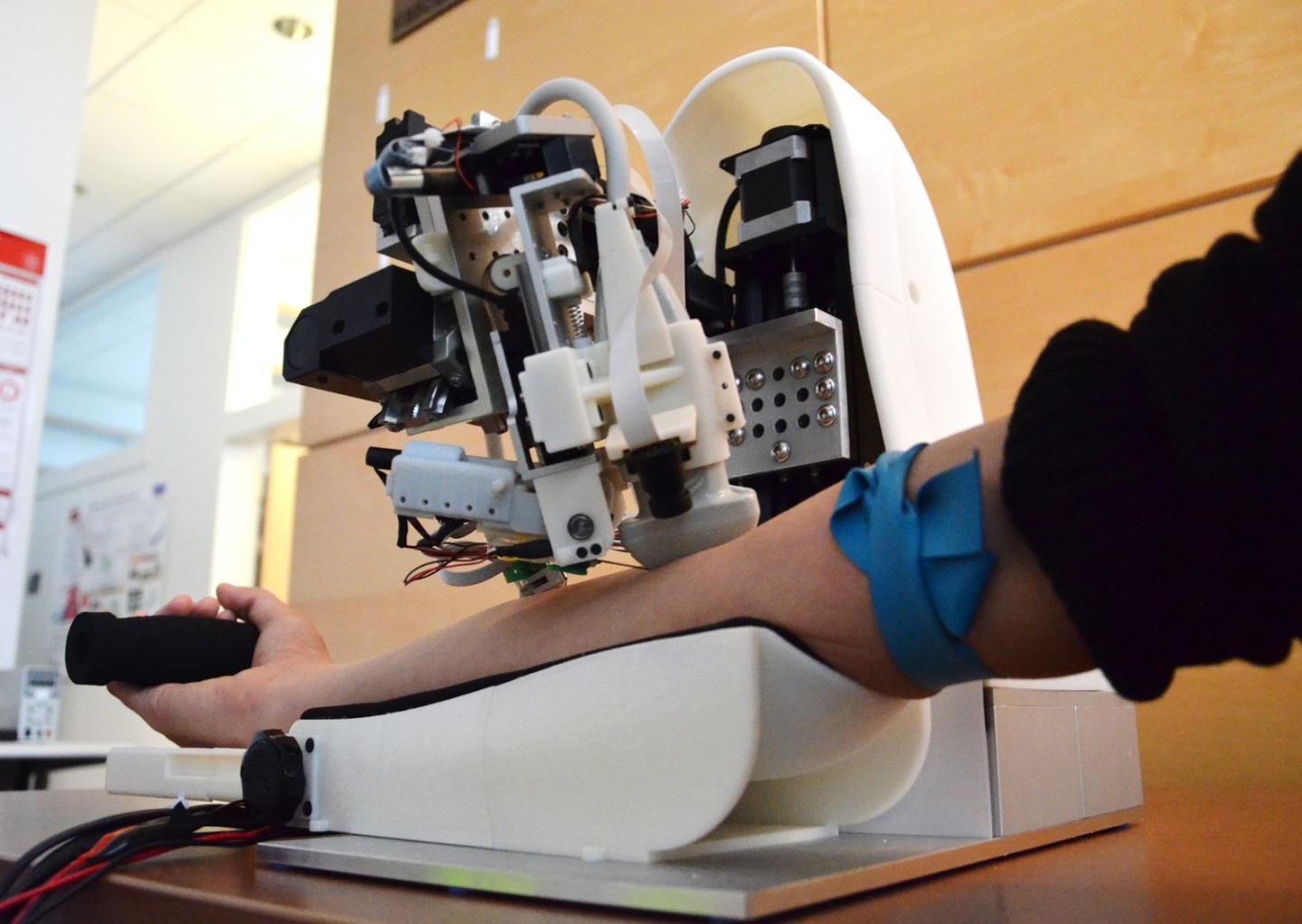 This tabletop robotic device can accurately steer needles and catheters into tiny blood vessels with minimal supervision. Source: Martin Yarmush and Alvin Chen
The robotic device can steer needles and catheters into tiny blood vessels with minimal supervision. It can identify blood vessels from the surrounding tissue, classify them, estimate their depth and conduct motion tracking.
The new robot could outperform on some complex medical tasks, reduce injuries, improve efficiency and outcomes of procedures. One advantage of the robot is that it can carry out tasks without supervision, allowing doctors and nurses to focus on more pressing matters in a hospital or emergency facility. The robot would also bring advanced interventions and resuscitation efforts to removed and resource-limited areas.
The robot can accurately pinpoint blood vessels with better success rates and faster procedure times than human professionals, even in patients with difficult veins. Access to veins, arteries and blood vessels is critical in diagnostic and therapeutic procedures, like drawing blood, administering fluids and medication, introducing devices and monitoring health. In these procedures, timeliness and efficiency are very important. Failures happen in 20% of procedures and this increased in people with small, twisted, rolling or collapsed blood vessels.
The team’s next steps are to conduct more research on a broader range of people with normal and difficult blood vessels.
A paper on the robot is published in Nature Medicine Intelligence.
