
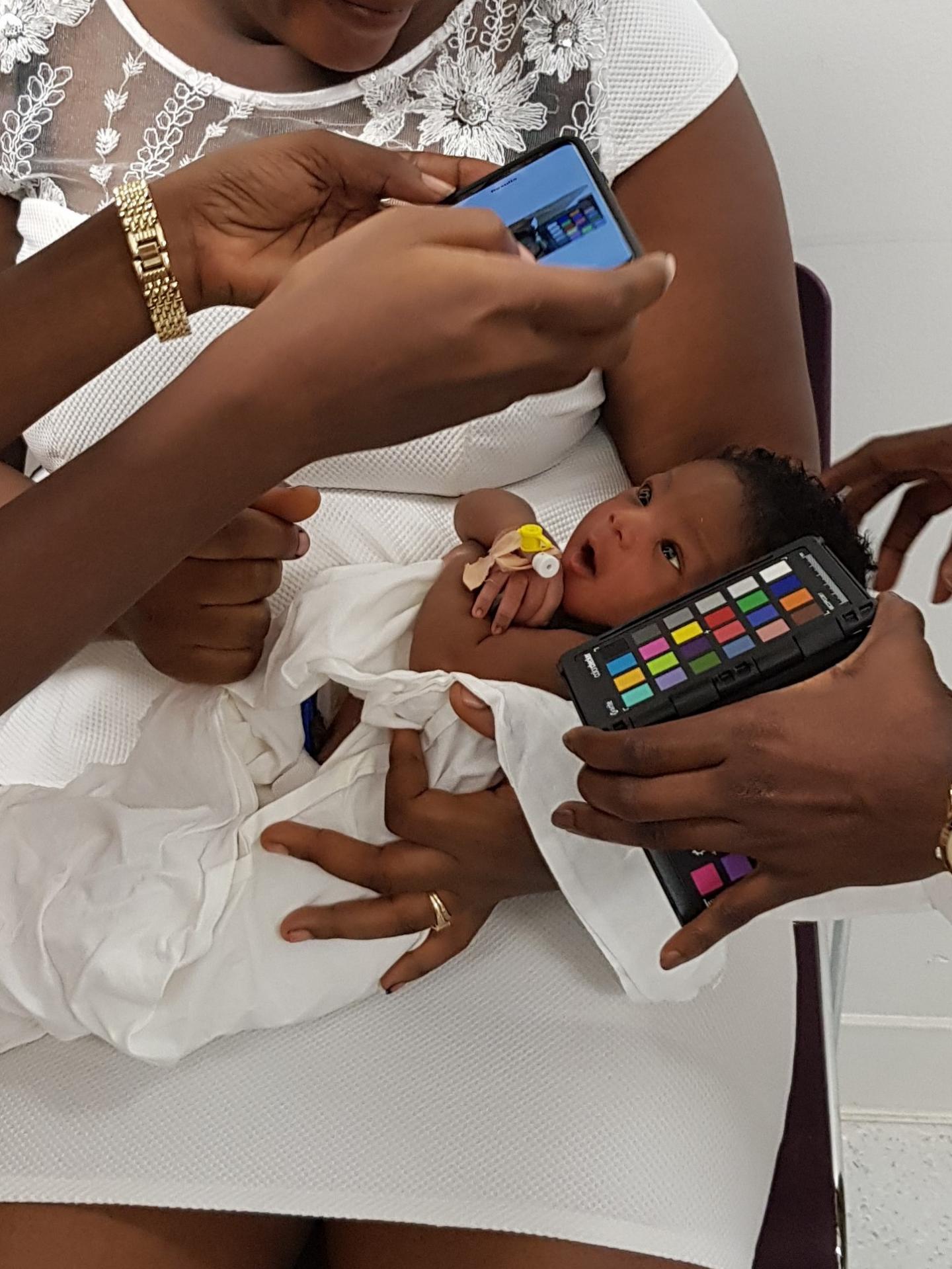
 The screening method is currently being trialled in a large-scale feasibility study at Greater Accra Regional Hospital. Source: Dr Christabel Enweronu-Laryea, University of Ghana
Researchers from the UCL and UCLH have created a smartphone app that checks for jaundice in newborn babies by taking pictures of their eyes. The new method is low-cost and just as effective at detecting jaundice as expensive screening devices.
Jaundice is when the skin or whites of a patient's eyes turn yellow. It is caused by bilirubin, a yellow substance, building up in the body. It is harmless in most cases, but severe in its neurotoxic form.
The disease causes 114,000 newborn deaths and 178,000 cases of disabilities per year around the world. Three-quarters of the infant deaths are in South Asia or Sub-Saharan Africa. Often midwives and nurses rely on their own sight to assess jaundice if they cannot afford to use the expensive screening devices. This is generally ineffective, especially for newborns with darker skin.
At-risk newborns are given a blood test to determine the concentration of bilirubin in blood. But jaundice can take time to become a problem, often after the mother and baby have returned home from the hospital.
During the study, smartphone pictures were taken of 37 newborns’ eyes at UCLH. These babies had been referred for jaundice blood tests. The yellowness of the babies’ eyes was quantified to predict the level of bilirubin in blood.
The smartphone method successfully identified all cases where treatment was normally needed. It also identified cases that wouldn’t require treatment 60% of the time. This success rate is comparable to expensive handheld detection devices often used in hospitals.
The new method eliminates the need for special equipment at a tenth of the cost.
A paper on this method was published in PLOS ONE.
