
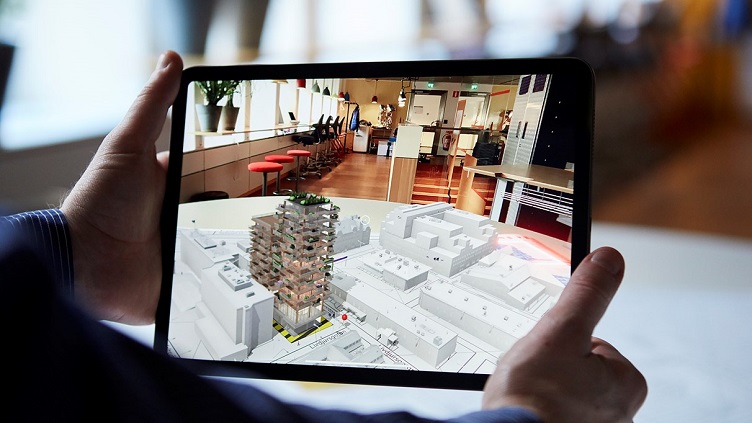
Ericsson and Nvidia are collaborating on alternative technologies and 5G radio access networks (RAN) to create virtualized networks that can produce faster and flexible artificial intelligence (AI) and internet of things (IoT) services.
The goal of the two companies is to commercialize virtualized RAN technologies to deliver radio networks with flexibility and short time to market for new services such as augmented reality (AR), virtual reality (VR) and gaming.
While 5G promises to make smartphones faster, the faster speed and lower latency will enable new use cases for the technology. These include bringing AR/VR to phones and other gadgets, speeding up emergency services, making intelligent farming easier, allowing robots to travel farther outside, bringing 8K TV to consumers and helping self-driving vehicles communicate with each other and their environment in real-time.
The collaboration, which was announced at this week’s Mobile World Congress 2019, taking place in Los Angeles, will seek to solve the challenge of how to virtualize the complete RAN solution in a cost-, size- and energy-efficient way and in a way comparable to traditional RANs.
"5G is set to turbocharge the intelligent edge revolution,” said Jensen Huang, founder and CEO of Nvidia. “Fusing 5G, supercomputing and AI has enabled us to create a revolutionary communications platform supporting, someday, trillions of always-on, AI-enabled smart devices."
