
EPFL Biorobotics Laboratory researchers have created a software program that analyzes data on walking gait and calculates how many calories are burned as represented by an avatar. This software can also provide users with ways to adjust their walk for ultimate calorie burning.
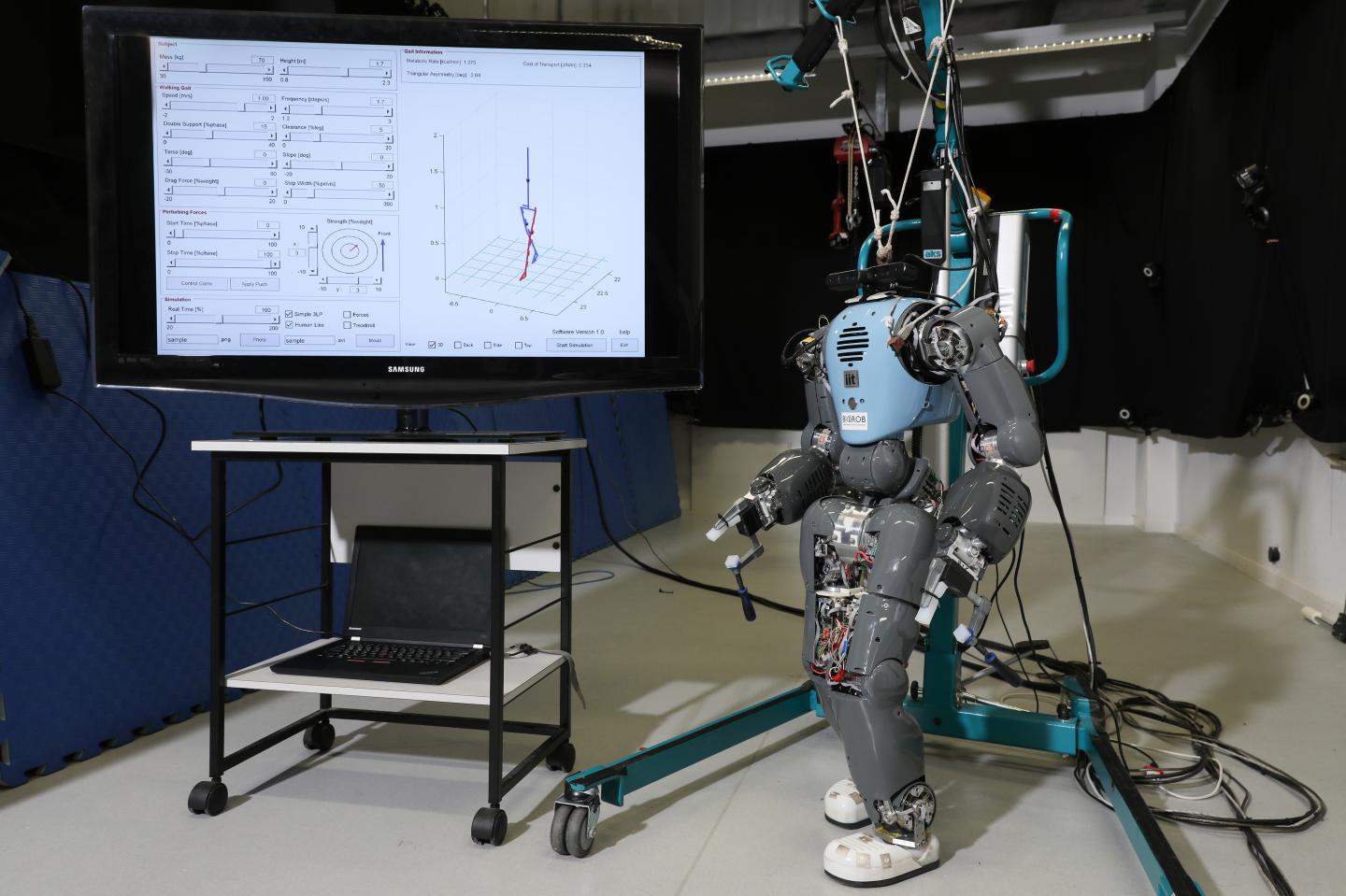 New avatar-based software developed at EPFL looks at how people walk in order to predict their energy expenditure. (Source: Alain Herzog/ EPFL 2018)
The researchers studied and analyzed eight gait parameters to gather information for the software program. The avatar can be freely configured for each person that is using it. The user inputs their height, weight, walking speed, stride distance, foot lift, incline of torso and ground data to create the avatar. Based on the avatar’s walk, the system calculates how many calories are burned when that walk is used. The avatar can also simulate the effects of being pushed or pulled for further analysis of calories burned.
"The software could be used to select the best design for an exoskeleton or a custom prosthetic, in order to reduce the user's effort. With a wearable exoskeleton, for example, we could optimize the location of the battery and actuators, or determine the ideal walking pattern for the user's preferred speed," said Amy Wu, the study co-lead author. "If, on the other hand, your goal is to burn calories, the software could be used to find a series of movements with a high metabolic cost."
The software could be used to determine the best walk for a given situation. For example, if someone is wearing a backpack, the software can calculate the best way to walk for maximum calorie burning.
"The way humans walk is extremely complex. The level of control required is a huge challenge for humanoid robots, which often don't get it quite right," said Salman Faraji, a corresponding author of the study. "We have a long way to go before we really understand all the parameters that go into human, animal and robot locomotion."
The paper on this new software was published in Scientific Reports.
