
Sponsored Content
Telecommunications
Creating Advanced Handover Testing Platforms Using Low Cost Programmable Devices
28 June 2018
Sponsored content
Digital attenuators are a critical part of mobile network test platforms where flexibility in controlling signal strength is vital. Multipath fading is a commonly occurring problem with obstacles, such as mountains or buildings, absorbing and reflecting signals. Programmable attenuators’ flexible features can be used in fading simulation applications where multipath scenarios can occur. For example, in handover testing, radar processing, digital radio communications and GPS receivers. In these cases, the fading simulator and customized test system with multipath switching is the key to optimizing mobile network performance.
Handover in Theory
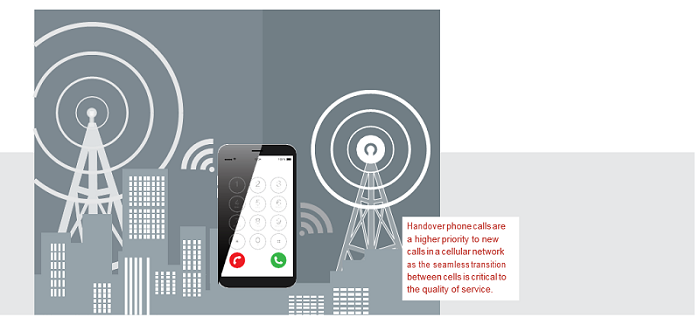
A handover, or handoff, occurs when an outgoing cellular call is transferred from one cell to an adjacent cell as the cellphone is moving through the network coverage area. Cells are physical areas that have cellular coverage. Handover is used with cellular networks, such as LTE or Wi-Fi networks. Some cellular services, including Google’s Project Fi, can even enable handovers between Wi-Fi and LTE with intelligent handover techniques.
Cellular networks must rely on multiple frequency channels as any signals sent out by a base station can be attenuated by obstacles in the environment. Soft handovers were developed for the goal of a seamless call transition in cases where calls become unreliable due to fading. This is where a connection to the current cell is only broken after a steady connection to the target cell is established known as ‘make-before-break.’ Hard handover occurs when the mobile connection from the source is broken and the connection to the target is made afterwards also known as a ‘break-before-make.’ Hard handovers allow for a more efficient use of channels as only one channel is necessary to enable a hard handover, which simplifies the design of the mobile phone as it also does not necessitate the need for parallel processing of several channels. While soft handovers can require more channels and a mobile phone that can receive two or more channels in parallel, the chances of a signal in all the channels being interrupted is much lower, in other words, dropped calls are highly unlikely in soft handover networks.
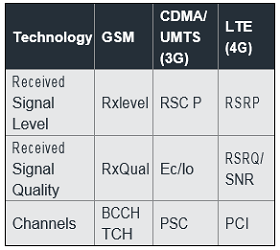
Handover can occur between “sectors” of the same site, known as intrasystem handover. Sectors are different areas of coverage from the same base station, and multiple ‘sectors’ can occupy one ‘cell.’ Intersystem handover can often occur with a fast moving target, where the target connection is established from one cell to a completely different cell or base station.
More recently, cellular technological advances have enabled vertical handover, such that a mobile phone connects between cellular networks and wireless LAN (WLAN) for greater accessibility. While cellular networks can offer lower data rates over large areas, WLAN technologies can potentially compensate for this as it offers higher data rates over smaller areas.
Handover Applied
Firstly, network engineers generate a ‘neighbor list’ of potential target cells for handover from selected source cells. Then, as a call is ongoing, the source channel’s signal transmission strength is monitored to assess when a handover request by the mobile phone of base station is necessary. In this complex process, the base stations in the ‘neighbor list’ and the mobile phone are connected and monitoring each other for the best target cell to connect to.
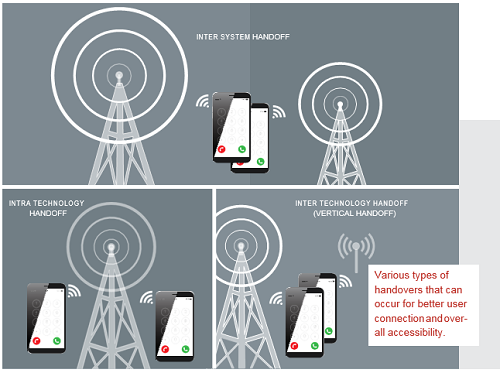
Network engineers have enabled several monitoring methods to ensure handover takes place seamlessly. The parameters that are tracked are dependent on the types of network modes that the mobile phone receiver and base station antenna is communicating with—some of these modes include GSM, UMTS, LTE and CDMA. Ultimately, the received signal level and received signal quality is tracked in the network measurement reports (NMR). Although, this is more complex with vertical handover where metrics should include user preference, network conditions, application types, cost, etc. In GSM networks, the Rxlevel indicates the power level of the received signal and is measured in decibels (dBm) and RxQual is an integer value representing the quality of voice at the receiver. The integer value of RxQual corresponds to the number of bit errors in a number of bursts. For UMTS, the received signal code power (RSCP) is another measurement of received signal power over a communication channel, and is measured in dBm. The Ec/Io is the ratio of the received energy per chip and the interference level measured in dB. In LTE handover measurements, the reference signal received power (RSRP) is used to estimate path loss, while reference signal received quality (RSRQ) indicates the quality of the received reference signal. In essence, RSRQ is a ratio between RSRP and the reference signal strength indicator (RSSI).
Handover Test
Fading Simulation
Fading is the effect of broadcasted signals being attenuated and dispersed by various media in the environment. As a result, the transmitted signal is broken up into multiple paths. Each resulting copy of the transmitted signal has varying amplitudes, delay and phase shift while traveling from the source to the receiver. Shifting frequencies can also occur when the target receiver is moving causing a Doppler effect. The type of multipath induced fading is a vital component in assessing the quality of a cellular network, as it frequently occurs in real environments and therefore requires an engineering solution.
Fading simulators are employed in cellular network tests to simulate the random multipath fading process. The International Telecommunication Union (ITU) provides standard methods and guidelines to simulate environments that generate multipath fading issues. ITU-R P.530 includes environments, such as urban, suburban and rural area simulators. The mathematical models of the random process of fading has evolved into several fading profiles including rayleigh, rician, lognormal and others. These fading profiles can be applied to the 2nd generation and 3rd generation cellular networks, such as GSM and UMTS/ WCDMA. There are several techniques to apply these fading simulators in a test environment, with the most popular being leveraging a vector signal generator (VSG) with digital baseband inputs and fading options.
Handover Testing Platform
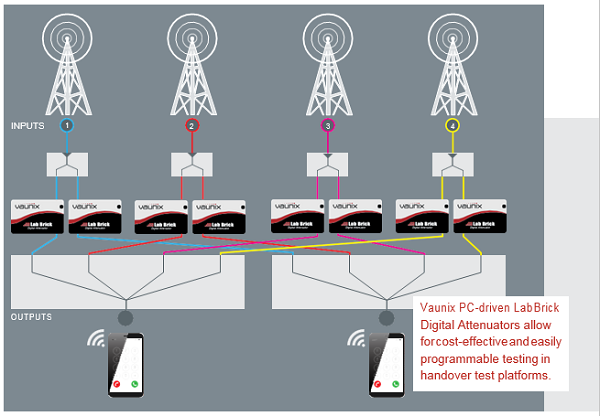
Fading is a significant factor in handover testing as it is an often a cause of handoffs. Another potential cause of handoff is a target simply moving out of the range of coverage for a particular cell. Sophisticated protocols and modeling are already in place, not only to simulate fading, but to also monitor received signals to time for a seamless handover. It is important that hardware for testing these protocols remain modular to maintain a level of customization as these technologies are constantly evolving. In handover testing, digital/programmable attenuators can interconnect base stations for the ability to attenuate each individual path and model the effects of fading. This is possible by controlling factors such as signal strength, signal quality, and signal drops.
This allows network engineers the ability to simulate specific handover scenarios and to establish the quality of a network connection. The number of programmable attenuators in a handover test system correlates directly with the functionality of the system.
The more digital attenuators, the more interconnected paths between ports in a test set-up. Naturally, this makes these components a major expenditure in handover testing.
Vaunix Technology Corporation | 7 New Pasture Road, Newburyport, MA 01950 Tel: +1-978-662-7839 | Fax: +1-978-662-7842 | www.vaunix.com
Powered by CR4, the Engineering Community
Discussion – 0 comments
By posting a comment you confirm that you have read and accept our Posting Rules and Terms of Use.
Advertisement
Advertisement
Popular News
Find Free Electronics Datasheets

Advertisement