
Researchers from the Technical University of Munich (TUM) have successfully used an inkjet printer to place electrodes onto the soft surface of a gummy for the first time. The development is major breakthrough for medical diagnoses.
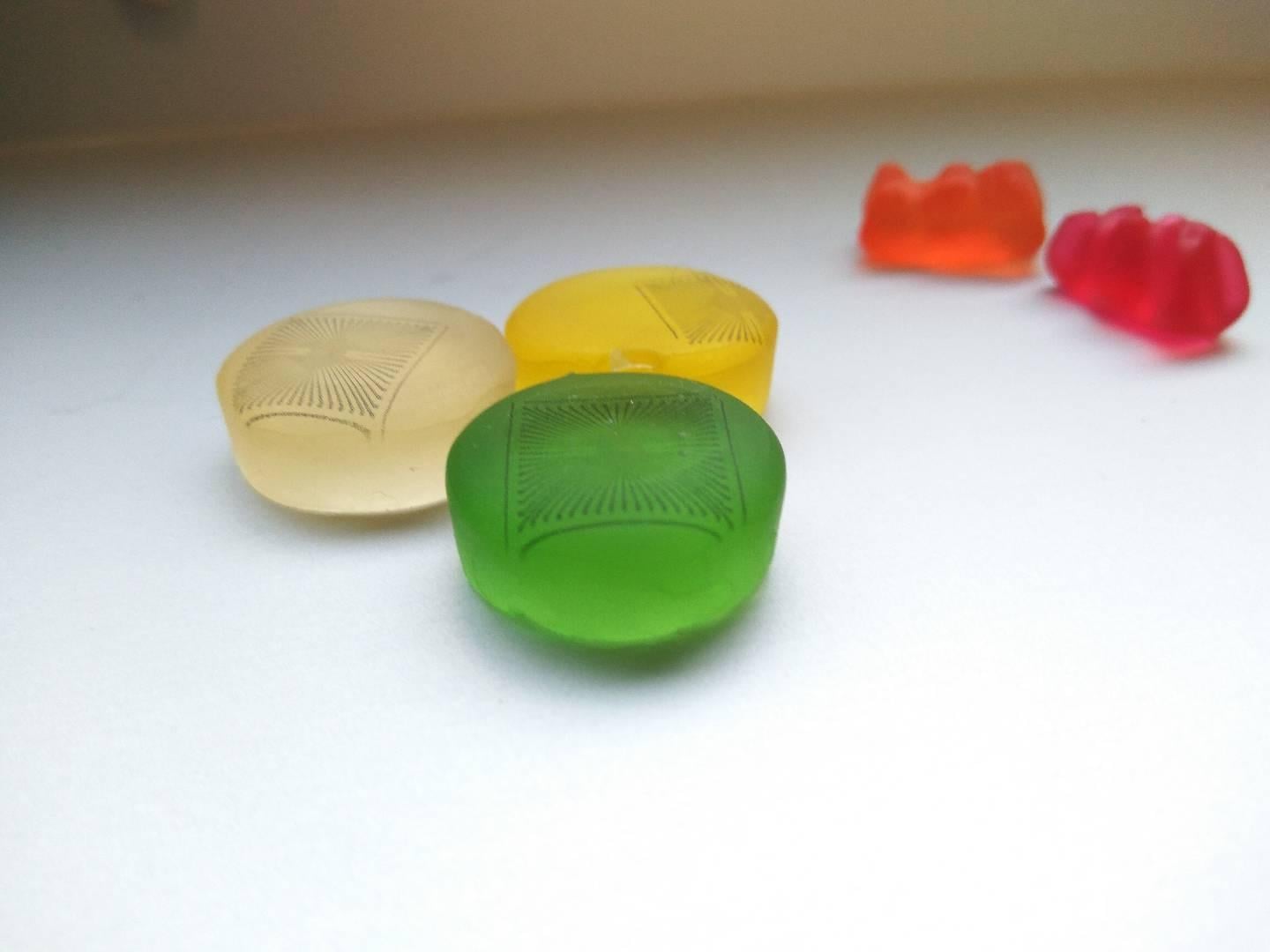 Researchers from the Technical University of Munich (TUM) have succeeded in printing microelectrode arrays directly onto several soft substrates. Source: N. Adly / TUM
Microelectrodes that detect changes in neurons or muscle cells are used to directly measure the electrical signals in the brain or the heart. Until now, scientists have had a hard time printing or attaching electrodes to soft materials because the electrodes have been made out of rigid materials. Once they have entered the body, rigid materials can cause inflammation or loss of organ functionality. Some gummy-printing methods have been successful in the past, but they are time-consuming and require the use of specialized technology and labs.
"If you instead print the electrodes, you can produce a prototype relatively quickly and cheaply. The same applies if you need to rework it," says Bernhard Wolfrum, professor of neuroelectronics at TUM. "Rapid prototyping of this kind enables us to work in entirely new ways."
To develop the gummy-printed electrodes, the team used a high-tech inkjet printer. The electrodes were printed with a carbon based-ink with a neural protective layer that lowers the chance of organ issues or inflammation. The team says they successfully tested printing on many soft materials that can each be used for different applications.
The researchers tested the sensors with cell cultures and found that they were able to provide reliable neuron measurements. The sensors measure at 30 micrometers, so they can detect and measure a group of cells or a single cell.
"In the future, similar soft structures could be used to monitor nerve or heart functions in the body, for example, or even serve as a pacemaker," says Prof. Bernhard Wolfrum from TUM.
The paper on this research was published in Npj Flexible Electronics.
