The only source of knowledge, said Albert Einstein, is experience.
If Einstein’s assessment is correct, every school should adopt an experiential learning curriculum. How much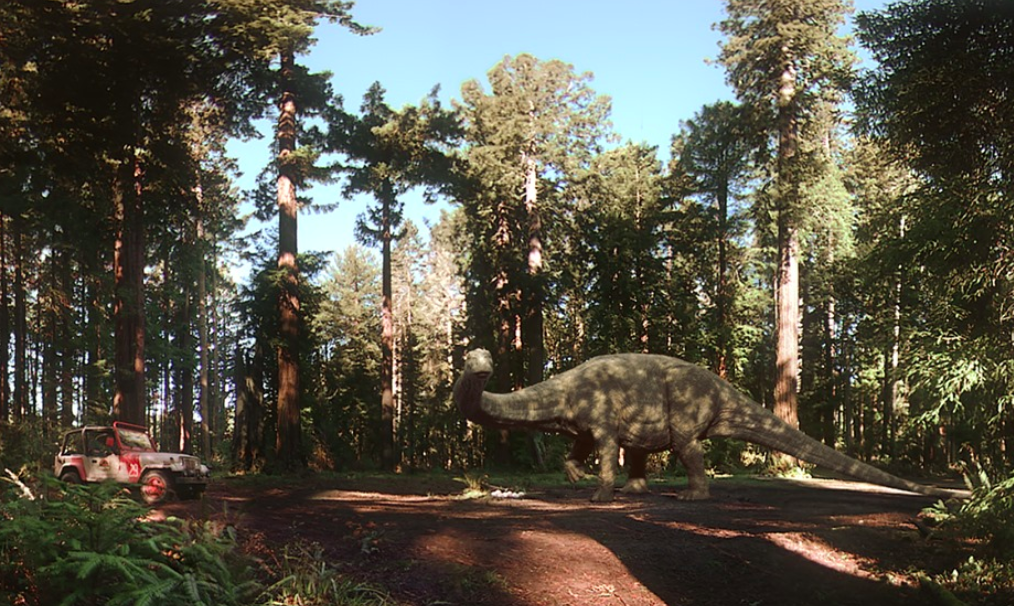 The Jurassic World: Apatosaurus VR Experience lets viewers see what it feels like to be in close proximity of a living dinosaur. Source: Oculus.com more would students understand about the events of today if they were immersed in a particular era? If they took a journey through the human body, how much more would they grasp about how our organs function? It’s likely that not only would the amount of knowledge retained by students grow, but their enthusiasm for school would increase as well.
Lacking a transporter, or a TARDIS, virtual reality technology is a great way to provide students an interactive look into the past. However, VR equipment can be an expensive investment for school districts, and good VR comes with some technology requirements. But there’s something for everyone.
The very least expensive is Google Cardboard. For $15, a viewer can travel the world. No matter where users look, it’s as if they’re really there. Cardboard supports most Android or iOS phones with screen sizes from 4 to 6 inches. The experience is suitable for learning, but the quality is not as good as more sophisticated devices.
If Cardboard is a good introduction to VR, Samsung’s GearVR is a solid product for less than $100. Students put on these goggles and are instantly immersed in a virtual world that’s completely explorable just by moving their heads. Although it uses the phone as does Cardboard, GearVR’s solid plastic construction is more durable, an important feature in a classroom. Samsung also includes a new handheld controller that brings natural movements into the virtual realm, including pointing, lifting, dropping and moving.
For districts looking to buy only a few very high-quality devices, Oculus Rift fills that bill for roughly $400. Apps include Oculus Medium, an immersive VR experience that lets users sculpt, model, paint and create tangible objects in a VR environment — well suited for a classroom environment.
Creative applications include using 3D modeling software to recreate historic sites — Stonehenge anyone? Teaching architecture with virtual reality tools can help designers adjust designs to various environments, get an idea of what the inside of buildings “feel” like and even understand what landscape plantings will succeed.
Field trips are now no longer a costly bus trip away, thanks to VR equipment. For example, the Smithsonian Museum offers several different virtual tours, using a variety of technologies. For those wanting an out-of-this-world science experience, Titans of Space offers a tour of the solar system. For social studies classes, Jurassic World Virtual Reality offer students the opportunity to ride a dinosaur.
Those are just a handful of the VR experiences available. Teachers can find many others online, and they can additionally use Google Expeditions as a field trip resource.
