
If your mobile electronics had desires, what do you think they’d most want? Our money would be on better batteries.
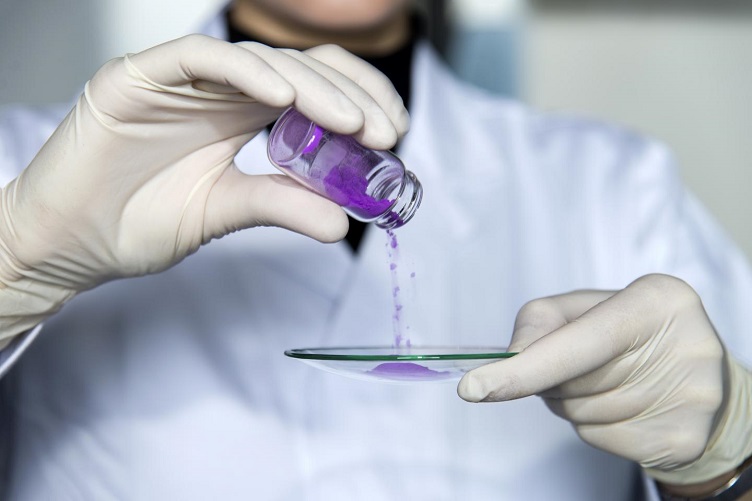
Higher battery capacity of course, translates to greater ranges for electric cars, longer operating time for cell phones and laptops and more. So your electronics would probably welcome the news from the Technical University of Munich (TUM) of a new process for fast and cost-effective production of lithium cobalt phosphate – a curious pink powder that is also a promising cathode material.
"Lithium cobalt phosphate can store substantially more energy than conventional cathode materials," said the university’s Dr. Jennifer Ludwig, who developed the process.
By operating at higher voltages, the substance attains a higher energy density than the lithium iron phosphate that is typically employed. Previously however, production of the material required a complex, energy-intensive and inefficient process under harsh conditions, including temperatures of 800 °C. The crystals formed under these conditions also need to be ground to nanocrystalline powder in another energy-intensive production step, Ludwig explains; that powder also has limitations which translate to a slow chemical reaction within batteries.
But Ludwig has solved all of these issues with a microwave oven.
You read that right. By placing reactants in a Teflon container along with a solvent and heating them with just 600 W of power, crystal formation is achieved at 250 °C. The thin, flat crystals produced demonstrate better electrochemical performance, because the lithium ions need to move only short distances within the crystals.
Ludwig encountered a hurdle as she developed her process – at temperatures over 200 °C and under high pressure a previously unknown compound is formed that is unsuitable as a battery material. By isolating that compound, however, the chemist was able to modify the reaction so that only the desired lithium cobalt phosphate is produced.
Ludwig works in the group of Synthesis and Characterization of Innovative Materials professor Tom Nilges, and received a research award for her work. Nilges characterized the achievement as surmounting “a further hurdle on the path to new high-voltage materials.”
